Shoulder Extensor Adductor And Retractor Stretch
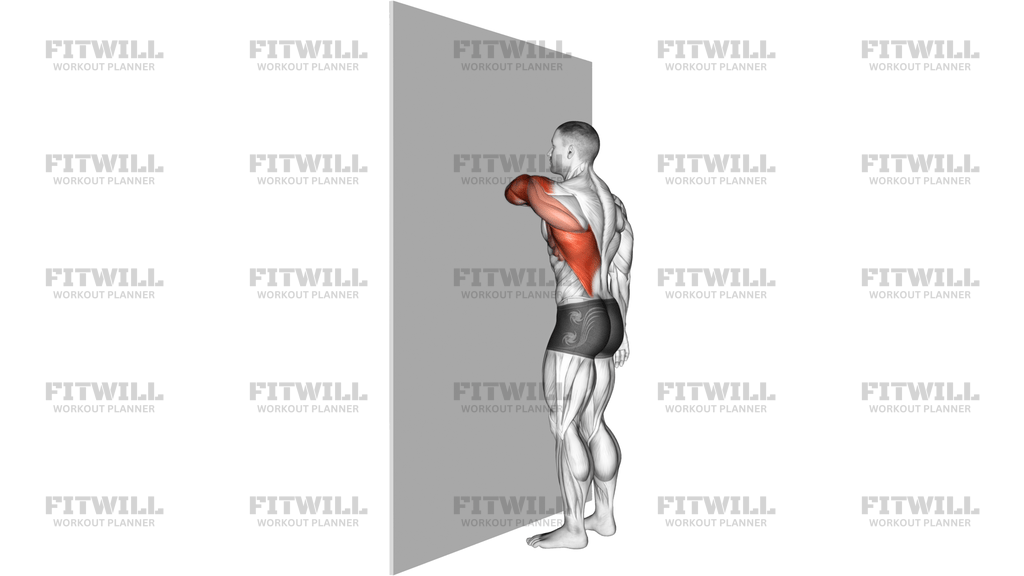
Shoulder Extensor Adductor And Retractor Stretch is a wall-based mobility drill for the back of the shoulder, lat, teres major, and upper-back tissues that help the arm extend, adduct, and retract. It is useful after pressing, rowing, climbing, swimming, or any session that leaves the shoulders feeling stiff and the rib cage pulled forward. Because the arm stays supported on the wall, the stretch comes from body position and torso rotation rather than from yanking on the joint.
The setup matters because a small change in elbow height or body angle changes where the tension lands. With the elbow bent and the forearm braced at about shoulder height, the stretch usually reaches the rear deltoid and side of the upper back; stepping farther from the wall or turning the chest away increases the line of pull. If the elbow rises too high, the sensation often moves toward the neck, while dropping it too low tends to shift the stretch away from the target area.
As you ease into the position, keep the shoulder blade from shrugging up toward the ear and let the torso rotate instead of arching the lower back. The best version feels like a broad pull across the back of the shoulder and the side of the torso, not a pinch in the front of the joint. Breathe out slowly as you settle, then keep the neck long and relaxed so the upper trap does not take over.
This stretch works well in a warmup between upper-body sets, after pulling work, or in a recovery session when overhead position feels restricted. It can also help lifters who spend a lot of time pressing or sitting with rounded shoulders, because it gives the rear shoulder and upper back a controlled way to open without collapsing the spine. The goal is a calm, repeatable hold on each side, not an aggressive test of how far you can twist.
Treat Shoulder Extensor Adductor And Retractor Stretch like a precision reset for shoulder position. Stay within a pain-free range, hold only as long as you can keep the ribs stacked and the arm supported, and come out of the stretch with control. If the shoulder feels unstable or sharply pinched, shorten the range or stop and choose a gentler variation.
[ Workout Log & Planner ]
Put your next workout in Fitwill
Keep your plan and training log ready when you are.


Instructions
- Stand side-on to a wall and place the forearm of the target arm against it with the elbow bent about 90 degrees and level with the shoulder.
- Keep the wrist neutral and press the forearm lightly into the wall instead of hanging on the joint.
- Step the same-side foot slightly behind the other foot so you can rotate your torso without arching your lower back.
- Set the shoulder blade down and back, then lengthen your neck before you begin the stretch.
- Exhale and slowly turn your chest away from the wall until you feel a stretch across the back of the shoulder and upper back.
- Hold the elbow at shoulder height and breathe steadily while you keep the ribs stacked over the pelvis.
- Ease a little farther only if the stretch stays smooth; stop if the front of the shoulder feels pinched or compressed.
- Hold the position for the planned time, then rotate back to center, lower the arm, and repeat on the other side.
Tips & Tricks
- Keep the elbow slightly in front of the shoulder line if the front of the joint feels compressed.
- A smaller step back reduces the stretch on the lat and rear shoulder; a bigger step increases it.
- If the neck tightens, drop the shoulder blade instead of pushing the head forward.
- Do not flare the lower ribs to fake extra range.
- A bent elbow usually feels friendlier than a straight arm in this stretch.
- If the wrist gets irritated on the wall, press more through the forearm than the hand.
- Match both sides even if one shoulder feels much tighter.
- Use this stretch after pressing or pulling work, not as a max-effort hold before heavy overhead lifting.
Frequently Asked Questions
What muscles does Shoulder Extensor Adductor And Retractor Stretch target most?
It mainly targets the rear shoulder and upper-back tissues, especially the rear delts, lats, teres major, and the muscles that help the shoulder blade retract.
Why is my chest stretching during Shoulder Extensor Adductor And Retractor Stretch?
If you turn too far or let the elbow drift forward, the pull can shift toward the front of the shoulder and chest. Re-center the elbow at shoulder height and reduce the turn slightly.
Should I feel Shoulder Extensor Adductor And Retractor Stretch in the lat or the shoulder first?
Most people feel it across the rear shoulder first, then into the lat and side of the upper back as they step farther from the wall. The sensation should stay broad and smooth, not sharp.
Can beginners do Shoulder Extensor Adductor And Retractor Stretch?
Yes. Start with a bent elbow, a small turn away from the wall, and a shorter hold until the position feels comfortable.
How long should I hold Shoulder Extensor Adductor And Retractor Stretch?
A 15-30 second hold per side is usually enough for warmups or post-workout mobility. Longer holds are fine if the shoulder stays relaxed and pain-free.
What is the most common mistake in Shoulder Extensor Adductor And Retractor Stretch?
Shrugging the shoulder toward the ear or twisting the ribs open just to get a bigger stretch. Keep the shoulder blade down and let the torso rotate instead.
Can I use a doorway instead of a wall for Shoulder Extensor Adductor And Retractor Stretch?
Yes, a doorway works if it gives you a stable surface to brace against. Keep the same elbow height and torso angle so the line of pull stays consistent.
What should I do if Shoulder Extensor Adductor And Retractor Stretch pinches the front of my shoulder?
Shorten the range, bring the elbow slightly lower, and move a little closer to the wall. If it still pinches, stop and choose a gentler shoulder stretch.