Roll Chest Opener Lying On Floor
Roll Chest Opener Lying On Floor is a floor-based chest and shoulder mobility drill performed with a foam roller placed across the upper back. By letting the shoulder blades settle over the roller while the arms open away from the torso, the movement encourages the pectorals, front delts, and upper thoracic spine to move into a more open position. It is most useful when the chest feels tight from pressing work, desk posture, or long periods of rounded shoulders.
The roller position is what makes this exercise work well. If it sits too low, the lumbar spine starts doing the work and the stretch turns into a low-back arch; if it sits too high, the neck can get compressed. In the right spot, the roller supports the mid-to-upper back, the ribs can expand, and the shoulders can relax toward the floor without forcing range. The goal is a broad opening through the front of the body, not a hard crank through the lower back.
Move slowly and use the breath to settle deeper into the position. A long exhale helps the ribs drop and the chest soften over the roller, while a smooth inhale lets the sternum lift slightly without losing control of the torso. If the shoulder angle feels aggressive, narrow the arm position, bend the elbows a little, or reduce how far the arms sink toward the floor. The best reps stay comfortable enough that you can repeat them evenly.
Use this movement in a warmup, recovery block, or accessory session when you want better pressing comfort, cleaner thoracic extension, or a more open shoulder position before benching, push-ups, rows, or overhead work. It is a mobility drill first, so the standard for success is relaxed control and pain-free range. Stop if you feel sharp shoulder pinching, neck pressure, or obvious lower-back compression.
Fitwill
Log Workouts, Track Progress & Build Strength.
Achieve more with Fitwill: explore over 9600 exercises with images and videos, access built-in and custom workouts, perfect for both gym and home sessions, and see real results.
Start your journey. Download today!




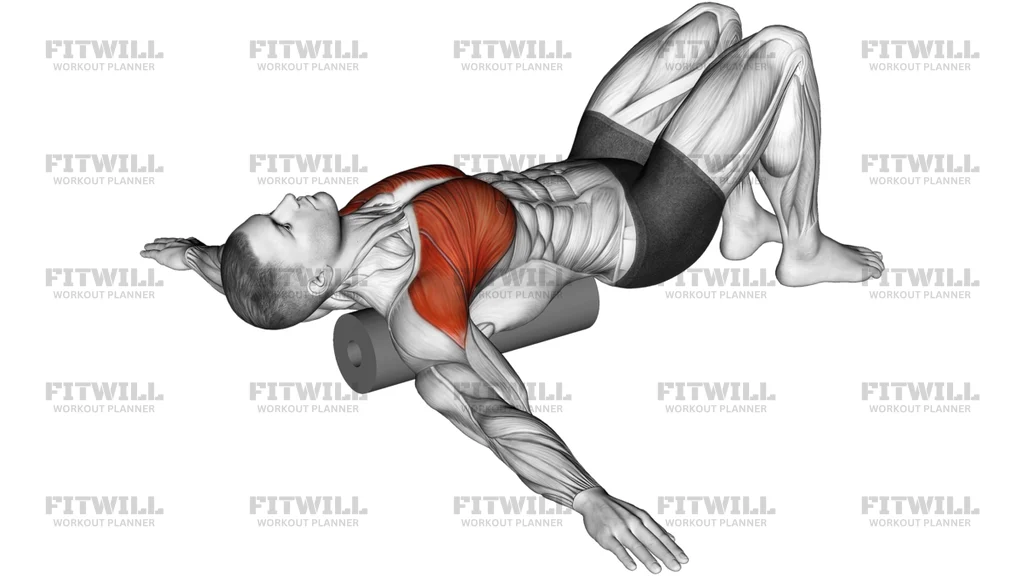
Instructions
- Place a foam roller on the floor and lie back so it sits across your mid-to-upper back, just below the shoulder blades.
- Bend both knees, keep both feet flat on the floor, and let your hips rest heavy without arching your lower back.
- Support your head on the floor or a thin mat, then open both arms out to the sides with your palms facing up.
- Take a light brace through the abs so your ribs do not flare as you settle onto the roller.
- Inhale slowly and let your chest broaden over the roller without pushing your neck into extension.
- Exhale and relax the shoulders toward the floor so the front of the chest can open.
- If the exercise calls for movement, make only small controlled rolls a few centimeters up or down the upper back.
- Hold the open position or repeat the small roll for the planned time or number of breaths, then sit up carefully to finish.
Tips & Tricks
- Keep the roller on the thoracic spine, not the lower back, so the opener stays in the chest and upper back.
- Use a thin mat or towel under your head if the floor position makes your neck feel too extended.
- Palms-up arms usually feel more open through the chest than palms-down hands.
- If the shoulders feel crowded, bend the elbows a little and lower the arms less aggressively.
- A longer exhale often deepens the opening more safely than forcing the ribs down with pressure.
- Do not chase a bigger backbend by flaring the ribs; that shifts the stress into the lumbar spine.
- Small position changes matter more than large rolling distances on this drill.
- Stop if you get sharp pinching in the front of the shoulder or tingling in the arms.
Frequently Asked Questions
What does Roll Chest Opener Lying On Floor work most?
It mainly opens the pectorals, front shoulders, and upper thoracic spine.
Can beginners perform this exercise?
Yes. It is beginner-friendly as long as the roller placement is gentle and the range stays pain-free.
Where should the foam roller sit on my back?
Place it across the mid-to-upper back, usually just below the shoulder blades, so the lower back does not take over.
Should I feel this more in my chest or my lower back?
You should feel the opening across the chest and front of the shoulders, not a strong arch in the lower back.
Do I need to roll a long distance up and down the floor?
No. Small controlled rolls are usually enough; the purpose is position and opening, not covering distance.
Why are my arms opened out to the sides in this exercise?
That arm position helps expose the chest and anterior shoulder line so the stretch lands where it should.
How long should I stay in the opener?
A short hold of 20 to 60 seconds or a few slow breaths is usually enough before resetting.
What should I do if the roller feels too intense?
Use a thinner support, move the roller slightly higher or lower, or reduce how far the arms sink toward the floor.