Shoulder Adductor Elevator And Protractor Stretch
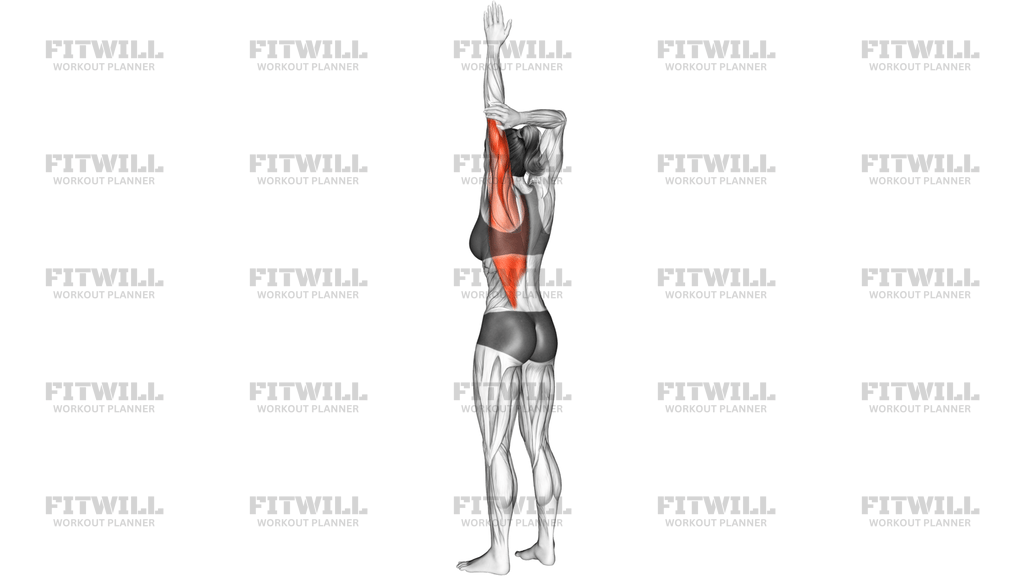
Shoulder Adductor Elevator And Protractor Stretch is a standing shoulder mobility drill that lengthens the back of the upper arm, the shoulder, and the upper back while teaching you to control the arm position overhead. It is most useful before pressing, overhead work, climbing, throwing, or any session where the shoulders need to move freely without the rib cage flaring or the neck tightening.
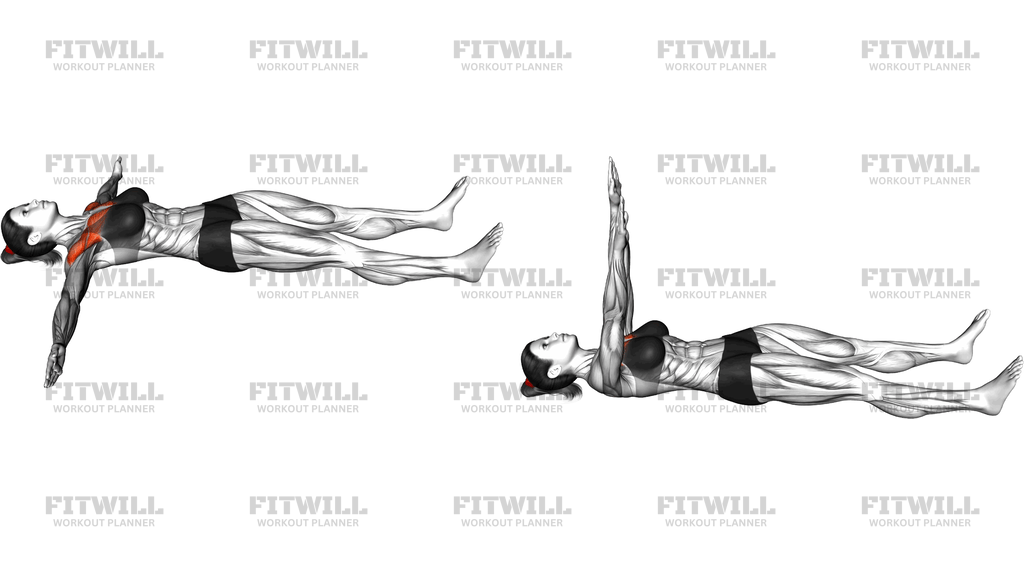
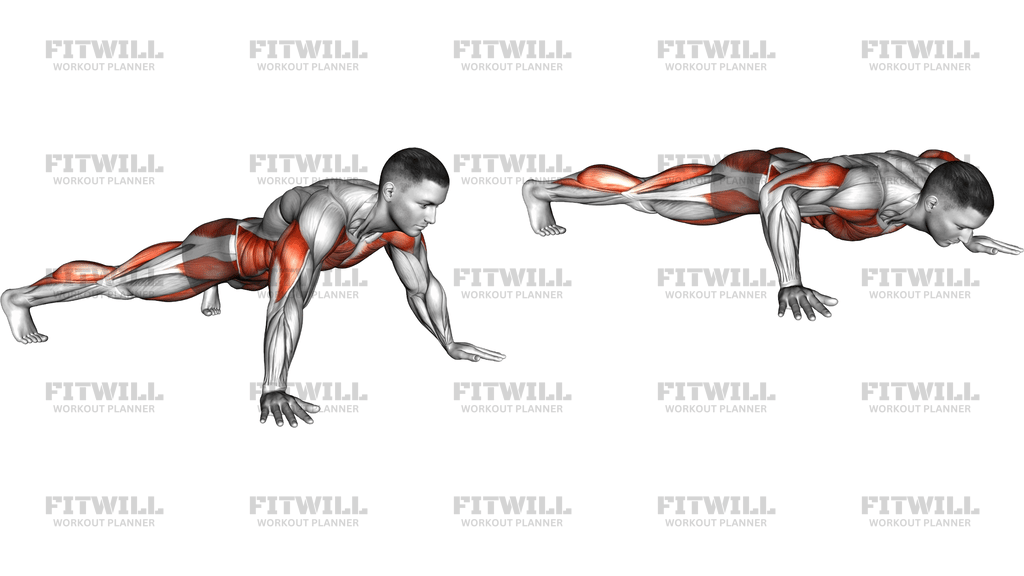
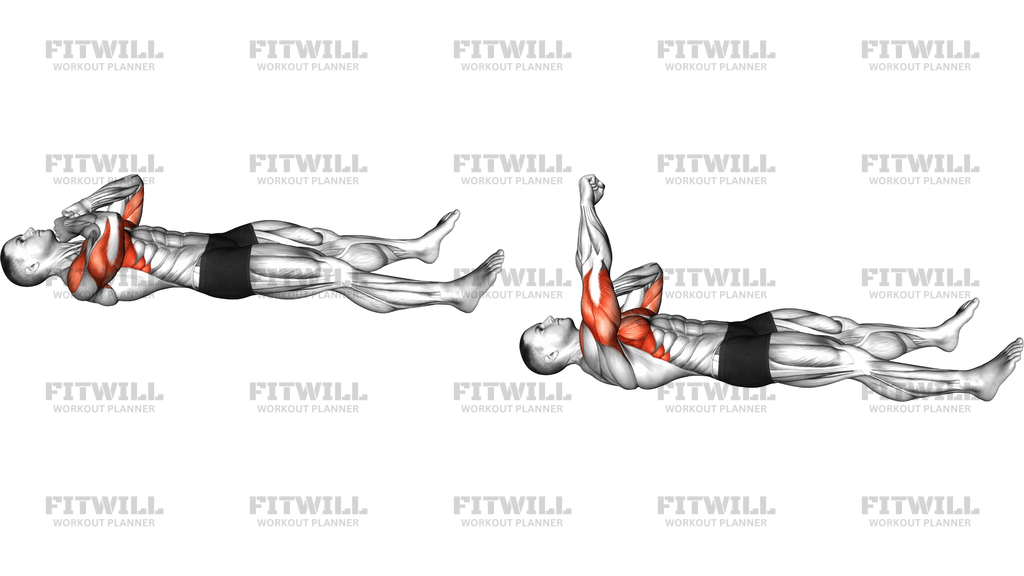
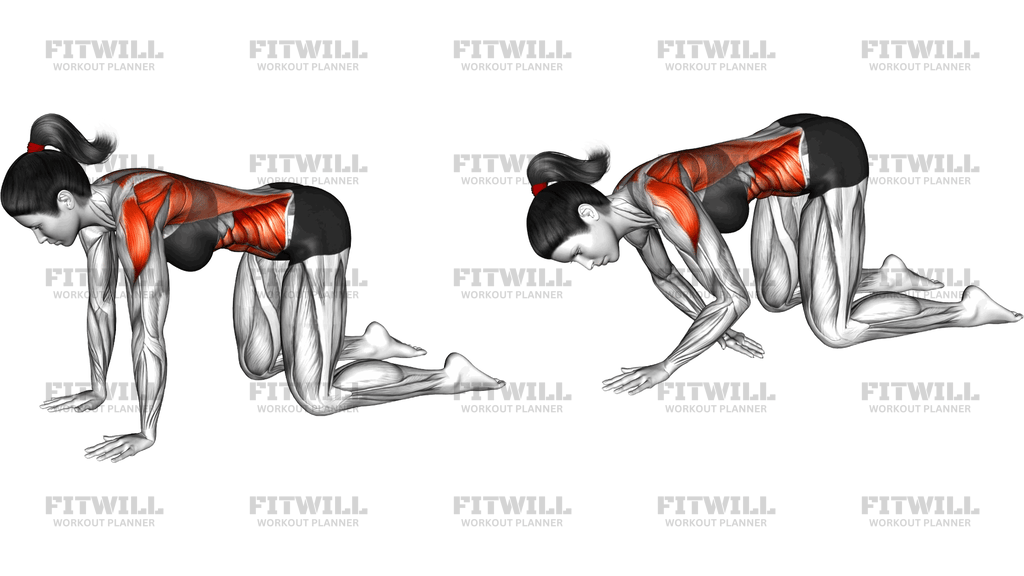
The stretch is usually performed with one arm raised overhead and bent so the elbow points up, then the opposite hand assists the arm into a deeper position. That setup matters because the shoulder blade, upper arm, and rib cage all have to stay organized together; if you twist or arch, the stretch moves out of the shoulder and into the low back. The image shows a tall standing position with the torso stacked and the free hand guiding the working arm rather than yanking it.
You should feel the stretch build gradually through the triceps, the back of the deltoid, and the side of the upper back or lats, depending on how high the elbow sits and how far the arm is brought across. Breathe out as you settle into the position and keep the neck soft so the upper traps do not take over. The goal is a calm, steady lengthening sensation, not a forced end range or a sharp pinch at the front of the shoulder.
Shoulder Adductor Elevator And Protractor Stretch works well in warm-ups, mobility blocks, recovery sessions, or as a reset between pressing sets when the shoulders feel stiff. It is a low-load movement, so the quality comes from the angle of the elbow, the position of the ribs, and the amount of assistance you use. Keep the motion smooth, stay in a pain-free range, and back off immediately if the shoulder feels compressed rather than opened up.
[ Workout Log & Planner ]
Put your next workout in Fitwill
Keep your plan and training log ready when you are.


Instructions
- Stand tall with your feet hip-width apart and stack your ribs over your pelvis.
- Raise one arm overhead and bend that elbow so the forearm drops behind your head.
- Reach the opposite hand to the working elbow or upper arm and take a light hold.
- Keep the lifted elbow pointing up while the chest stays square and the neck stays long.
- Gently draw the elbow slightly across and forward until you feel a stretch through the shoulder and upper arm.
- Breathe out slowly and let the shoulders soften instead of shrugging harder.
- Hold the end position without bouncing or twisting your torso.
- Release the arm back overhead under control, then repeat on the other side.
Tips & Tricks
- If your lower back arches when you pull the elbow, shorten the range and bring your ribs back down.
- Keep the free hand light; this stretch should guide the arm, not crank it into position.
- A mild stretch in the triceps and rear shoulder is expected, but a sharp pinch at the front of the shoulder means the elbow is too high or the pull is too aggressive.
- Let the shoulder blade glide forward naturally instead of pinning it back and down.
- Keep the head neutral and avoid jutting the chin forward to chase more range.
- If the stretch feels cramped, move the elbow a few degrees lower and breathe into the side of the rib cage.
- Hold each side long enough to settle, then switch rather than bouncing through repeated short pulses.
- Use this as a reset before overhead pressing or pulling only if the shoulder feels better after the hold, not more irritated.
Frequently Asked Questions
What does Shoulder Adductor Elevator And Protractor Stretch target most?
It mainly targets the deltoids and the back of the upper arm, with the upper back and triceps helping create the stretch.
Can beginners perform this exercise?
Yes. Beginners usually do best with a gentle hold and a small range so the shoulder stays comfortable and the ribs do not flare.
Where should I feel the stretch in Shoulder Adductor Elevator And Protractor Stretch?
Most people feel it in the triceps, rear shoulder, and side of the upper back. If you feel it mostly in the neck, relax the shoulder and lower the elbow a little.
Should my torso twist during Shoulder Adductor Elevator And Protractor Stretch?
No. Keep the chest facing forward and let the arm position change instead of rotating the whole body to fake more range.
Why is my lower back arching during this stretch?
That usually means the elbow is too high or the hold is too aggressive. Bring the ribs down, soften the knees, and use a lighter pull.
Is Shoulder Adductor Elevator And Protractor Stretch useful before overhead pressing?
Yes, if it leaves the shoulder feeling looser and more comfortable. It is a good choice when the overhead position feels stiff through the triceps and shoulder.
What should I do if I feel a pinch in the front of the shoulder?
Reduce the arm angle, ease off the pull, or stop the stretch altogether. A pinch is not the same as a productive lengthening feeling.
Do I need the exercise mat for Shoulder Adductor Elevator And Protractor Stretch?
No, the movement is normally done standing. A mat can help only if you prefer a softer surface under your feet.