Rotation Shoulder Stretch
Rotation Shoulder Stretch is a standing wall-based mobility drill for the shoulders and upper chest. It uses body weight and a fixed hand position on the wall to create a controlled rotation stretch through the front and side of the shoulder, with the delts taking most of the load and the upper back helping you stay organized.
The setup matters because the wall gives you a clear anchor point. With the working hand at about shoulder height, the elbow slightly bent, and the feet staggered for balance, you can rotate the torso away from the wall without turning the stretch into a sloppy twist. That makes it useful before pressing, throwing, overhead work, or any session where the shoulder needs to move cleanly.
The goal is not to force a huge range. You should feel a smooth stretch through the shoulder capsule, chest, and upper arm while the ribs stay stacked and the neck stays long. If the shoulder hikes up toward the ear, the low back arches, or the hand slides, the stretch is usually too aggressive or the stance is too narrow.
To perform it well, keep the arm fixed on the wall and let the body rotate away in a slow, even arc. Exhale as you move deeper, then pause briefly at the end range without bouncing. The return should be just as controlled as the turn-in, especially if you are repeating both sides for symmetrical mobility.
Use this stretch in a warm-up, cooldown, or mobility block when you want a simple shoulder-opening pattern with a clear end position. It is friendly for beginners as long as the range stays pain-free and the rotation comes from the torso and shoulder, not from cranking the wrist or twisting through the lower back.
[ Workout Log & Planner ]
Put your next workout in Fitwill
Keep your plan and training log ready when you are.


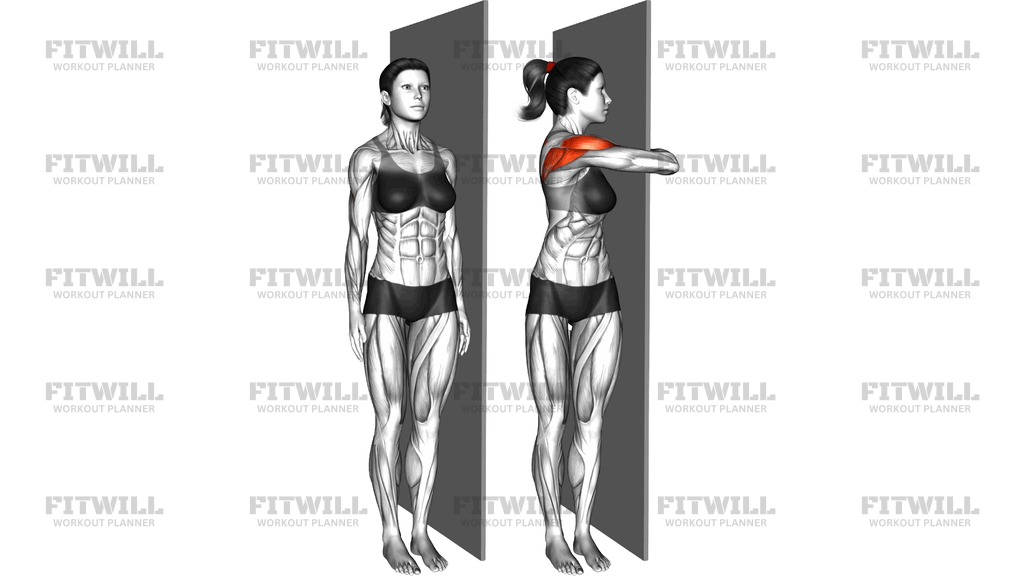
Instructions
- Stand beside a wall and place the working hand on it at about shoulder height.
- Keep the elbow softly bent, the shoulder down, and the palm or fingers set flat and steady.
- Stagger your feet so you can balance without leaning into the wall.
- Brace lightly through the ribs and keep the neck long before you rotate.
- Slowly turn your torso away from the wall until you feel a stretch through the front and side of the shoulder.
- Keep the hand fixed in place and do not let the shoulder shrug toward the ear.
- Hold the stretched position briefly while breathing out smoothly.
- Return to the start position with control instead of snapping back.
- Repeat on the other side if you are training both shoulders.
Tips & Tricks
- A staggered stance makes it easier to rotate without drifting into the wall.
- Keep the working shoulder depressed; shrugging usually turns the stretch into neck tension.
- If the front of the shoulder pinches, reduce the turn and keep the elbow slightly lower.
- Exhale as you rotate away from the wall to help the chest and shoulder relax.
- The hand should stay planted; sliding it changes the line of pull and reduces control.
- Do not twist hard through the lower back just to get more range.
- A mild stretch is the goal; sharp pain or joint clicking is a sign to back off.
- Use the same foot position on both sides so you can compare range evenly.
- Longer holds work better than bouncing for this kind of shoulder mobility drill.
Frequently Asked Questions
What does Rotation Shoulder Stretch target most?
It primarily targets the delts while also opening the front of the shoulder and upper chest.
Can beginners perform this exercise?
Yes. Beginners usually do best with a smaller rotation and a steady hand position on the wall.
Where should I feel the stretch on the wall setup?
You should feel it in the front and side of the shoulder, with some opening through the chest and upper arm.
Should the hand stay fixed on the wall?
Yes. Keeping the hand planted gives you a stable anchor so the torso rotation creates the stretch instead of the hand sliding.
Why are the feet staggered?
A staggered stance gives you balance and makes it easier to rotate away from the wall without losing posture.
What is the most common mistake?
Shrugging the shoulder up or twisting too hard through the low back instead of keeping the rotation controlled.
Is this better before or after training?
It works well in a warm-up before pressing or overhead work, and it also fits in a cooldown or mobility block.
Can I use this if my shoulder feels tight after desk work?
Yes, if the stretch is pain-free. Use a smaller range and keep the ribs and neck relaxed.