Rotator Cuff Stretch
Rotator Cuff Stretch is a standing cross-body shoulder stretch used to open the back of the shoulder and the tissues around the rotator cuff. In the image, one arm is drawn across the chest while the other hand supports and pulls at the upper arm, which makes this more of a self-assisted mobility drill than a strength exercise. The goal is to create a gentle, repeatable stretch through the rear shoulder without twisting the torso or cranking on the joint.
This movement is useful when the shoulder feels tight after pressing, throwing, overhead work, or long periods of desk posture. The stretch is felt mostly in the rear deltoid and posterior shoulder capsule, with the rotator cuff muscles helping stabilize the joint as you hold position. Because the shoulder is a small, complex joint, the setup matters: if the rib cage rotates, the neck tightens, or the shoulder hikes toward the ear, the stretch shifts away from the target area and becomes less useful.
Start tall, keep the chest stacked over the pelvis, and draw the working arm across the body at about chest height. The opposite hand should guide the arm from above or just behind the elbow so the pull stays broad and controlled rather than sharp. You should feel a firm but tolerable stretch along the back of the shoulder and upper arm. If the stretch moves into the front of the shoulder, the hand position is probably too aggressive or the arm is crossing too high.
Hold the end position with calm breathing and a relaxed neck. Small adjustments often work better than forcing more range: lower the arm slightly, soften the grip, or let the shoulder blade settle before adding time. The best reps are smooth and consistent, with no bouncing and no pain. This makes the stretch appropriate for warm-ups, cool-downs, and recovery sessions when you want to restore shoulder comfort and maintain usable range of motion.
Use Rotator Cuff Stretch when you need a simple standing mobility drill that can be repeated on both sides with minimal setup. It is especially helpful if one shoulder sits higher, one side feels tighter after training, or overhead positions feel restricted. Keep the movement pain-free and controlled; the objective is to improve shoulder position and comfort, not to force the arm farther across the body than the joint can handle well.
[ Workout Log & Planner ]
Put your next workout in Fitwill
Keep your plan and training log ready when you are.


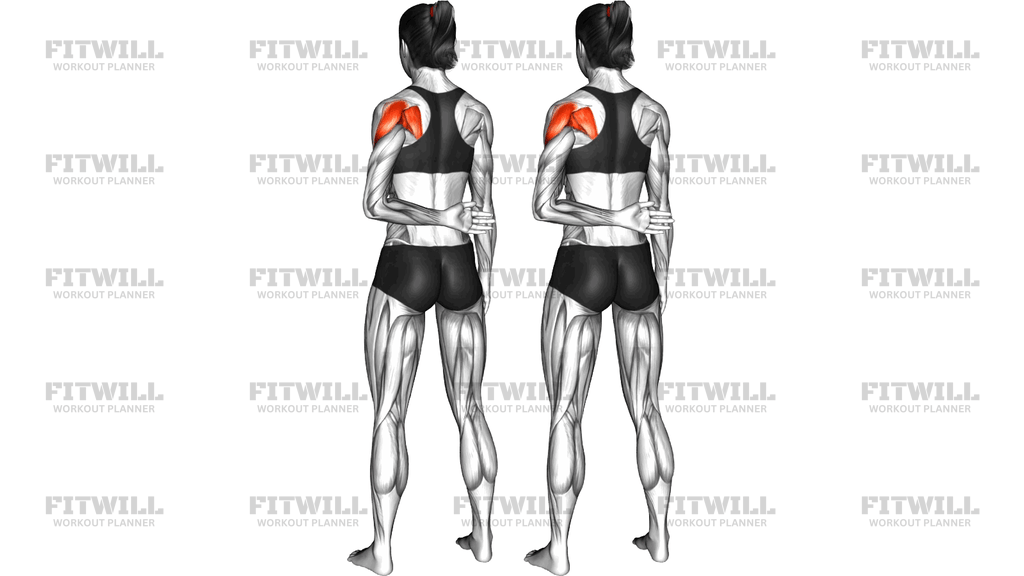
Instructions
- Stand tall with your feet about hip-width apart and your shoulders relaxed.
- Bring one arm straight across your chest at roughly shoulder height or slightly lower.
- Use the opposite hand to hold the upper arm or just above the elbow, not the wrist.
- Gently draw the arm closer to your chest until you feel a stretch in the back of the shoulder.
- Keep both shoulders level and avoid turning your torso toward the pulling arm.
- Let the neck stay long and the stretched shoulder stay down instead of shrugging up.
- Breathe slowly and hold the stretch for the planned time without bouncing.
- Release the arm back to center with control, then repeat on the other side.
- If the stretch feels sharp or pinchy in the front of the shoulder, reduce the range immediately.
Tips & Tricks
- A lower arm position usually targets the back of the shoulder better than pulling the elbow high across the chest.
- Keep the pull gentle; this stretch works best when the shoulder feels long, not forced.
- If your torso is twisting, you are likely borrowing range from the spine instead of stretching the shoulder.
- Holding the upper arm gives you better leverage than grabbing the wrist and yanking the arm inward.
- Let the shoulder blade settle down and back slightly instead of shrugging toward the ear.
- Use slow nasal breathing or long exhales to help the rear shoulder relax into the hold.
- The stretch should stay in the back of the shoulder or upper arm, not deep in the front of the joint.
- Switch sides evenly so one tighter shoulder does not get extra attention while the other is ignored.
- If you feel numbness, tingling, or a sharp pinch, stop and shorten the range.
Frequently Asked Questions
What does Rotator Cuff Stretch target most?
It mainly targets the back of the shoulder, especially the rear deltoid and the rotator cuff area around the joint.
How do I know I am doing the cross-body stretch correctly?
You should feel a steady stretch across the back of the shoulder while your chest stays square and your neck stays relaxed.
Should I pull from the elbow or the wrist?
Pull from the upper arm or just above the elbow so the stretch stays controlled and the shoulder joint is not yanked inward.
Why does this stretch sometimes feel more like the upper arm than the shoulder?
The posterior shoulder and upper arm share tension, so it is normal to feel part of the stretch along the outside of the arm as well.
Can I do this if one shoulder is tighter than the other?
Yes. Work both sides separately and let the tighter side hold a little longer, but do not force the arm farther across the body.
What is the most common mistake with this stretch?
The most common mistake is twisting the torso or pulling too hard, which turns the movement into a whole-body rotation instead of a shoulder stretch.
Is this exercise useful before overhead pressing?
Yes, a light version can help restore shoulder comfort, but keep the hold brief and avoid aggressive end-range stretching right before heavy lifts.
What should I do if I feel a pinch in the front of the shoulder?
Back off the range, lower the arm slightly, and use a softer pull. A front-shoulder pinch usually means the joint is being taken too far.