Depression In Parallel Bars Stretch
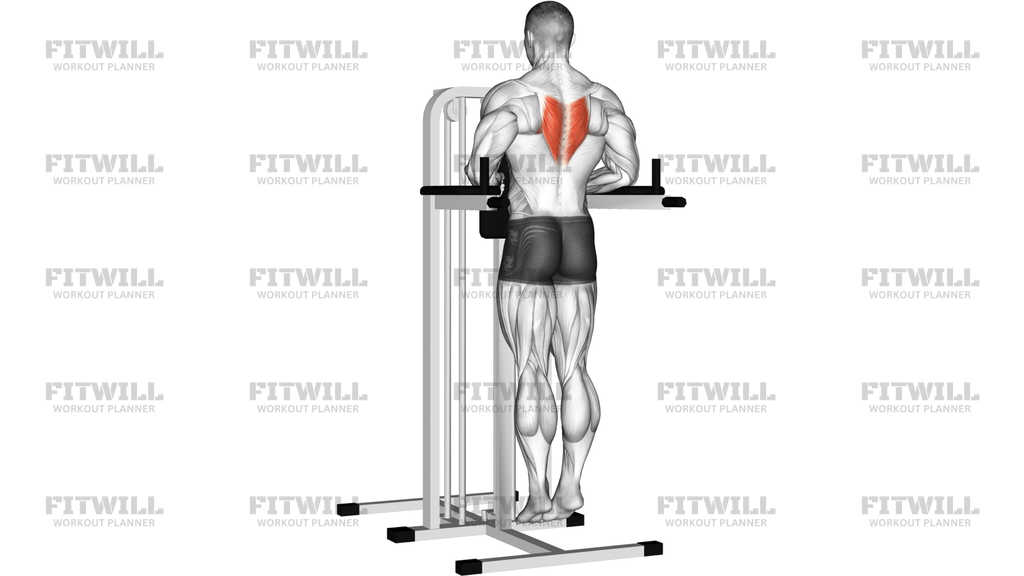
Depression In Parallel Bars Stretch is a supported shoulder-depression drill performed on parallel bars or a dip station. In the pictured position, your hands support your body while the shoulders stay actively drawn down away from the ears, creating a controlled stretch and activation effect through the lats, lower traps, and other upper-back stabilizers. It is less about moving through a big range and more about holding a clean stacked position under bodyweight.
The setup matters because small changes in bar width, hand placement, and foot support change how much load the shoulders and wrists have to carry. Use a grip that lets the elbows stay long, the wrists stay stacked, and the neck remain relaxed. If the bars are too narrow or too wide, the stretch can shift from useful upper-back work to a stressful shoulder position. A light foot assist is fine when you are learning the pattern.
As you settle into the support, think about pressing the bars down while your shoulders slide lower in the sockets. Keep the chest tall without flaring the ribs, and avoid letting the torso swing or the low back overarch. The target feeling should be a steady lengthening through the sides of the upper back and under the arms, with enough active tension to keep the position organized and safe.
This movement is useful in warm-ups, shoulder-prep sessions, posture work, and accessory blocks where you want controlled scapular depression rather than a dynamic press or dip. Beginners can use it with their feet helping on the floor or platform and short holds. If you feel sharp pain at the front of the shoulder, reduce load and range, because the best version of this exercise feels stable, quiet, and repeatable instead of forced.
[ Workout Log & Planner ]
Put your next workout in Fitwill
Keep your plan and training log ready when you are.


Instructions
- Stand between the parallel bars and place your hands on the rails just wider than shoulder width.
- Step onto the platform or lightly support yourself with the feet so your arms carry only the amount of load you can control.
- Straighten the elbows, stack the wrists under the hands, and keep the neck long.
- Lift the chest slightly and pull the shoulders down away from the ears before you hold the position.
- Keep the ribs from flaring and avoid turning the motion into a low-back arch.
- Hold the depressed shoulder position for the target time while breathing slowly and evenly.
- Let the shoulders rise only a little on the release, then settle back down without bouncing.
- Step down carefully and reset before repeating the next hold.
Tips & Tricks
- Use the bar width that lets your elbows stay long and your shoulders feel open, not jammed.
- If the front of the shoulder pinches, keep some foot support instead of hanging fully on the arms.
- Think about sliding the shoulders into your back pockets rather than forcing the chest forward.
- Keep pressure spread through the whole hand so the wrists do not collapse backward on the rails.
- A short, clean hold is better than a long shrugging hold that loses the shoulder position.
- Exhale slowly to help keep the ribs down and the upper back organized.
- You should feel steady tension in the lats and lower traps, not pain in the shoulder joint.
- If one shoulder climbs higher than the other, shorten the hold and reset before continuing.
Frequently Asked Questions
What does Depression In Parallel Bars Stretch work?
It primarily trains shoulder depression and upper-back control through the lats, lower traps, and supporting stabilizers.
Is this more of a stretch or a strength drill?
It is both: the bars create a supported stretch while your shoulder girdle works to keep the body organized.
Should my elbows stay straight on the bars?
Yes, keep them long and only soften them slightly if you need to reduce stress at the wrists or shoulders.
Can beginners do this exercise?
Yes, beginners can use foot support and short holds until they can control the shoulder position without shrugging.
What should I feel in the parallel bars position?
You should feel a firm grip, a tall stacked torso, and a controlled stretch through the sides of the upper back and under the arms.
Why do my traps take over during the hold?
Usually the shoulders are drifting back up toward the ears. Reduce load, breathe out, and reset the depressed position.
How can I make this easier?
Keep more weight on the feet, shorten the hold, and use a grip width that feels stable and pain-free.
When should I stop the set?
Stop if you feel sharp shoulder pain, neck tension, or a loss of control that causes the torso to swing or arch.