External Shoulder Rotation Stretch
External Shoulder Rotation Stretch is a bench-supported shoulder mobility drill for opening the front of the shoulder and teaching the arm to relax into external rotation without losing control of the rib cage. In the pictured setup, you lie on your back with one arm supported out to the side and the elbow bent, then you slowly let the forearm travel backward until you feel a clear stretch rather than a pinch. The exercise is simple, but the exact setup matters because a small change in shoulder angle, elbow position, or torso position can make the stretch feel very different.
The main purpose is to improve shoulder rotation tolerance and mobility around the rotator cuff, front delt, and surrounding tissues so pressing, overhead reaching, throwing, and upper-body warmups feel smoother. It is not about forcing the biggest possible range. It is about letting the shoulder open gradually while the upper arm stays anchored and the rest of the body stays quiet. That makes it useful before training, after upper-body sessions, or as part of a shoulder-friendly mobility routine.
A good repetition begins with the shoulder blade and upper arm settled against the bench. From there, the forearm rotates backward under control until the stretch lands in the front of the shoulder or chest. If the elbow floats, the ribs flare, or the shoulder rolls forward off the bench, the stretch stops being specific and starts becoming compensation. The best version feels smooth, measured, and repeatable from side to side.
Use a lighter, calmer approach if the shoulder is already irritated or if overhead positions usually feel tight. You should never chase a sharp pinch in the front of the joint. The goal is a manageable stretch, a steady breath, and enough control to come out of the position the same way you entered it. Done well, this stretch is a small but useful way to restore shoulder rotation without turning the neck, low back, or upper traps into the limiter.
[ Workout Log & Planner ]
Put your next workout in Fitwill
Keep your plan and training log ready when you are.


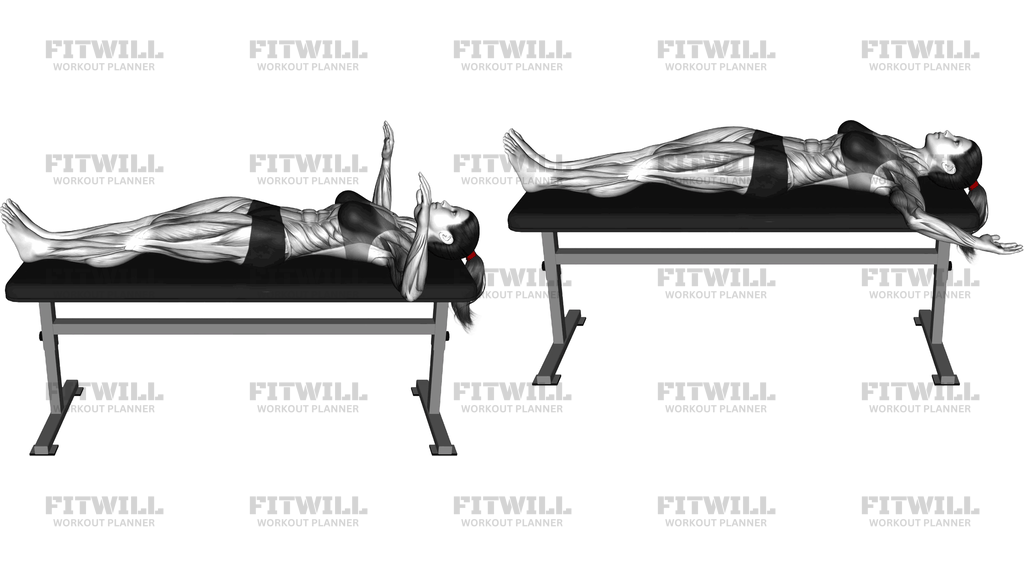
Instructions
- Lie face up on a flat bench with your head and shoulder blades supported.
- Set one upper arm out to the side at shoulder height and bend the elbow to about 90 degrees.
- Keep the opposite arm relaxed and let the working shoulder stay heavy against the bench.
- Brace gently through your ribs so your lower back does not arch as you move.
- Slowly let the forearm rotate backward until you feel a mild stretch in the front of the shoulder or chest.
- Keep the upper arm in contact with the bench and stop if the shoulder starts to roll forward or pinch.
- Breathe out slowly while you settle into the stretch, then take calm breaths without forcing deeper.
- Hold briefly, then reverse the motion with control and return the forearm to the start position.
- Repeat on the other side with the same bench position and the same amount of range.
Tips & Tricks
- A flat bench gives the shoulder a stable base; if the bench edge is too high on the upper arm, slide down until the shoulder can settle.
- Keep the elbow near shoulder height instead of letting it drift up or down, because that changes the stretch from the shoulder capsule to the upper arm.
- If the front of the shoulder pinches, reduce the rotation range first before changing anything else.
- Let the ribs stay down so the stretch comes from the shoulder instead of a low-back arch.
- A slow exhale usually helps the forearm settle farther than forcing it with extra pressure.
- Do not press the hand toward the floor; let the arm open only as far as the joint can comfortably accept.
- Compare both sides, because one shoulder often feels tighter or sits differently on the bench.
- This should feel like a controlled mobility drill, not a max-effort hold or a painful crank.
Frequently Asked Questions
What does External Shoulder Rotation Stretch target most?
It mainly opens the front of the shoulder and loads the rotator cuff position around external rotation, with the front delt and nearby chest tissues usually feeling the stretch first.
Where should I feel the stretch on the bench?
Most people feel it in the front of the shoulder, sometimes with a gentle line into the upper chest or front delt. It should not feel like a sharp pinch deep in the joint.
Why does the upper arm need to stay on the bench?
Keeping the upper arm supported isolates the shoulder rotation. If the arm lifts off the bench, the torso usually starts helping and the stretch loses specificity.
Can beginners use External Shoulder Rotation Stretch?
Yes. Beginners should use a small range, slow breathing, and a bench position that feels stable rather than trying to force the arm farther back.
What is the most common mistake?
The biggest mistake is arching the lower back or rolling the shoulder forward to fake more range. That usually turns the stretch into compensation.
How long should I hold the stretch?
A short, calm hold is usually enough for mobility work. Hold only long enough to breathe, settle the position, and keep the shoulder feeling smooth.
Is this a good warmup before pressing or overhead work?
Yes, if you keep it light and avoid forcing end range. It can help the shoulder settle into a cleaner rotation before benching, overhead pressing, or throwing.
What should I do if the stretch causes a pinch in the shoulder?
Reduce the range immediately, lower the elbow angle slightly if needed, and keep the ribs down. Sharp pinching is a sign to back off rather than push through.