Hip Thrusts
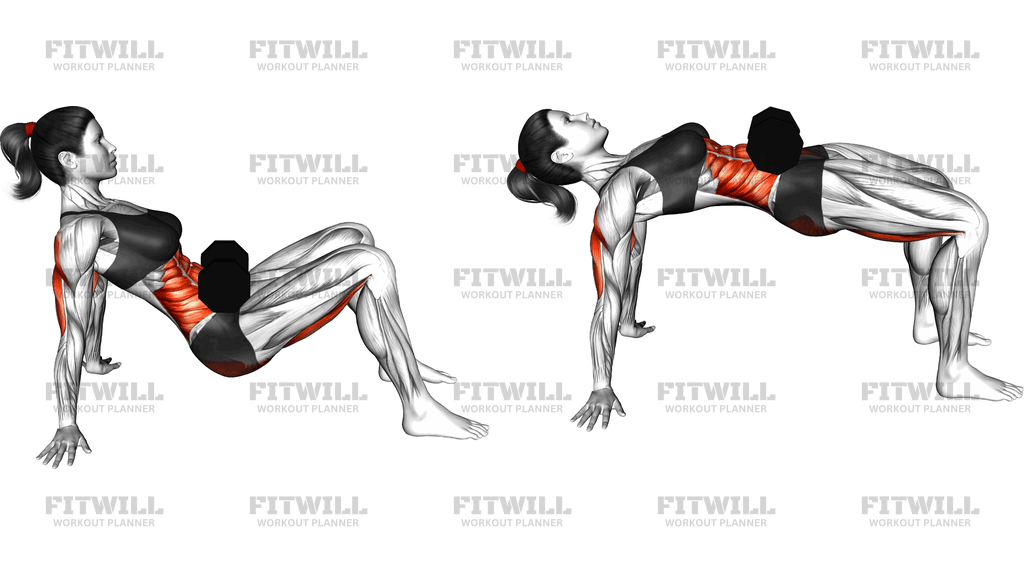
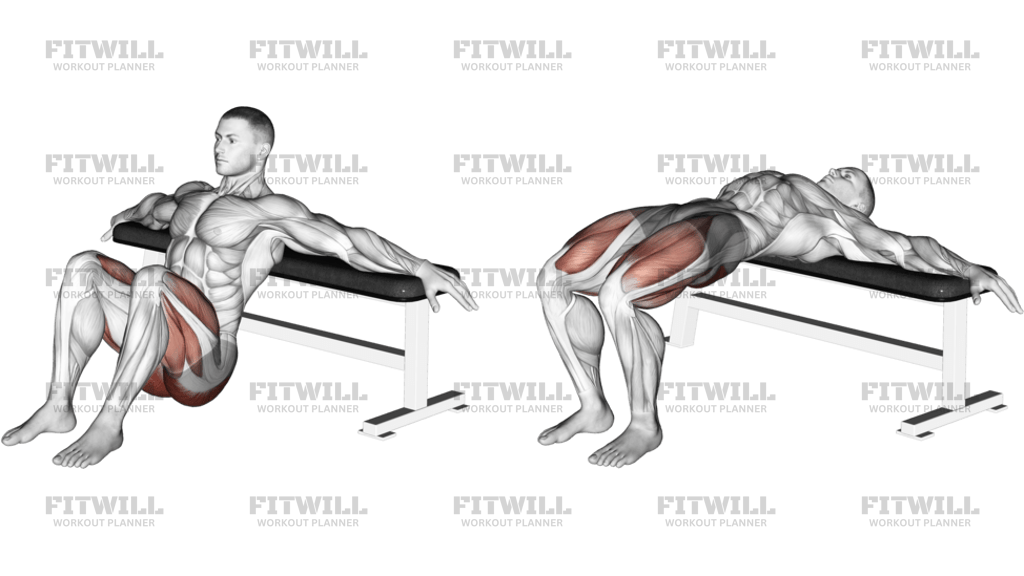
Bodyweight Hip Thrusts are a bench-supported glute exercise built around hip extension. The image shows the upper back resting on a bench, the feet planted on the floor, and the torso moving from a seated, bent-knee position into a straight line from shoulders to knees. That setup matters because it lets you load the hips without turning the movement into a low-back arch or a bouncing bridge.
This version uses body weight only, so the challenge comes from clean positioning, a strong lockout, and controlled tempo. The main job is to drive the hips upward by squeezing the glutes, while the hamstrings, core, and upper back help stabilize the torso and keep the ribs from flaring. When done well, the rep should feel like the pelvis is rising and lowering as one unit, not the chest leading or the lower back cranking into extension.
The exercise is useful when you want to train the glutes directly, reinforce hip extension for sports and lifting, or add posterior-chain work without heavy spinal loading. It also makes a good beginner-friendly progression before adding a barbell, dumbbell, or band. Because the movement is simple on paper but easy to cheat, small setup details such as foot distance, bench contact, and chin position strongly affect where the work goes.
Perform each rep by starting from a stable seated setup, bracing before the drive, and finishing with the hips fully extended while the ribs stay down. Lower under control until the hips are back near the floor, then reset before the next rep. If you feel the lower back taking over, shorten the range slightly and reorganize the top position rather than forcing a higher lift. The goal is repeatable glute tension, not extra height.
[ Workout Log & Planner ]
Put your next workout in Fitwill
Keep your plan and training log ready when you are.


Instructions
- Sit on the floor with your upper back resting across the edge of a flat bench and your knees bent, feet flat and about hip-width apart.
- Slide your shoulder blades onto the bench so your torso can hinge freely, then place your hands on the bench for balance.
- Set your feet so your shins are close to vertical at the top of the rep; adjust them before you start the set.
- Tuck your chin slightly and brace your midsection so your ribs stay down as you begin the drive.
- Press through your heels and lift your hips toward the ceiling until your shoulders, hips, and knees form one long line.
- Squeeze the glutes hard at the top without letting your lower back overarch or your ribs flare.
- Pause for a moment at lockout, then lower your hips in a smooth, controlled path until you are back near the floor.
- Reset your brace before the next rep and keep the same foot position, hip path, and breathing pattern throughout the set.
Tips & Tricks
- If you feel the move mostly in your lower back, stop the top position a little shorter and keep your ribs stacked over your pelvis.
- Place your feet so the shins are nearly vertical at lockout; feet that are too close tend to shift the work toward the quads, while feet that are too far away make the hamstrings dominate.
- Keep your eyes forward or slightly up, not back, so you do not crank your neck as the hips rise.
- Think about driving the bench away with your upper back and pressing the floor through your heels at the same time.
- Use a brief pause at the top to remove momentum and make each rep come from the glutes rather than a bounce.
- Do not let your knees cave inward as you lift; keep them tracking in line with your toes.
- Exhale as you drive up and let the breath reset on the way down so your brace stays consistent.
- If your shoulder blades slide around on the bench, reposition before the next rep instead of trying to save the set with extra speed.
Frequently Asked Questions
What muscles do bodyweight hip thrusts work most?
They primarily train the glutes, with the hamstrings and core helping stabilize the pelvis and torso.
How is a hip thrust different from a glute bridge?
A hip thrust uses the bench to let your torso travel through a larger range of motion, while a glute bridge is usually done with the upper back on the floor.
Where should the bench contact my back?
The bench should sit just below the shoulder blades so your upper back can pivot comfortably while your hips move freely.
Can beginners do this exercise safely?
Yes. Bodyweight hip thrusts are a good beginner option if you keep the setup controlled and avoid overextending the lower back at the top.
What is the most common mistake with this movement?
A frequent error is turning the top position into a low-back arch instead of a glute squeeze with the ribs kept down.
How do I know if my feet are in the right place?
At the top of the rep your shins should be close to vertical. If your knees are far forward or your heels are too far away, adjust your stance before continuing.
Should I pause at the top of each rep?
A short pause is useful because it removes bounce and makes the glutes finish the rep instead of momentum.
Can I make this harder without adding weight?
Yes. Slow the lowering phase, add a longer pause at lockout, or use a band around the knees if you want more glute tension.