Lever Cable Rear Pulldown
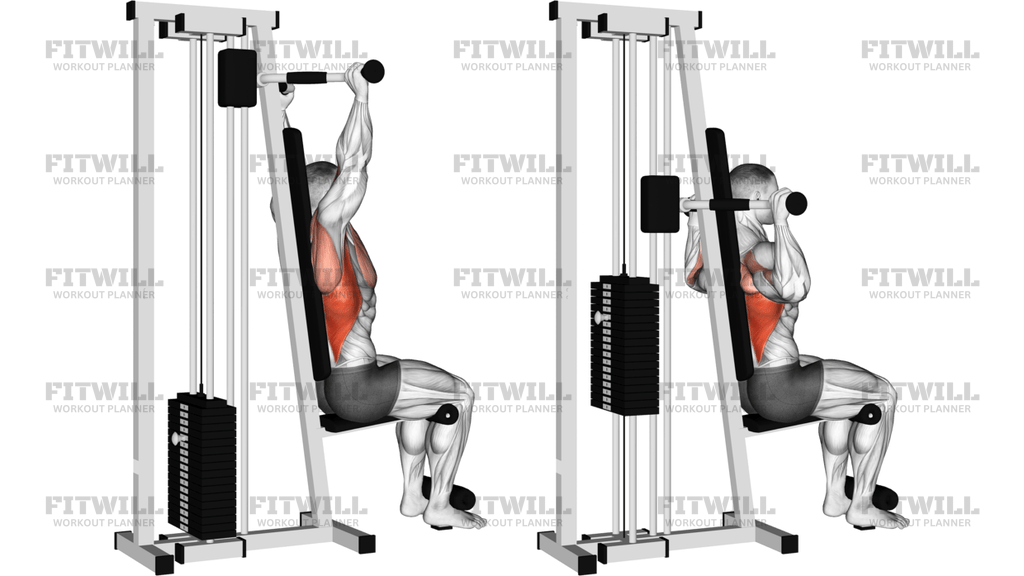
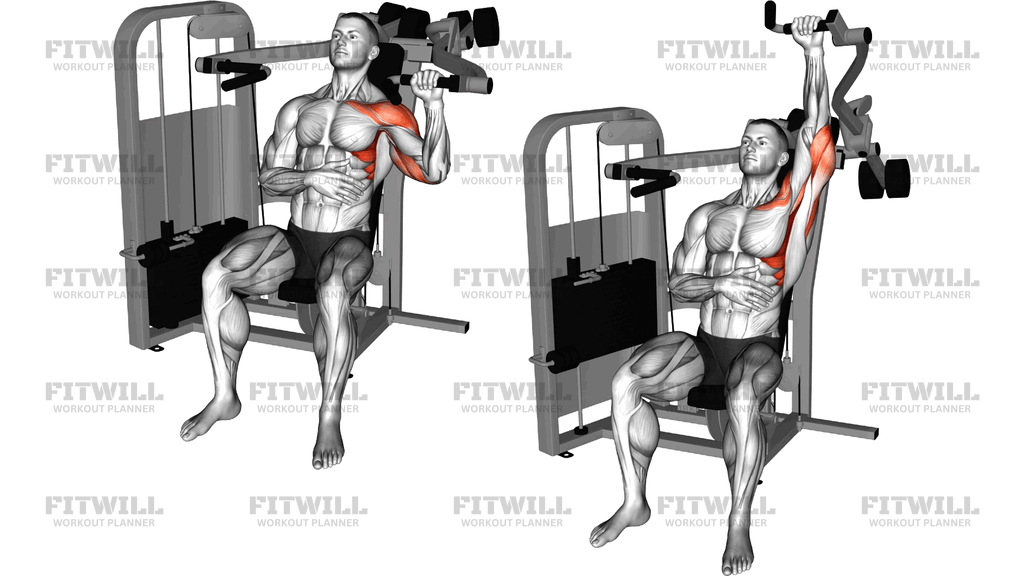
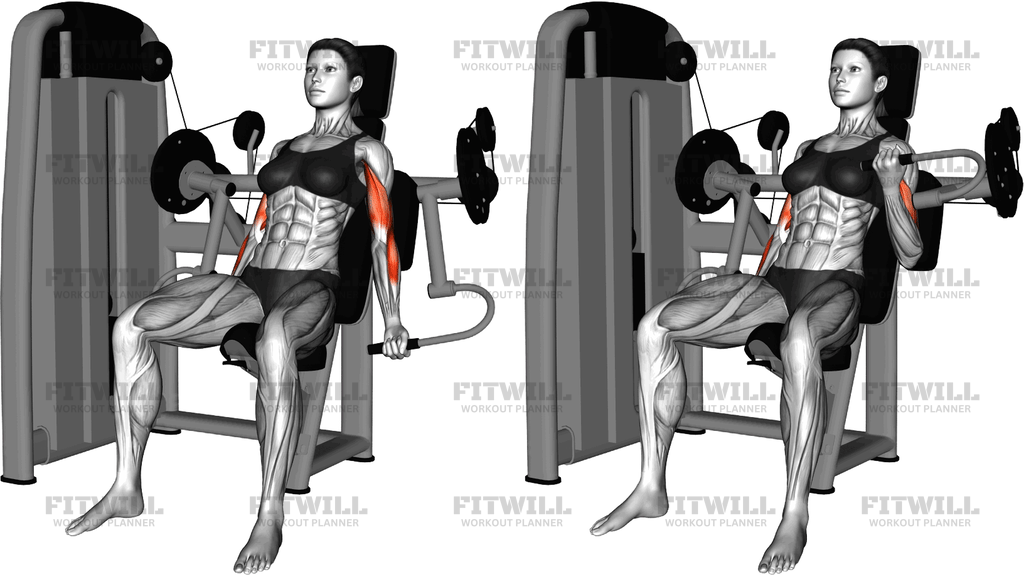
Lever Cable Rear Pulldown is a guided pulldown performed on a leverage machine with the thighs locked under the pads and the torso held tall. The image shows a seated, overhead pulldown path where the bar starts above the head and is drawn down in front of the face toward the upper chest. That guided path makes the exercise useful for building lat strength, upper-back control, and arm involvement without having to stabilize a free cable from scratch.
This movement is best thought of as a strict vertical pull. The machine fixes the path, so your job is to keep the body organized: feet planted, hips settled, ribs stacked, and shoulders moving smoothly instead of jerking. When the setup is right, the pulldown loads the sides of the back and the muscles around the shoulder blades while the biceps and forearms help finish the pull.
The starting position matters because it determines whether the repetition feels like a clean back exercise or a sloppy lean-back row. Set the seat so the thigh pad holds you down, then reach up to the bar with a comfortable overhand grip. From there, keep the neck long and the chest proud without over-arching the lower back. The pull should begin by driving the elbows down and slightly back, not by cranking the hands or shrugging the shoulders.
At the bottom, the bar should finish around the upper chest or collarbone area, depending on your shoulder mobility and the machine path. A brief squeeze is enough; there is no need to turn it into a heavy rear-delt shrug. On the way up, let the arms return under control until the elbows are again overhead and the lats are still engaged. The stack should never slam down or pull your torso forward.
Use Lever Cable Rear Pulldown as an accessory back movement, a machine-based strength builder, or a safer option when you want a repeatable pulldown pattern with less balance demand. It is appropriate for beginners when the load is light and the range stays pain-free, but it also works well for more advanced lifters who want strict lat tension without cheating. If the shoulders feel pinchy, shorten the range, slightly narrow the grip, or reduce the load until the movement stays smooth.
[ Workout Log & Planner ]
Put your next workout in Fitwill
Keep your plan and training log ready when you are.


Instructions
- Adjust the seat and thigh pads so your legs are locked in and the bar starts overhead.
- Sit tall with both feet flat, your hips settled on the bench, and your chest lifted without over-arching your low back.
- Take a slightly wider-than-shoulder-width overhand grip on the bar.
- Set your shoulders down away from your ears and brace your ribs before the first rep.
- Pull the elbows down and slightly back to bring the bar toward the upper chest.
- Keep the wrists neutral and avoid turning the pull into a body swing.
- Briefly squeeze at the bottom when the bar reaches the upper chest or collarbone line.
- Return the bar overhead under control until the arms are long again and the shoulders stay organized.
- Exhale as you pull and inhale on the controlled way up.
Tips & Tricks
- Keep the thigh pads snug enough that your hips do not pop up when the bar gets heavy.
- Think about driving your elbows toward your back pockets instead of yanking the bar with your hands.
- If you have to lean back hard to reach the upper chest, the load is too heavy or the grip is too wide.
- Let the shoulder blades move naturally, but do not shrug at the top of the pull.
- A controlled 2-3 second return usually keeps the lats under better tension than a fast drop.
- Stop the descent when the bar reaches the upper chest or collarbone line and the neck still feels relaxed.
- Keep the wrists stacked under the bar so the forearms do not take over the set.
- Use a grip width that lets your elbows travel down cleanly without pinching the front of the shoulders.
- If the rep turns into a triceps press or a row, reduce the load and keep the torso fixed.
Frequently Asked Questions
What muscles does Lever Cable Rear Pulldown work?
It mainly trains the lats, with help from the mid-back, rear shoulders, biceps, forearms, and the muscles that hold the shoulder blades in position.
Where should the bar finish on each rep?
For most lifters, the bar should land around the upper chest or collarbone line without forcing the shoulders forward.
Is this the same as a standard lat pulldown?
It is a similar vertical pulling pattern, but the leverage machine gives the exercise a fixed path and a more supported seated setup.
Can beginners use this machine safely?
Yes. Start with a light load, keep the thigh pads tight, and use a range that stays smooth and pain-free.
What is the most common form mistake?
The usual error is leaning back and turning the pulldown into a half-row instead of keeping the torso mostly fixed.
How wide should my grip be?
A slightly wider-than-shoulder-width grip usually works well, but it should still let your elbows travel down without shoulder pinching.
Should I pull the bar behind my head?
No. In this setup the bar should travel down in front of you, toward the upper chest, while your neck stays relaxed.
What should I do if my shoulders feel pinchy?
Shorten the range a little, reduce the load, and slightly narrow the grip until the pull feels smooth and shoulder-friendly.