Dumbbell Lying Extension Across Face
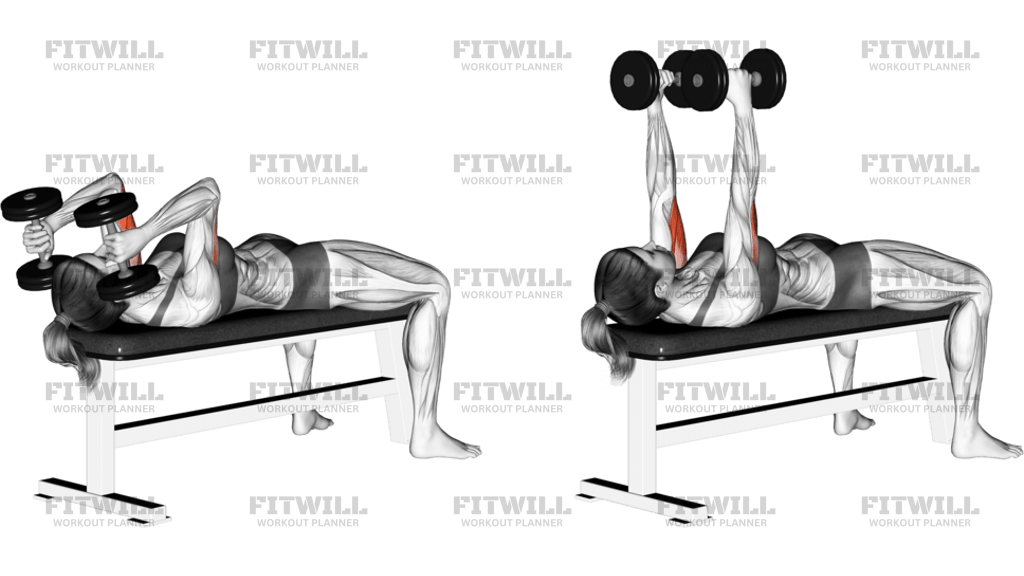
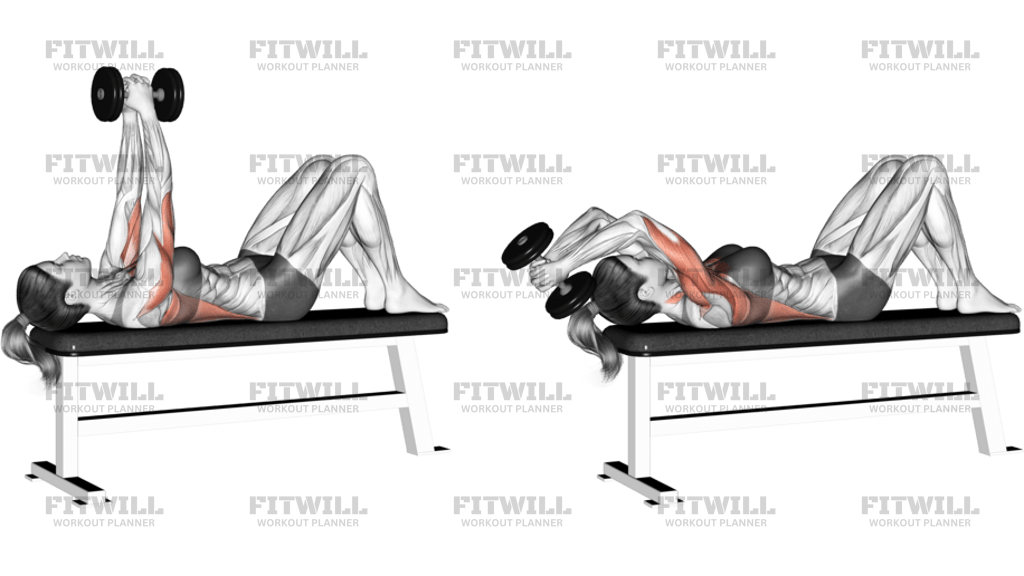
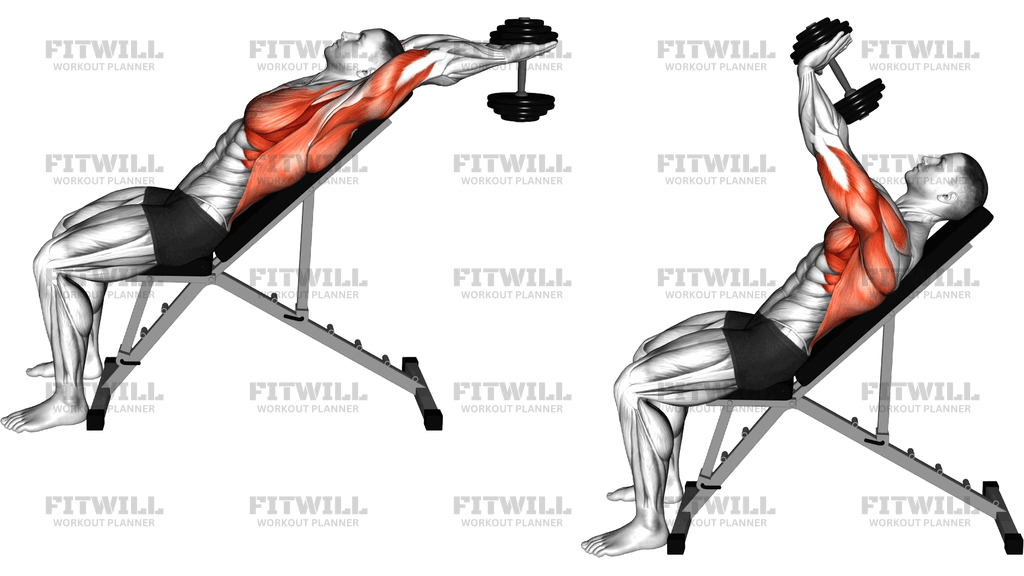
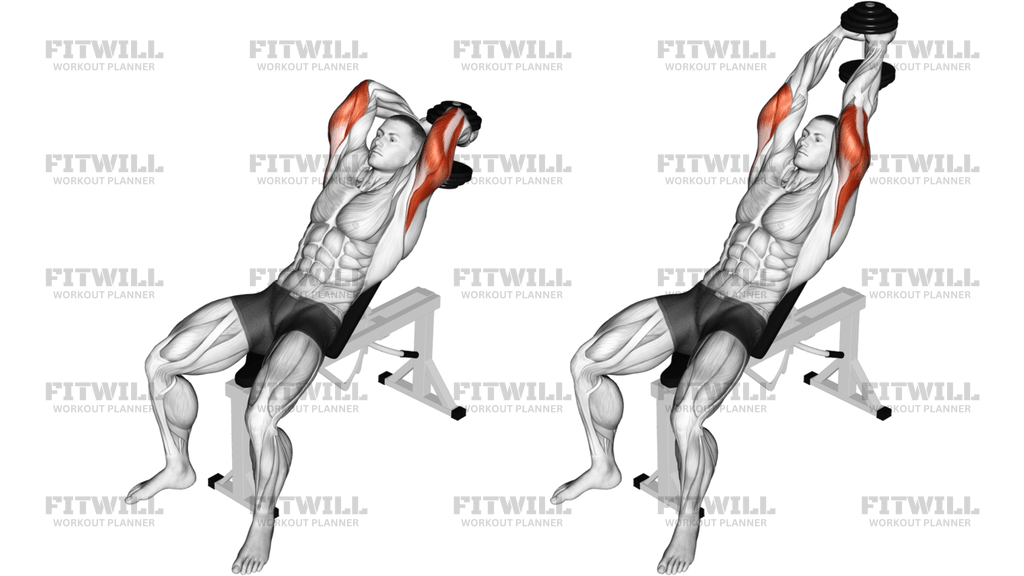
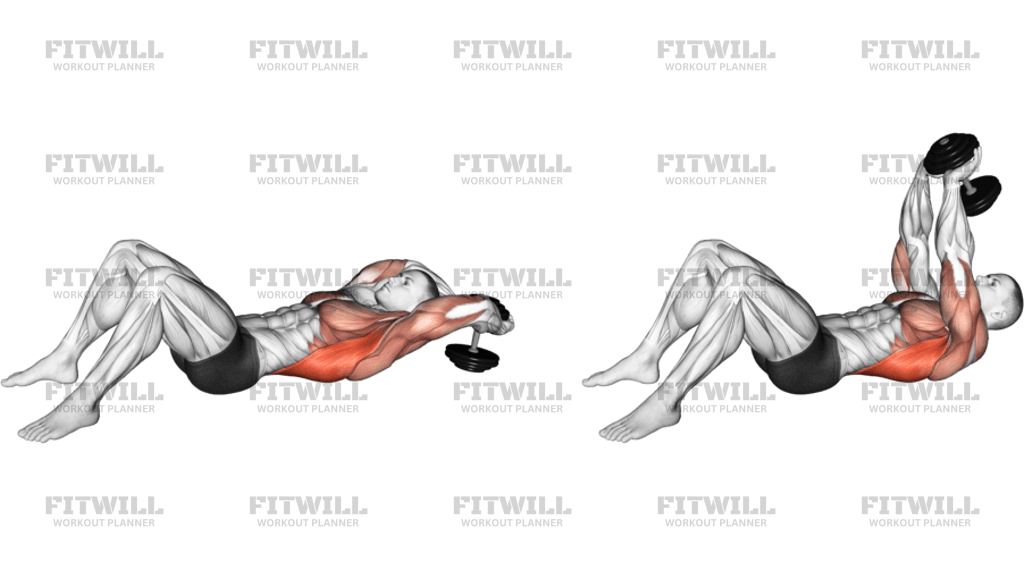
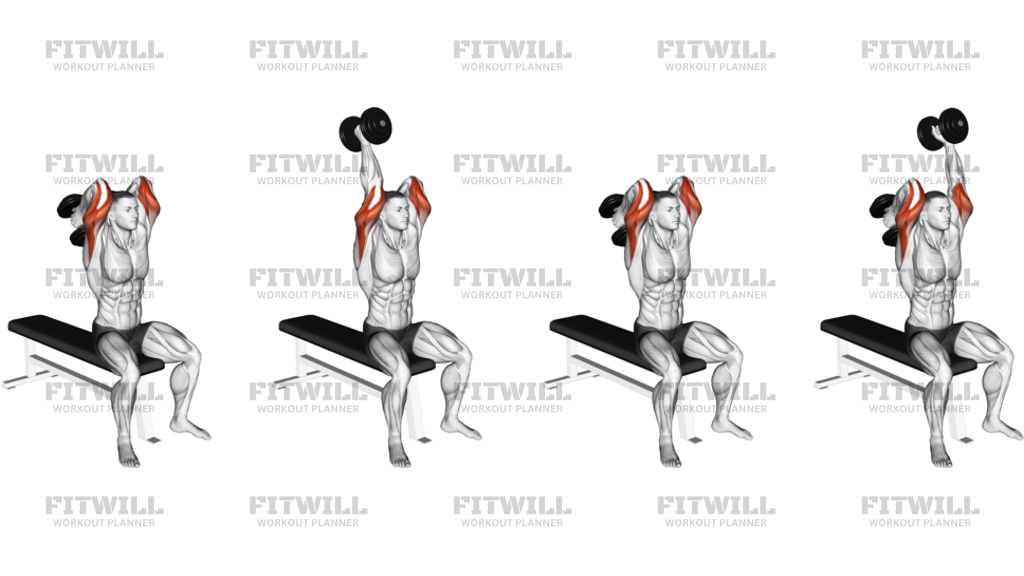
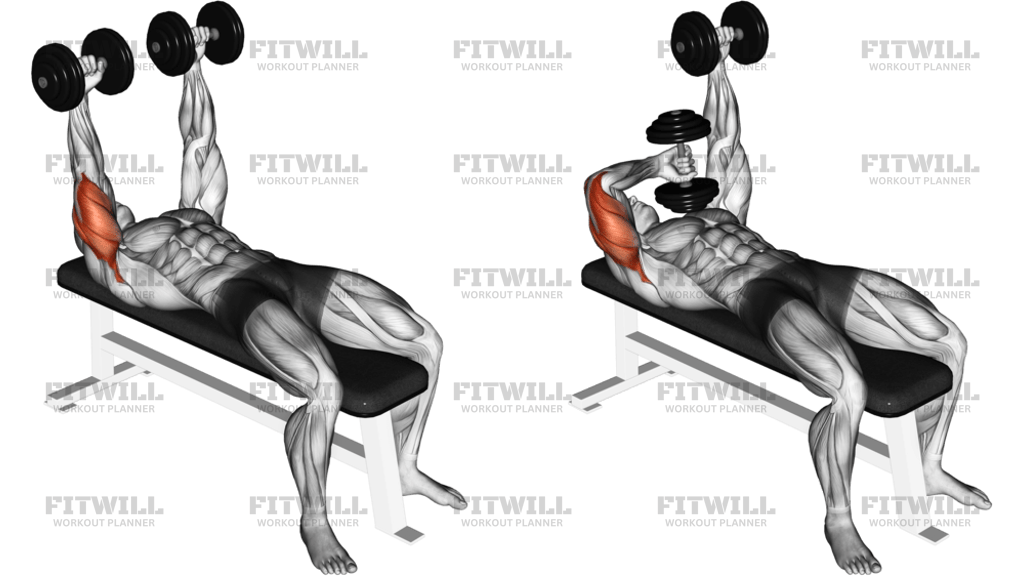
Dumbbell Lying Extension Across Face is a flat-bench triceps isolation exercise that uses a pair of dumbbells to load elbow extension through a controlled arc. The neutral-grip setup in the image usually feels more natural on the wrists than a straight bar, and the independent dumbbells let each arm move without being forced into the same exact path. It is a good accessory choice after pressing work when you want direct triceps volume without turning the set into a shoulder-driven movement.
The main target is the triceps, with the long head doing a lot of the work because the arms stay elevated while the elbows bend and straighten. The forearms help keep the dumbbells steady, and the front shoulders and upper back assist by holding the upper arms in place. If the upper arms drift or the rib cage pops up, the load shifts away from the triceps and the exercise becomes much less precise.
Set up on a flat bench with your head, upper back, and hips supported, and plant your feet so the torso does not slide as the dumbbells move. Start with the dumbbells stacked above the chest or slightly over the face, palms facing each other, wrists straight, and elbows pointing upward. That stacked position matters because it gives you a clean line of pull before the first rep and makes it easier to keep the weights out of your field of vision.
Lower the dumbbells in a short arc toward the temples or the sides of the forehead rather than letting them travel straight behind the head. Keep the upper arms mostly still and let the elbows do the bending while the shoulders stay quiet. When the forearms approach the upper arms and the triceps are fully stretched, extend the elbows to bring the dumbbells back to the start with a smooth finish instead of snapping the lockout.
This exercise works best with light to moderate loads and a tempo that stays controlled from the first rep to the last. It is useful for lifters who want triceps isolation after benching, overhead pressing, or arm work, and it can also be a helpful option when a neutral grip feels friendlier than an EZ-bar or straight bar. Stop the set if the weights drift toward the eyes, the elbows flare hard, or the shoulders take over the motion; those are signs the range or load is too aggressive for this variation.
[ Workout Log & Planner ]
Put your next workout in Fitwill
Keep your plan and training log ready when you are.


Instructions
- Lie flat on a bench with your head, upper back, and hips supported, and hold a dumbbell in each hand above the chest or slightly over the face with your palms facing each other.
- Plant both feet on the floor, keep your rib cage down, and stack your wrists directly over your elbows before the first rep.
- Set your shoulder blades lightly against the bench and aim the elbows toward the ceiling without locking the shoulders into a hard flare.
- Inhale and lower the dumbbells in a short arc toward the temples or the sides of the forehead.
- Keep the upper arms mostly still while the elbows bend and the forearms travel around the face.
- Stop the descent when the triceps are fully stretched and the dumbbells are still well clear of your eyes and nose.
- Exhale and extend the elbows to bring the dumbbells back to the stacked start position over the chest or face.
- Finish each rep with straight wrists and controlled lockout instead of snapping the elbows hard.
- After the last rep, bring the dumbbells back to the chest or thighs before sitting up.
Tips & Tricks
- Lower the dumbbells toward the sides of the face, not straight behind the head, so the rep matches the across-face path.
- If the elbows drift apart, reduce the weight and think about pointing the upper arms more toward the ceiling.
- Keep the wrists neutral from start to finish; a bent-back wrist makes the dumbbells feel much heavier than they are.
- Use a lighter load than you would for barbell skull crushers because the independent dumbbells expose sloppy control quickly.
- If the shoulders start to roll forward, shorten the lowering range before the dumbbells pass temple height.
- Let the forearms move and keep the upper arms quiet; if the shoulders swing, the triceps lose tension.
- Drive the elbows to full extension smoothly instead of bouncing out of the bottom or slamming the lockout.
- Match both dumbbells together on every rep; one arm finishing early usually means the set is too heavy.
- Keep your feet planted firmly so the torso does not slide as the dumbbells travel around the face.
Frequently Asked Questions
What muscles does Dumbbell Lying Extension Across Face work?
It mainly targets the triceps, with the long head taking a big share of the work. The forearms help hold the dumbbells steady, and the front shoulders stabilize the upper arms on the bench.
Is Dumbbell Lying Extension Across Face the same as a skull crusher?
It is a close triceps extension variation, but the dumbbells travel in a slightly different arc across the face and the neutral grip often feels friendlier on the wrists.
How far should I lower the dumbbells?
Lower them toward the temples or the sides of the forehead, stopping before the shoulders roll forward or the dumbbells get too close to the eyes.
Should my elbows stay tucked in Dumbbell Lying Extension Across Face?
They should stay mostly fixed and point up, but they do not need to be squeezed together hard. A small natural drift is fine as long as the upper arms do not swing.
Is Dumbbell Lying Extension Across Face good for beginners?
Yes, if you keep the dumbbells light and the range controlled. Beginners usually do better when they focus on the elbow path first and leave the load low.
Why do my elbows hurt during Dumbbell Lying Extension Across Face?
That usually happens when the weight is too heavy, the wrists bend back, or the lowering range is too deep. Reduce the load and stop the rep a little sooner.
Can I do Dumbbell Lying Extension Across Face on an incline bench?
You can, but the flat-bench version is the closest match to this movement and is usually easier to control. An incline changes the shoulder angle and the feel of the stretch.
How do I know I chose the right weight?
You should be able to keep the dumbbells on the same arc without wobbling or drifting over your eyes. If the path changes from rep to rep, the load is too much.