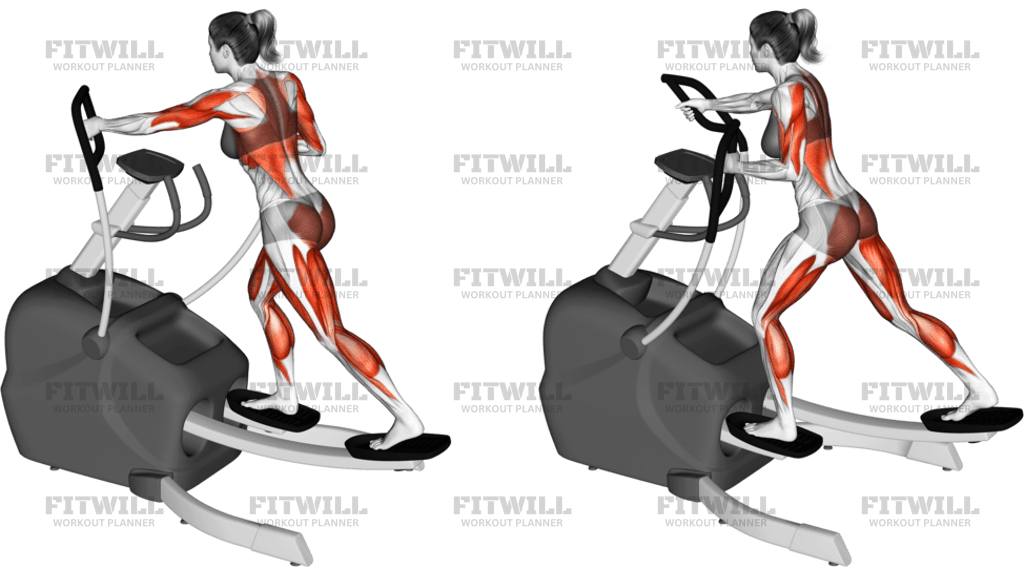
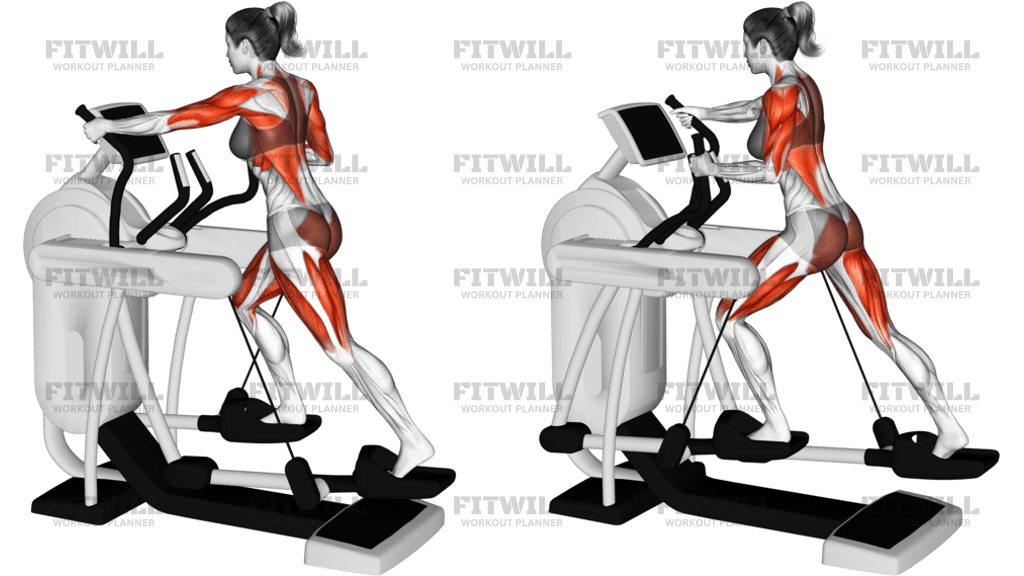
Run On Treadmill
Run On Treadmill is a straightforward treadmill running drill for building conditioning, rhythm, and repeatable stride mechanics. It can be used for steady aerobic work, tempo efforts, or interval conditioning, depending on how fast you set the belt and how long you stay on it. The value of the movement is not just speed; it is the ability to keep your posture, foot strike, and breathing organized while the pace changes under you.
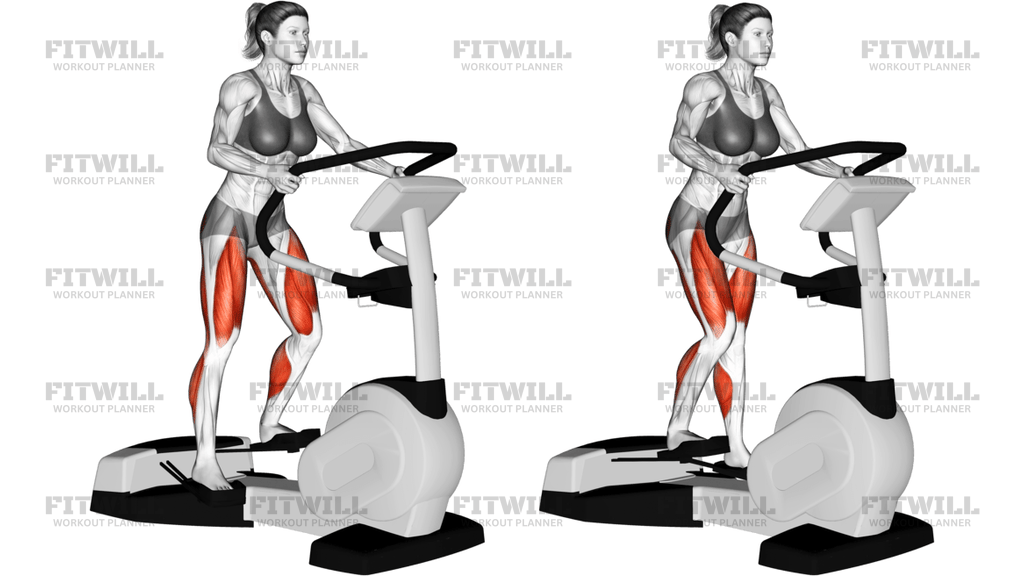
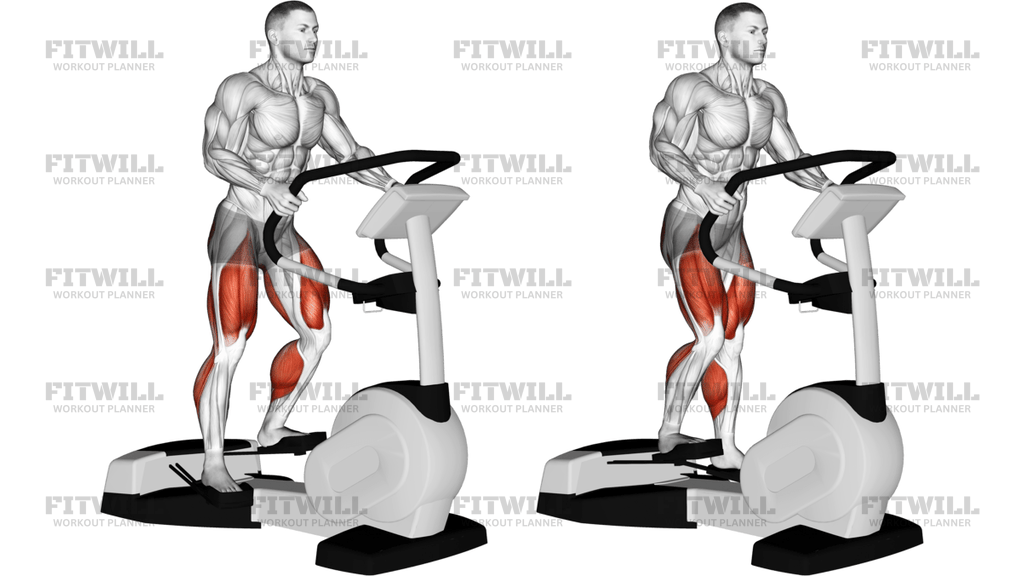
This exercise mainly trains the legs and the cardiovascular system, with the glutes, quads, hamstrings, calves, and hip flexors doing most of the work and the core helping keep the torso steady. A treadmill makes it easier to control pace than outdoor running, which is useful for beginners learning cadence and for experienced runners who want a precise workload. Because the belt stays consistent, sloppy mechanics show up quickly if you overstride or let your posture collapse.
Start by clipping the safety key, then stand tall before you bring the belt up to a walk or jog. Keep your chest open, shoulders relaxed, and hands loose so the arms can swing naturally instead of crossing the body. A small forward lean from the ankles is enough; avoid bending at the waist, because that usually pushes the hips back and shortens the stride in a bad way.
Once you are moving, place each foot under your center of mass instead of reaching out in front of you. Let the cadence stay quick and light, with the feet landing quietly and the knees tracking in line with the toes. The treadmill should feel like it is meeting your stride, not like you are chasing the belt with a long, braking step. Breathe in a steady rhythm that matches the effort, and use the arms to help the lower body stay smooth.
Run On Treadmill is useful for warmups, conditioning blocks, recovery jogs, and interval sessions where you want repeatable pacing. Beginners can start with walk-run intervals and short bouts of running, then build duration as foot strike and breathing improve. If your shins, calves, or low back start taking over, lower the speed before the form gets loose, and finish the set by slowing the belt to a walk before stepping off.
[ Workout Log & Planner ]
Put your next workout in Fitwill
Keep your plan and training log ready when you are.


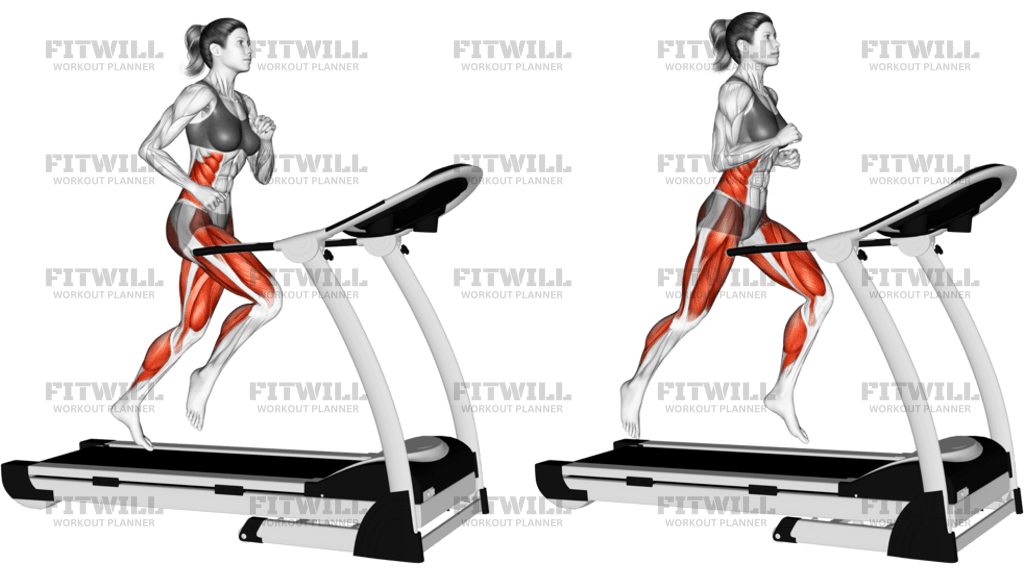
Instructions
- Clip the safety key to your clothes, then stand on the treadmill with both feet on the deck before starting the belt.
- Set the speed to a comfortable walk or jog, and stand tall with your eyes forward, shoulders relaxed, and hands unclenched.
- Lean slightly from the ankles so your body line stays straight from head to heel instead of hinging at the waist.
- Step into the belt with short, quick strides and let your feet land under your hips rather than far in front of you.
- Drive the opposite arm and leg together while keeping your elbows bent and your hands moving cheek to hip.
- Keep your torso steady as the belt moves, and avoid twisting or bouncing through the shoulders.
- Breathe in a steady pattern that matches the pace, such as a two-step or three-step rhythm.
- To finish, lower the speed to a walk, wait until your breathing settles, and step off the treadmill carefully.
Tips & Tricks
- Keep the stride short if your feet are slapping the belt or landing way out in front.
- A slight forward lean from the ankles helps running feel smooth; bending at the waist usually makes the stride harsher.
- Let your hands stay loose and avoid gripping the handrails unless you are recovering or the pace is still too fast.
- If your shoulders are rising toward your ears, lower the speed and reset your arm swing.
- A quiet foot strike usually means your cadence is better and your braking force is lower.
- Use walk-run intervals when your breathing gets ragged before your legs do.
- Set the belt speed so you can stay tall without reaching forward for balance.
- If your calves cramp or your shins complain, reduce speed and keep the steps lighter for the next round.
Frequently Asked Questions
What muscles does Run On Treadmill work most?
It mainly works the quads, glutes, hamstrings, calves, and hip flexors, with the core helping you stay upright and stable.
Is Run On Treadmill good for beginners?
Yes, beginners can start with brisk walking and short walk-run intervals before building up to continuous running.
Should I hold the treadmill handrails while running?
Only if you need them briefly for balance or to recover between intervals. Holding on during the run usually shortens the stride and changes your posture.
What is the most common mistake in Run On Treadmill?
Overstriding is the big one. If your foot reaches far ahead of your hips, the treadmill belt feels like it is pulling you back and the landing gets noisy.
Do I need to use an incline for Run On Treadmill?
No, flat running is fine for most sessions. A small incline can be useful for hill-style conditioning, but keep the pace honest and the posture tall.
How should my feet land on the treadmill?
They should land under your center of mass, not far ahead of you. Think quick, quiet steps that feel like you are rolling smoothly with the belt.
Can I use Run On Treadmill for intervals?
Yes, it works well for intervals because you can change pace precisely. Just make sure the faster reps still look controlled instead of chaotic.
What should I do if my calves or shins start burning early?
Lower the speed, shorten the stride, and build back up more gradually. Early lower-leg fatigue usually means the pace is outrunning your current mechanics.