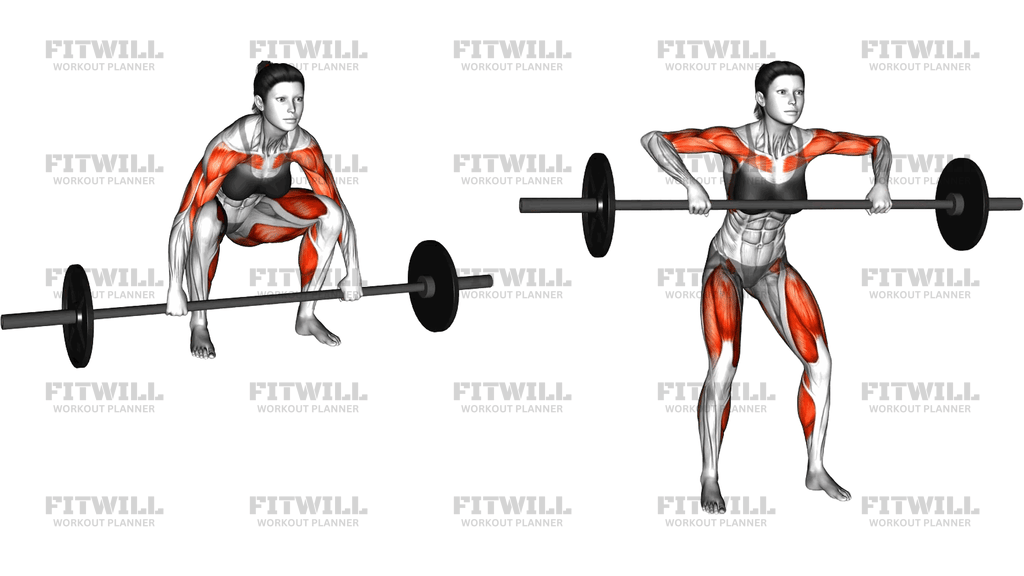
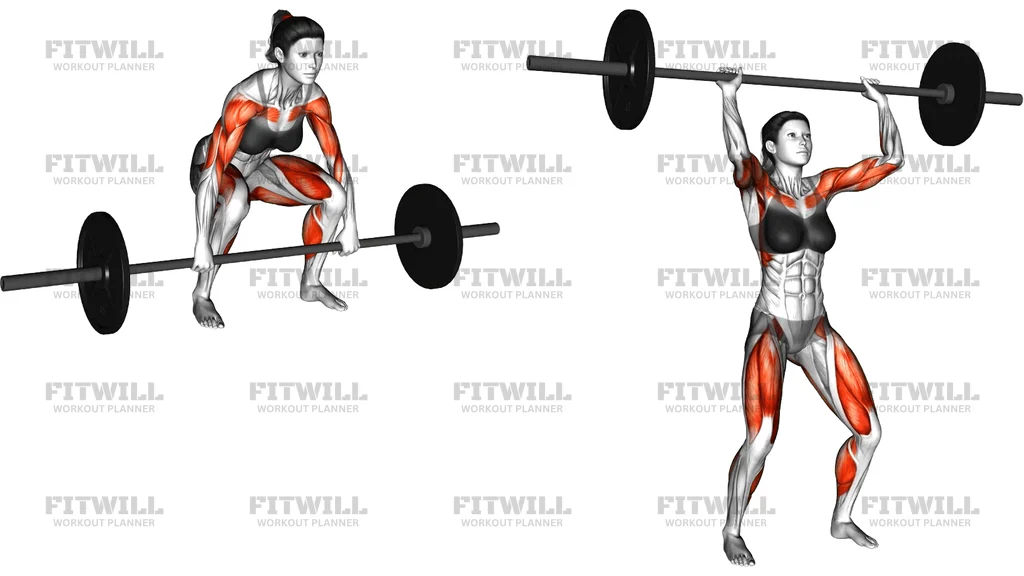
Barbell Romanian Deadlift
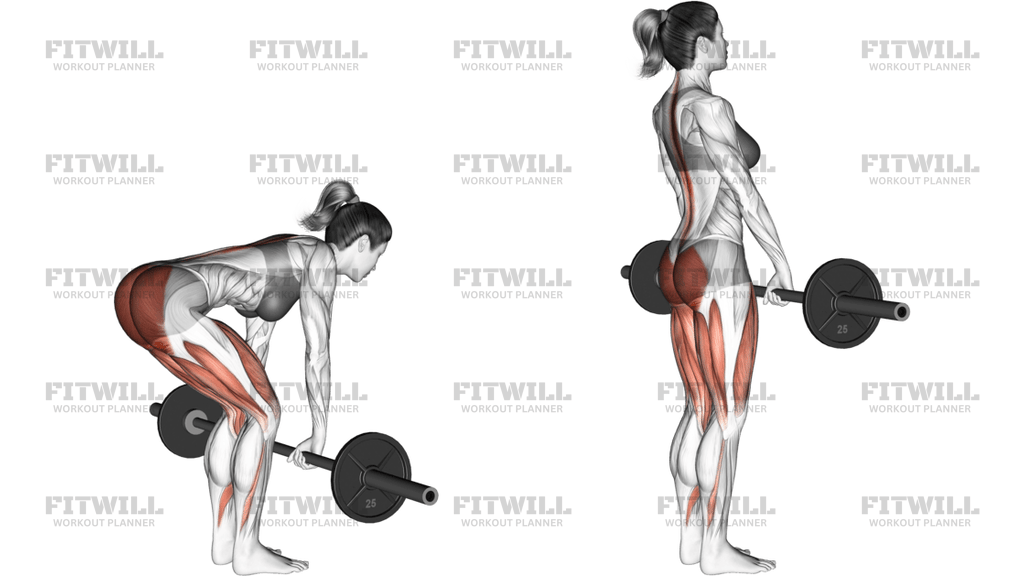
Barbell Romanian Deadlift is a hip-hinge strength exercise that teaches you to load the hamstrings and glutes while keeping the bar path close to the body. It is especially useful when you want posterior-chain work without the knee bend and momentum of a conventional deadlift. The movement rewards patience, because the best repetitions come from a controlled hinge rather than from trying to force the bar lower than your mobility allows.
This exercise usually places the biggest demand on the hamstrings and glutes, with the lower back and core working hard to keep the torso organized. A good set feels like the hips are traveling back while the ribcage stays stacked over the pelvis. When that position is right, the load stays on the back side of the legs instead of drifting into the lower back or onto the toes.
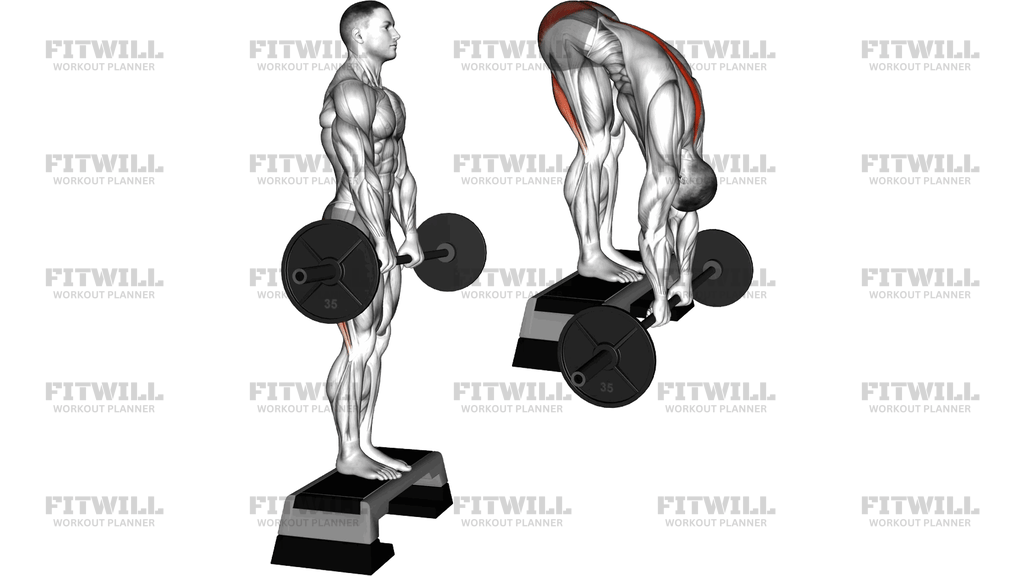
The setup matters more here than in many lifts. Stand with the feet about hip-width apart, grip the bar just outside the thighs, and keep the bar touching or very close to the legs from start to finish. Soft knees are correct, but the movement should still look and feel like a hinge, not a squat. Think about sending the hips back until the hamstrings reach a strong stretch, then stop before the spine starts to round or the shoulders collapse forward.
On the way up, drive the floor away and bring the hips forward under control. The bar should travel in a straight, close line, brushing the thighs as you stand tall. Finish with the glutes, not with a lean-back at the top, and keep the neck long so the head does not chase the bar. If the bar moves away from the body, the rep usually gets heavier on the lower back and less effective for the target muscles.
Barbell Romanian Deadlift fits well in strength programs, lower-body sessions, and accessory work when you want to build hinge mechanics, hamstring length under load, and glute strength. It is also a useful regression or teaching tool for people who are learning how to hinge before moving to more complex pulls. Use a load that lets every rep look identical, because the exercise loses most of its value once the bar starts drifting, the back rounds, or the descent turns into a drop.
[ Workout Log & Planner ]
Put your next workout in Fitwill
Keep your plan and training log ready when you are.


Instructions
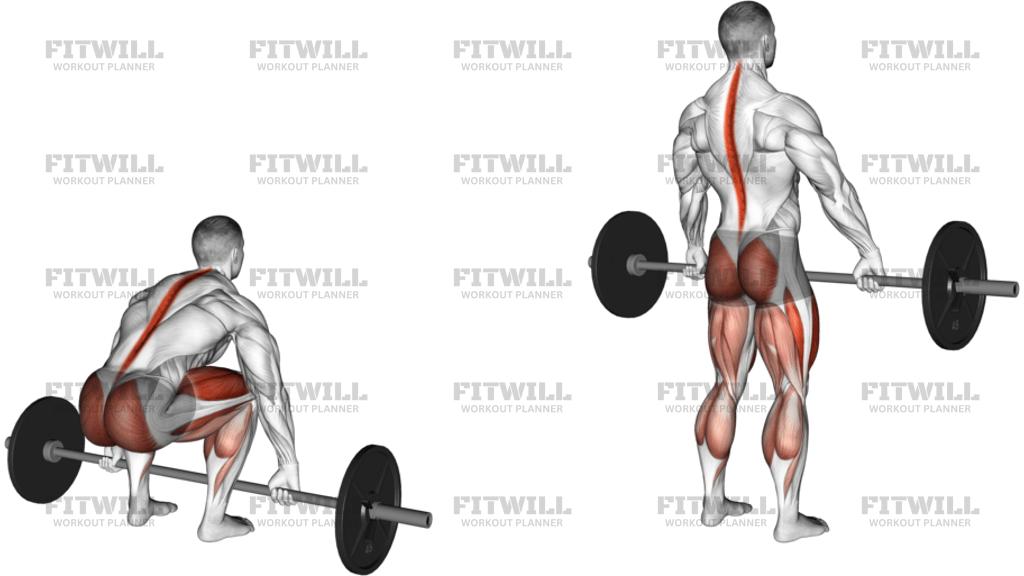
- Stand with a barbell over the midfoot, feet about hip-width apart, and grip the bar just outside your thighs.
- Unlock your knees slightly, pull your chest long, and keep your shoulder blades set without leaning back.
- Brace your core, then hinge your hips back until your torso starts to tip forward and the bar stays close to your legs.
- Lower the bar by sliding it down the thighs with a soft bend in the knees and a neutral spine.
- Stop the descent when you feel a strong hamstring stretch or just before your back wants to round.
- Drive your hips forward and stand up by squeezing the glutes, keeping the bar brushing the legs on the way up.
- Finish tall without leaning back or overextending the lower back at the top.
- Reset your brace, lower the bar under control, and repeat for the planned reps.
Tips & Tricks
- Keep the bar in contact with your thighs and shins; if it drifts forward, the lower back usually takes over.
- A slight knee bend is enough. Turning the movement into a squat shortens the hamstring stretch and changes the exercise.
- Stop the descent where your hamstrings are tight but your spine still stays neutral; range is earned, not forced.
- Think about sending the hips back, not the chest down, so the hinge stays loaded through the back of the legs.
- Do not lock the knees hard at the bottom or top; the soft-knee position helps keep tension on the posterior chain.
- Exhale as you stand and re-brace before each rep if you are doing controlled repetitions from the floor or from a hang.
- Use straps if grip fails before the hamstrings do, especially on longer sets with heavier plates.
- Flat shoes or bare feet usually make it easier to feel balance and keep pressure through the whole foot.
Frequently Asked Questions
What muscles does Barbell Romanian Deadlift work most?
It primarily targets the hamstrings and glutes, with the lower back and core working to hold the hinge position.
How low should the bar go in Barbell Romanian Deadlift?
Lower it only until you feel a strong hamstring stretch and can keep a neutral spine. For many lifters that is around mid-shin, but the exact range depends on mobility and limb length.
Is Barbell Romanian Deadlift the same as a regular deadlift?
No. Romanian deadlifts start from standing and keep more tension on the hamstrings through the hinge, while a conventional deadlift usually starts from the floor and uses more knee bend.
Should the bar stay close to my legs?
Yes. The bar should brush the thighs and shins on the way down and up; letting it drift forward usually turns the lift into a lower-back exercise.
Can beginners learn Barbell Romanian Deadlift safely?
Yes, if they start light and treat it as a hinge drill. A dowel or empty bar is often enough to teach the hip-back pattern before adding load.
Why do I feel Barbell Romanian Deadlift in my lower back?
That usually means you are bending too far, losing your brace, or letting the bar move away from your body. Reduce the range and keep the ribs stacked over the pelvis.
What grip should I use on the bar?
Use a double overhand grip for moderate loads, or straps if grip becomes the limiting factor before the hamstrings do.
Should my knees stay bent the whole time?
Keep them softly bent, but do not keep squatting down. The knees stay unlocked so the hips can travel back and the hamstrings stay loaded.