Barbell Deadlift
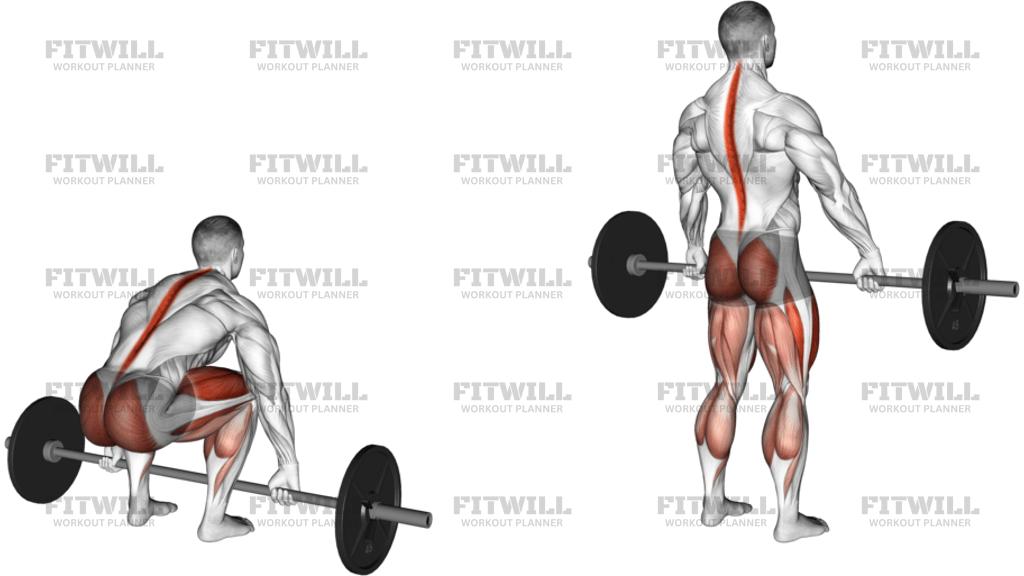
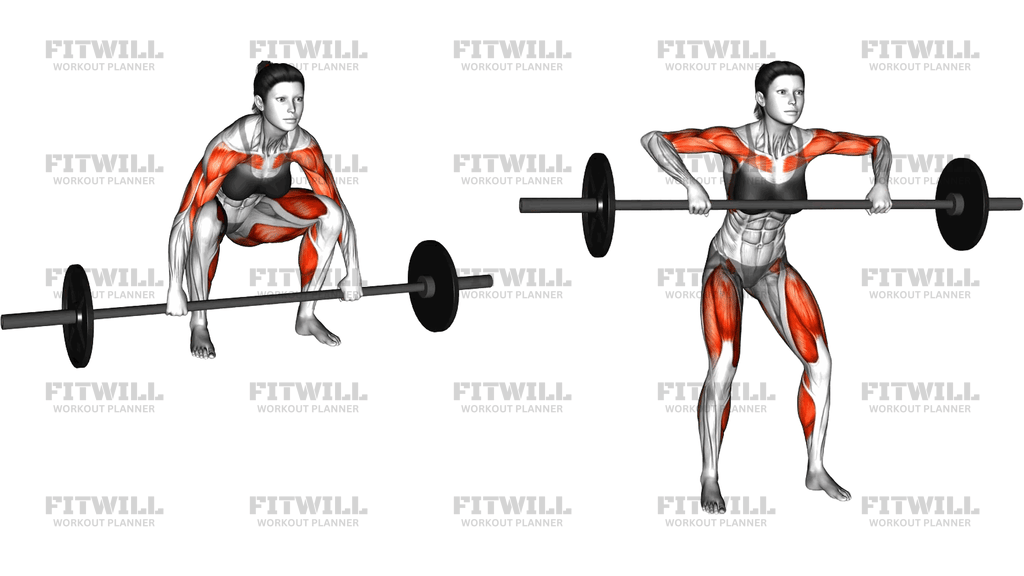
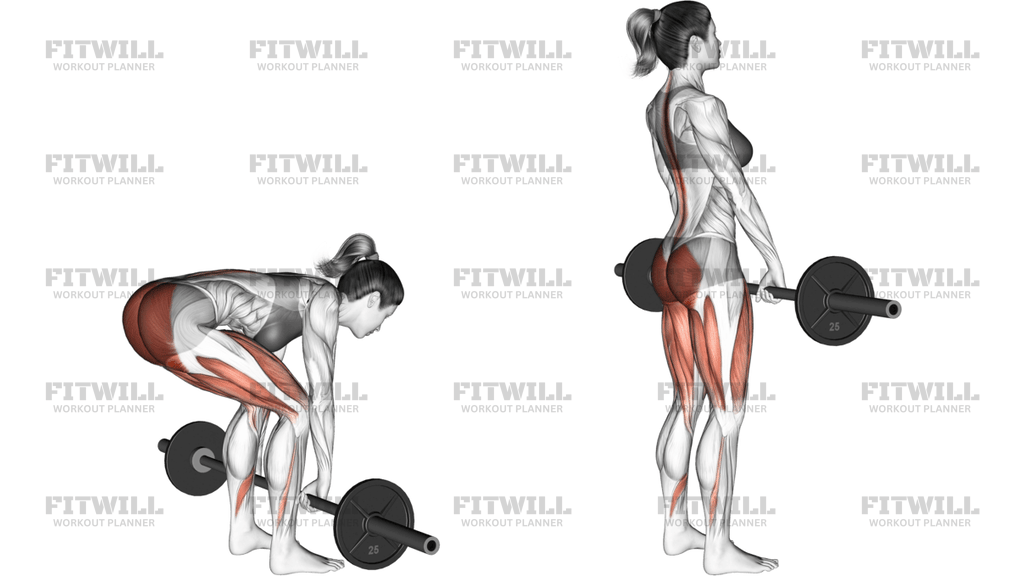
Barbell Deadlift is a classic floor-based hinge that trains the whole back side of the body with a strong demand on the legs, trunk, and grip. The image shows a conventional deadlift: the bar starts on the floor, the feet are about hip-width apart, and the torso leans forward with the shins close to the plates before the lift begins. That setup matters because the bar has to stay close to the body from the first pull to the lockout.
This movement is most useful when you want to build hip extension strength, posterior-chain coordination, and the ability to keep the spine stable while force moves from the floor upward. The glutes and hamstrings drive the lift, while the upper back and core keep the bar path controlled and prevent the torso from collapsing. In practice, it is not a loose pulling motion; it is a braced hinge with a deliberate push through the floor.
A good repetition starts before the bar leaves the ground. Set the feet, grip the bar just outside the legs, and pull slack out of the bar so your body is tight before the plates move. Keep the chest long, lats engaged, and pressure centered over the midfoot. When the bar breaks from the floor, let the knees and hips rise together instead of shooting the hips up first, because that usually shifts the load away from the intended pattern.
At the top, stand tall without leaning back or shrugging hard. Finish by stacking the ribs over the pelvis and squeezing the glutes rather than overextending the lower back. The descent should mirror the setup: hinge the hips back, guide the bar down the thighs and shins, and place it on the floor under control so the next rep starts from a stable position. If the bar drifts forward or the back rounds early, the load is too heavy or the setup is off.
Use Barbell Deadlift when you need a foundational strength movement for lower-body power, posterior-chain development, or technical hinge practice. It works well in strength blocks, compound lower-body sessions, or as a main lift when you have room to rehearse clean repetitions. Beginners can learn it with light weight and a small range of motion before loading it aggressively, but the lift should always feel organized, deliberate, and repeatable.
Fitwill
Log Workouts, Track Progress & Build Strength.
Achieve more with Fitwill: explore over 9600 exercises with images and videos, access built-in and custom workouts, perfect for both gym and home sessions, and see real results.
Start your journey. Download today!




Instructions
- Stand with your feet about hip-width apart and the barbell over the middle of your feet.
- Hinge at the hips, bend the knees, and grip the bar just outside your legs with the shins close to the plates.
- Set your back flat, chest long, and shoulders slightly in front of the bar before you pull.
- Brace your core and pull the slack out of the bar so your body is tight before the plates leave the floor.
- Drive the floor away and let the bar travel straight up your shins and thighs.
- Keep the bar close as the knees and hips extend together until you stand tall.
- Finish by squeezing the glutes without leaning backward or shrugging the shoulders.
- Lower the bar by hinging the hips back first, then bend the knees and return the plates to the floor with control.
- Reset your breath and body position before each rep if the bar starts to drift or the setup changes.
Tips & Tricks
- Keep the bar against your legs; if it swings away from the shins, the low back has to work harder than it should.
- Think about pushing the floor away instead of yanking the bar up with the arms.
- The first pull should feel like a leg press and hinge combination, not a rounded-back tug.
- Use your lats to keep the bar path tight and to stop the shoulders from drifting forward.
- Do not let the hips shoot up faster than the chest on the way off the floor.
- A controlled descent lets you reset the hinge; dropping the bar tends to hide setup errors.
- Breathe in and brace before the pull, then exhale after you pass the hardest part of the lift or once you are locked out.
- Stop the set when you can no longer keep the spine and bar path consistent from rep to rep.
Frequently Asked Questions
What does the barbell deadlift train most?
It strongly trains the glutes, hamstrings, spinal erectors, upper back, and grip while teaching a powerful hip hinge.
Can beginners perform this exercise?
Yes, beginners can learn it with a light bar or dumbbells first, as long as they can keep a flat back and controlled setup.
Where should the bar be before I start the lift?
It should start over the middle of your feet, with the shins very close to the bar and the shoulders just in front of it.
What is the biggest mistake in the deadlift setup?
Starting with the bar too far from the legs or the hips too low usually makes the bar drift and the back lose position.
Should I lock out by leaning back?
No. Finish tall with the glutes tight and the ribs stacked over the pelvis, but do not hyperextend the lower back.
Why do my hips rise before the bar leaves the floor?
That usually means the setup is too low or the load is too heavy. Recheck your brace and start with the shoulders slightly in front of the bar.
Do I need to touch the bar to the floor every rep?
For standard deadlifts, yes. Resetting on the floor keeps each rep honest and makes your setup repeatable.
Is this the same as a Romanian deadlift?
No. A conventional deadlift starts from the floor each rep, while a Romanian deadlift usually starts from standing and emphasizes the eccentric hinge.