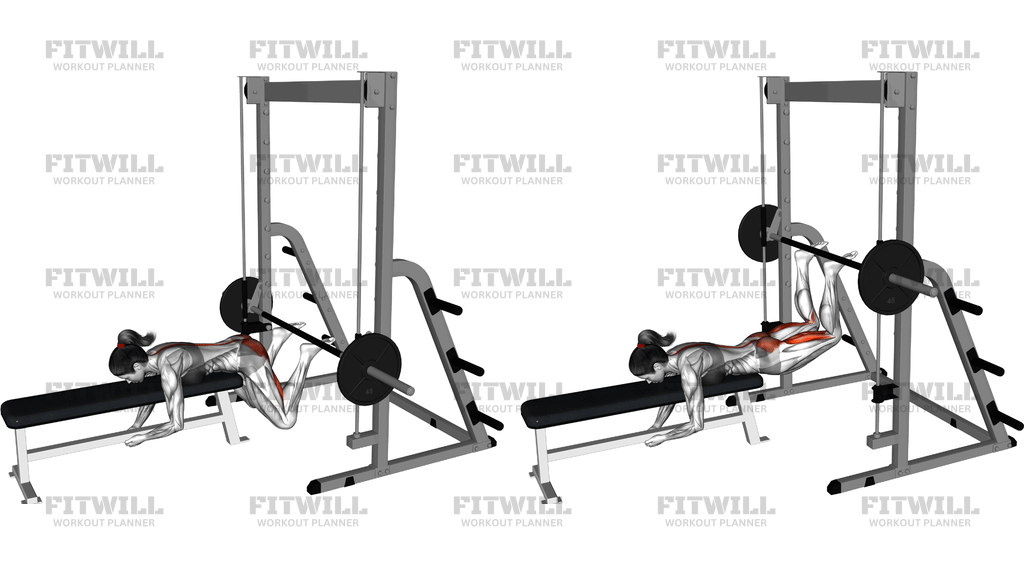
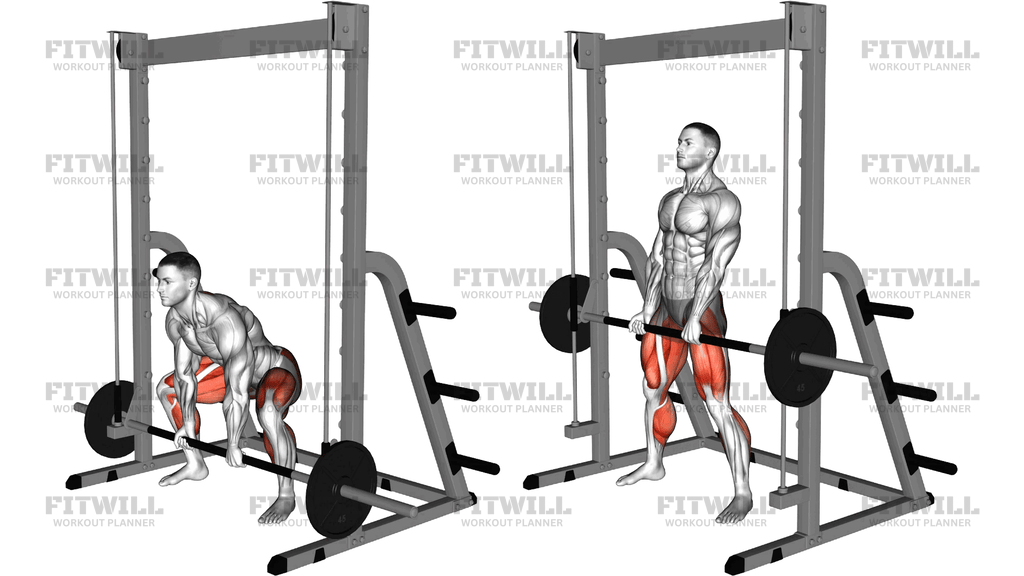
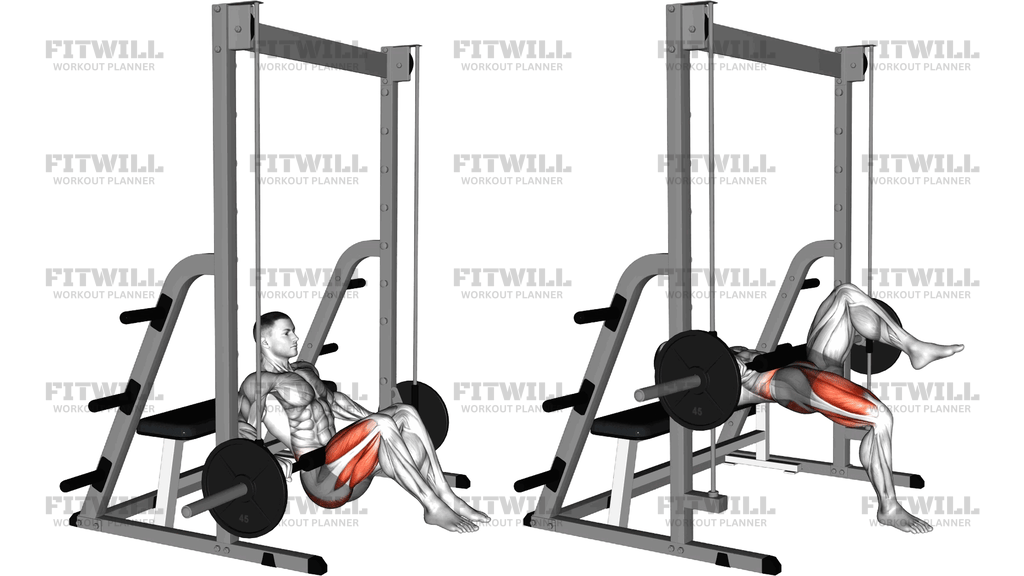
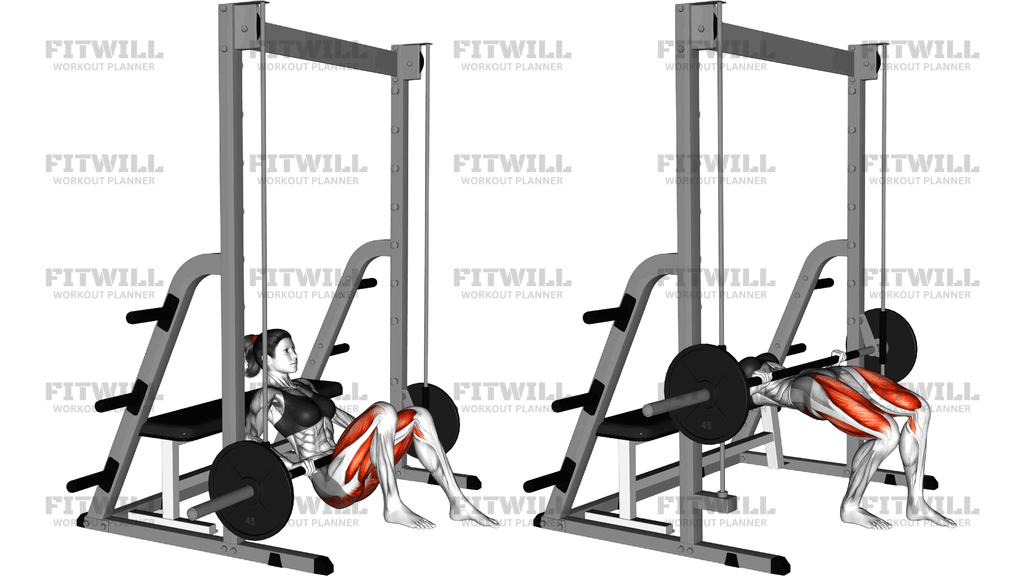
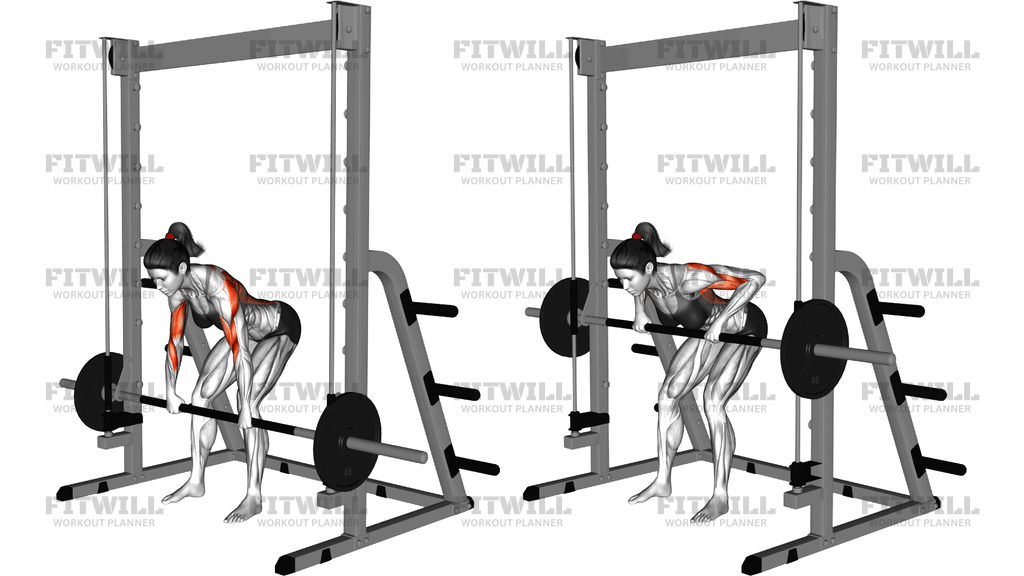
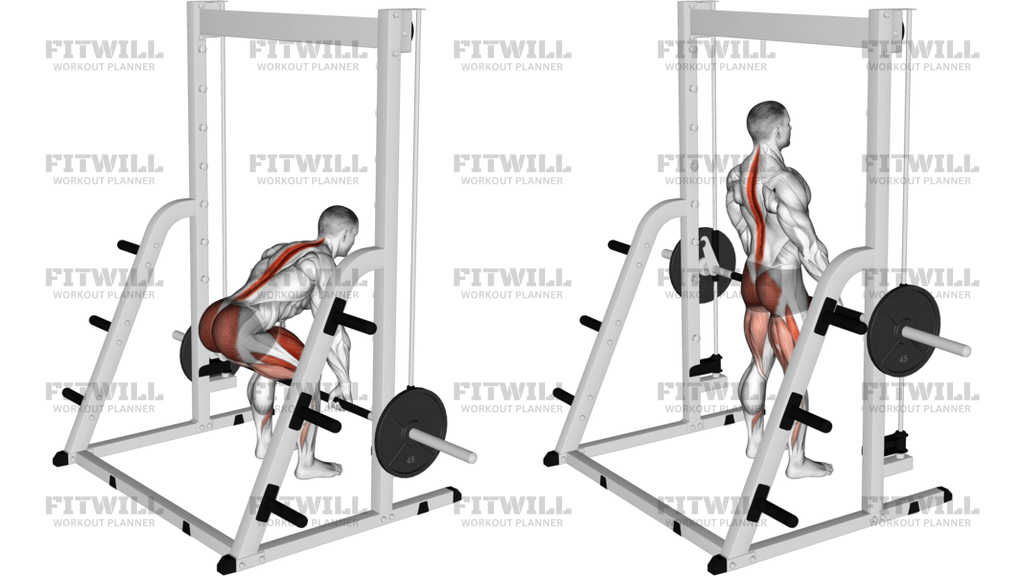
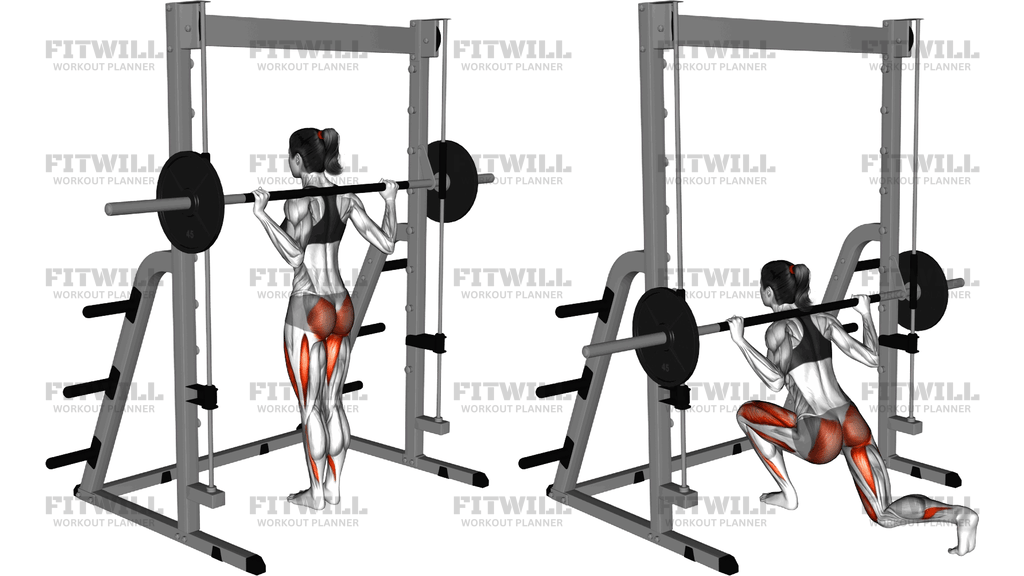
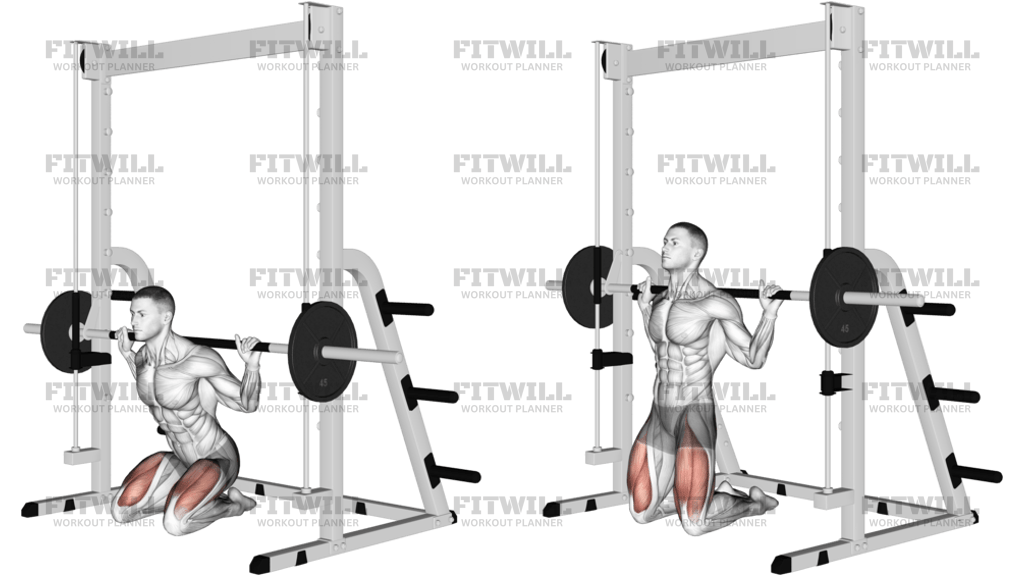
Smith Lying Lift On Hip
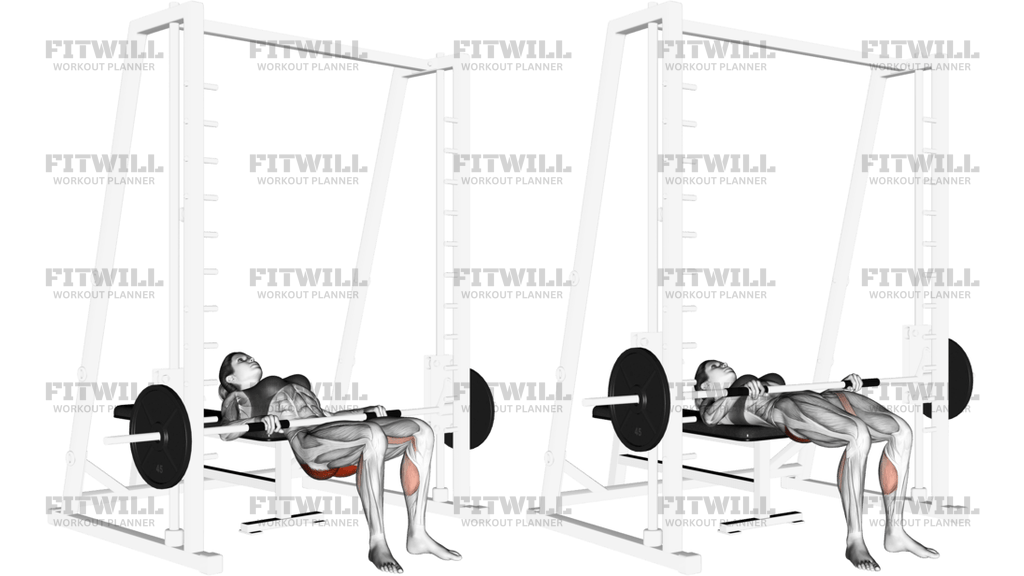
Smith Lying Lift On Hip is a Smith machine hip thrust variation built to train hip extension with steady bar path and a stable upper-body support point. The bench removes most of the balance demand so you can focus on driving the hips up, keeping the ribs down, and feeling the glutes do the work through each repetition.
This movement places the main load on the glutes, with the hamstrings helping at the bottom and the core working to keep the torso from over-arching. It is especially useful when you want direct glute work without needing a free barbell setup, or when you want a more controlled option for higher-rep accessory work. The guided Smith machine track makes it easier to repeat the same groove rep after rep.
The setup matters more here than in many lower-body lifts. Your upper back should be anchored on the bench, your feet should be far enough forward that the shins are close to vertical at the top, and the bar should rest across the hip crease rather than the stomach. If the feet are too close, the quads take over; if they are too far away, you lose glute tension and turn the lift into a lower-back extension.
Each rep should start from a stacked position: chin tucked, ribs down, and pelvis controlled before the bar moves. Press through the midfoot and heels to lift the hips until the torso and thighs form a strong line, then squeeze the glutes without hyperextending the lower back. The bar should travel straight along the Smith rails, and the descent should stay deliberate so the glutes keep tension instead of bouncing off the bottom.
Smith Lying Lift On Hip works well in glute-focused sessions, lower-body days, or as a strength accessory after squats and deadlifts. It can also be a practical choice for beginners because the machine path reduces coordination demands, but the load still needs to stay modest enough to keep the hips level and the neck relaxed. Done well, it is a simple movement with a very specific payoff: strong, repeatable hip extension with clean glute contraction.
[ Workout Log & Planner ]
Put your next workout in Fitwill
Keep your plan and training log ready when you are.


Instructions
- Set a flat bench inside the Smith machine and sit on the floor with your upper back resting on the bench edge.
- Place the bar across the hip crease, then slide your feet forward until your shins are close to vertical at the top.
- Grip the bar just outside your hips and keep your chin slightly tucked so your ribs do not flare.
- Plant both feet flat, brace your core, and start with your hips low enough that the glutes feel loaded but the lower back stays neutral.
- Drive through your heels and midfoot to lift the hips along the Smith rail until your torso is almost level with your thighs.
- Squeeze the glutes hard at the top without leaning back or overextending the spine.
- Lower the bar under control until the hips are close to the floor and you feel a stretch through the glutes and hamstrings.
- Reset your breath at the bottom, keep the knees tracking over the toes, and repeat for the planned reps.
- When the set ends, lower the bar fully to the safeties or rack it before sliding out from under the machine.
Tips & Tricks
- If you feel the quads more than the glutes, move your feet slightly farther from the bench so the shins stay closer to vertical at lockout.
- Keep the bar in the hip crease, not on the stomach, or the rep will feel awkward and can dig into the pelvis.
- A small posterior pelvic tilt at the top helps the glutes finish the rep without turning it into a lower-back arch.
- Pause for a count at the top when the hips are fully extended; that makes the glute squeeze much cleaner than bouncing through the rep.
- Do not let the knees cave inward as the bar rises. Track them over the middle toes so the hips stay level.
- Use a pad or folded towel if the bar pressure on the hips keeps you from holding the top position long enough.
- Stop the descent before you lose your low-back position. A shorter, controlled bottom range is better than dropping too far and losing tension.
- Keep your ribs stacked over your pelvis. If the chest flares up, the movement usually shifts away from the glutes and into the lumbar spine.
- Load this exercise conservatively at first. On a Smith machine, the bar can feel easier to move than your tissues can tolerate.
Frequently Asked Questions
What muscles does Smith Lying Lift On Hip work?
The glutes do most of the work, with the hamstrings helping at the bottom and the core stabilizing the torso.
Is Smith Lying Lift On Hip the same as a hip thrust?
It is a Smith machine hip thrust-style movement. The fixed bar path makes the setup more guided, but the mechanics are still hip extension driven by the glutes.
Where should the bar sit on Smith Lying Lift On Hip?
The bar should sit across the hip crease, usually with a pad or towel if the pressure bothers you. It should not rest on the stomach or up on the lower ribs.
How far should my feet be from the bench?
Set them far enough forward that your shins are close to vertical at the top. If they are too close, the quads take over; too far, and the lower back usually compensates.
Can beginners do Smith Lying Lift On Hip?
Yes. The Smith machine makes the path easier to control, but beginners should start light and learn the bench position, foot placement, and top squeeze first.
Why do I feel Smith Lying Lift On Hip in my lower back?
That usually means the ribs are flaring or the hips are being driven past neutral at the top. Keep the chin tucked, brace the core, and stop when the torso is roughly in line with the thighs.
Should I use a full range of motion on Smith Lying Lift On Hip?
Use the deepest range that still lets you keep the pelvis controlled and the glutes loaded. The best bottom position is the one you can repeat without losing tension.
What are good alternatives if the Smith machine is busy?
A barbell hip thrust, dumbbell glute bridge, or machine hip thrust will train a very similar pattern if you keep the same feet-forward, bench-supported setup.