Barbell Single Leg Split Squat
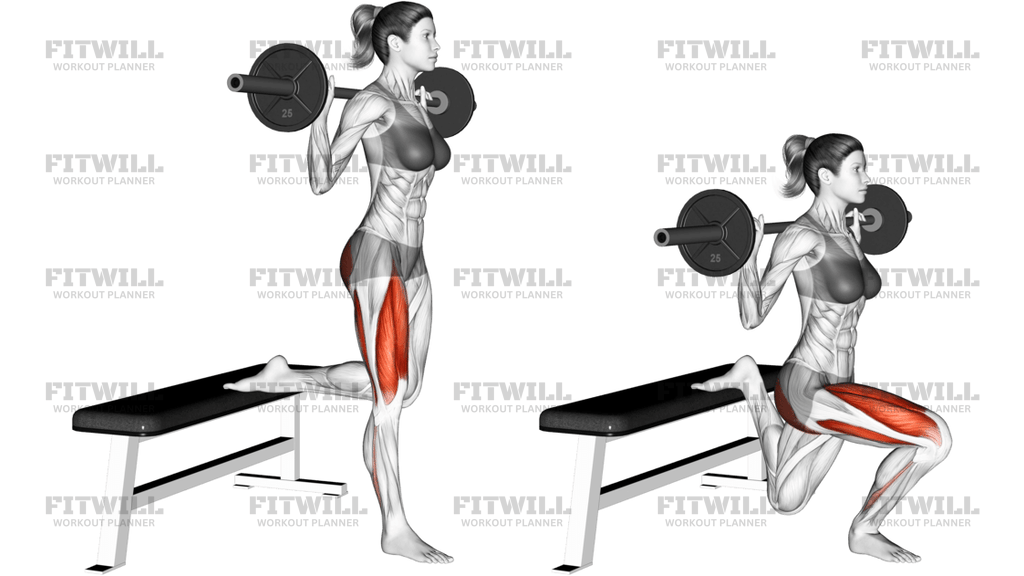
Barbell Single Leg Split Squat is a rear-foot-elevated unilateral leg exercise that places a barbell across the upper back while one foot works from the floor and the other rests behind you on a bench. The front leg does most of the work, so each rep challenges leg strength, balance, hip control, and the ability to keep the torso organized under load. It is a useful way to train one side at a time without needing a machine, making it easy to expose left-right strength differences and clean up stance-related movement faults.
The main training emphasis is on the quads, with glutes, adductors, and core muscles helping to keep the pelvis level and the bar stable. Because the back foot is only there for balance, the quality of the front-foot setup matters more than the height of the bench or how far you can drop. A slightly shorter stance and more upright torso bias the quads more, while a longer stance and a bit more forward lean usually shift more load toward the hip. The best version is the one that keeps the front heel planted, the knee tracking smoothly, and the pelvis from twisting.
Start with the bar centered across the upper back, not the neck, and keep the front foot far enough forward that you can descend without the heel popping up. Lower under control until the back knee moves close to the floor and the front thigh approaches parallel or the deepest position you can control. The front leg should produce the lift on the way up; the rear leg should not push the body back to standing. A steady descent, brief control at the bottom, and a clean drive through the front midfoot usually make this exercise safer and more productive than chasing extra depth.
This movement works well for lower-body strength blocks, hypertrophy work, and sport preparation because it loads one leg at a time while still letting you use a barbell. It is also helpful when you want a demanding leg session without heavy bilateral spinal loading. Beginners can use bodyweight, a lighter bar, or dumbbells first if balance is limiting, and experienced lifters can increase the challenge by tightening the setup, slowing the lowering phase, or adding load. Keep the rep smooth, keep the front knee honest, and stop the set if the pelvis starts shifting or the rear leg begins to do the work.
Fitwill
Log Workouts, Track Progress & Build Strength.
Achieve more with Fitwill: explore over 9600 exercises with images and videos, access built-in and custom workouts, perfect for both gym and home sessions, and see real results.
Start your journey. Download today!




Instructions
- Set a bench behind you and stand in front of it with a barbell across your upper back, hands just outside shoulder width.
- Step one foot forward into a split stance and place the back foot on the bench top with the laces down.
- Plant the front foot flat, brace your trunk, and keep most of your weight over the front midfoot and heel.
- Take a breath and lower by bending the front knee and hip until the back knee travels toward the floor.
- Keep the front knee tracking in line with the toes while the torso stays tall with only a small natural lean.
- Pause briefly at the bottom without bouncing or pushing off the rear foot.
- Drive through the front heel and midfoot to stand back up while the bar stays level across your back.
- Exhale as you rise, then reset your stance and balance before the next rep.
- Complete the planned reps on one side, then switch legs and repeat.
Tips & Tricks
- A slightly shorter front step usually makes the quad work harder; a longer step shifts more demand toward the glutes and hip.
- Treat the back foot as a balance point, not a second drive leg.
- If the front heel lifts at the bottom, move the front foot a little farther away from the bench.
- Keep the bar over the middle of your stance instead of letting it drift forward over the toes.
- Lower under control for two to three seconds so the bottom position stays stable.
- Let the torso lean just enough to keep balance, but avoid rounding the upper back under the bar.
- Track the front knee over the second and third toes instead of letting it cave inward.
- Use a rack or spotter pins to get the bar in and out safely before starting the set.
Frequently Asked Questions
What muscle does Barbell Single Leg Split Squat target most?
The quads are the main target, with the glutes, adductors, and core helping stabilize the rep.
Can beginners perform this exercise?
Yes, but most beginners should start with bodyweight or a light load until they can stay balanced and keep the front heel down.
Where should the back foot sit on the bench?
Place the laces or top of the foot on the bench so the rear leg stays relaxed and does not drive the rep.
How far forward should the front foot be?
Far enough that the front heel stays planted at the bottom and the knee can travel without collapsing or bouncing.
Does the rear leg do much work?
Not much. It should help with balance, but the front leg should do almost all of the lifting.
How deep should I go on each rep?
Lower until the front leg is under control and the back knee nears the floor, but stop short of losing balance or hip position.
Why does this feel different from a regular split squat?
The elevated rear foot increases the stretch and stability demand, so the front leg usually has to work harder through a longer range.
What can I use instead of the barbell version?
A dumbbell, goblet hold, or bodyweight version is a good substitute if balance or shoulder position limits the barbell setup.