Cable One-Arm Lateral Raise
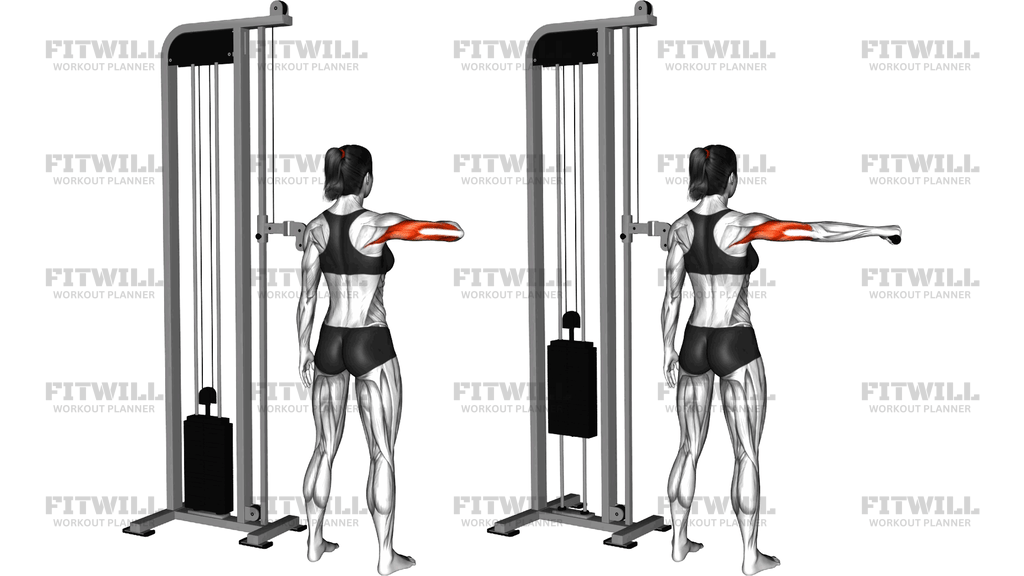
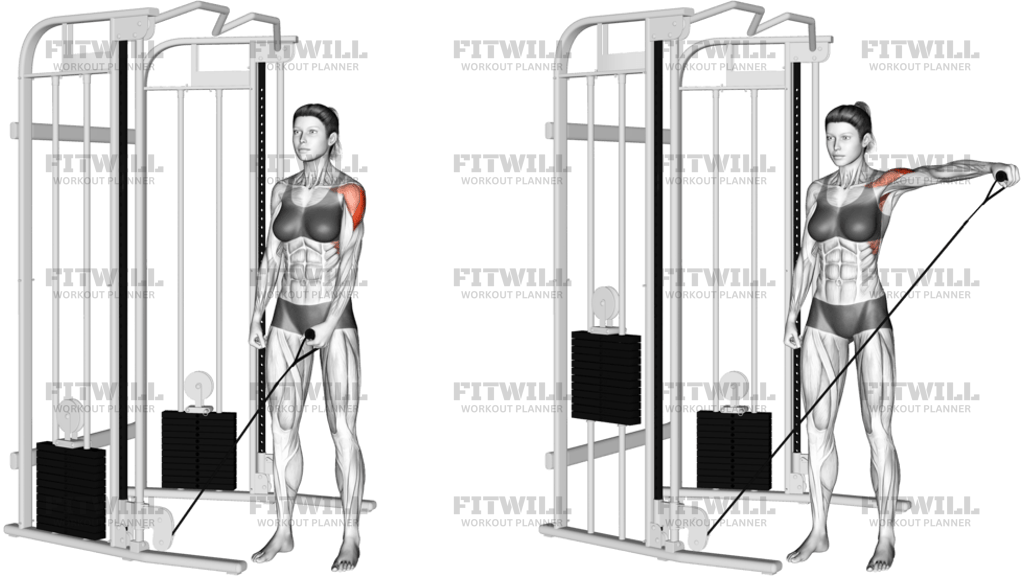
Cable One-Arm Lateral Raise is a single-arm shoulder isolation exercise built around shoulder abduction against a low cable. It is most often used to train the side delts with a constant line of tension, which makes it useful when you want cleaner resistance through the bottom of the rep than a dumbbell usually gives. The cable and handle attachment let you keep the load smooth, but the exercise still demands a very steady torso and shoulder position.
The setup matters because the cable must stay active throughout the whole rep. Stand side-on to the machine, hold the handle in the hand farthest from the stack, and let the cable cross slightly in front of your body. From there, the working arm should begin in front of the outer thigh with a soft elbow and a neutral wrist. That starting position keeps the shoulder honest and prevents the rep from becoming a shrug or a body-swing drill.
As you lift, the arm should travel out to the side in a smooth arc until it reaches about shoulder height or just below. The goal is not to heave the weight higher, but to keep the upper arm leading while the torso stays tall and still. A brief pause near the top can help you feel the deltoid finish the rep, then the handle should lower under control so the cable never goes slack.
This movement is a strong fit for accessory work, shoulder-focused sessions, and higher-quality hypertrophy sets where you want tension without using much momentum. It can also be a helpful option for beginners because the cable path is easy to control, but only if the load stays light enough to avoid leaning, twisting, or turning the rep into an upright row. If the neck takes over or the shoulder pinches, reduce the range, reduce the load, and keep the motion strict and pain-free.
Fitwill
Log Workouts, Track Progress & Build Strength.
Achieve more with Fitwill: explore over 9600 exercises with images and videos, access built-in and custom workouts, perfect for both gym and home sessions, and see real results.
Start your journey. Download today!




Instructions
- Set the pulley at the lowest position, attach a single handle, and stand side-on to the stack with the handle in the hand farthest from the machine.
- Let the cable cross slightly in front of your body and start with the working hand in front of the outer thigh, elbow softly bent and wrist neutral.
- Plant your feet, square your ribs, and keep your free hand relaxed at your side, on your hip, or lightly braced on the machine for balance.
- Before each rep, set your shoulder down away from your ear and keep your neck long.
- Raise the arm out to the side in a smooth arc until the hand reaches shoulder height or just below.
- Keep the elbow slightly higher than the hand and avoid turning the movement into a forward swing or a shrug.
- Pause briefly at the top while the cable is still under tension.
- Lower the handle slowly back to the start until the working arm is again in front of the outer thigh.
- Exhale on the lift, inhale on the descent, and repeat for the planned reps before switching sides.
Tips & Tricks
- Step far enough from the stack that the cable keeps pulling at the bottom of the rep instead of going slack.
- Use a lighter load than you would expect on a dumbbell lateral raise; the cable is unforgiving when you start to swing.
- Keep a soft bend in the elbow the whole set so the shoulder does the work instead of the elbow locking out.
- Let the thumb stay slightly up or neutral if that feels better on the shoulder; forcing the pinky high can irritate the joint for some lifters.
- Stop the lift at shoulder height if you have to shrug to go higher.
- Keep the torso quiet; if your ribs flare or your hips shift, the weight is too heavy.
- Use a controlled lowering phase of about two to three seconds to keep tension on the side delt.
- If the front of the shoulder pinches, shorten the range a little and keep the cable path just in front of the body.
Frequently Asked Questions
What muscles do Cable One-Arm Lateral Raises work most?
The side delts do most of the work, with the upper traps and rotator cuff helping stabilize the shoulder.
Where should the handle start before each rep?
It should start in front of the outer thigh with a soft elbow, neutral wrist, and the cable crossing slightly in front of your body.
How high should I raise my arm?
Raise until the hand reaches about shoulder height or just below, then lower under control instead of chasing extra height.
Should I lean away from the cable stack?
A small lean is fine if it helps you stay balanced, but the torso should stay mostly still and not turn the rep into a swing.
Is this a good beginner shoulder exercise?
Yes, if the load is light and the motion stays strict. The cable path is easy to control, but the shoulder still has to stay organized.
Why use a cable instead of a dumbbell?
The cable keeps tension on the shoulder through more of the range, especially near the bottom where dumbbells can feel too easy.
What is the biggest form mistake?
Shrugging the shoulder or using body sway to get the handle higher usually means the load is too heavy.
How can I make the exercise harder without cheating?
Use a slower lowering phase, stand a little farther from the pulley, or add a small pause at the top before increasing the load.