Walking
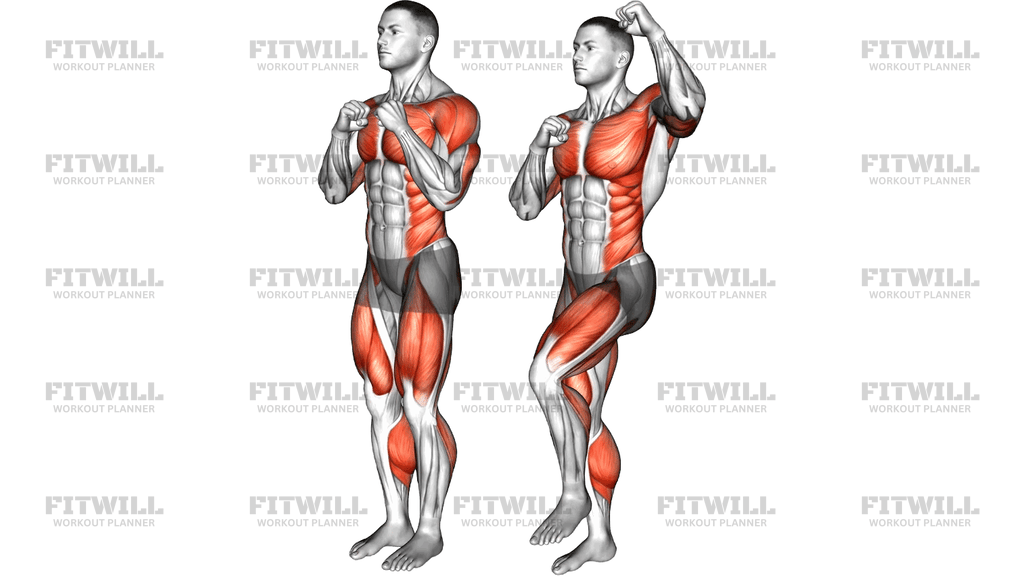
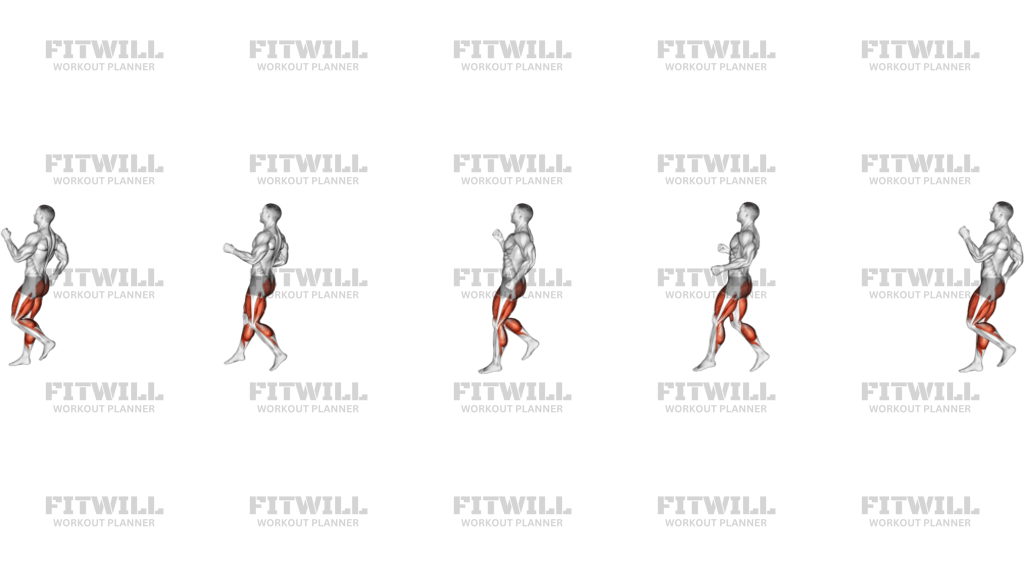
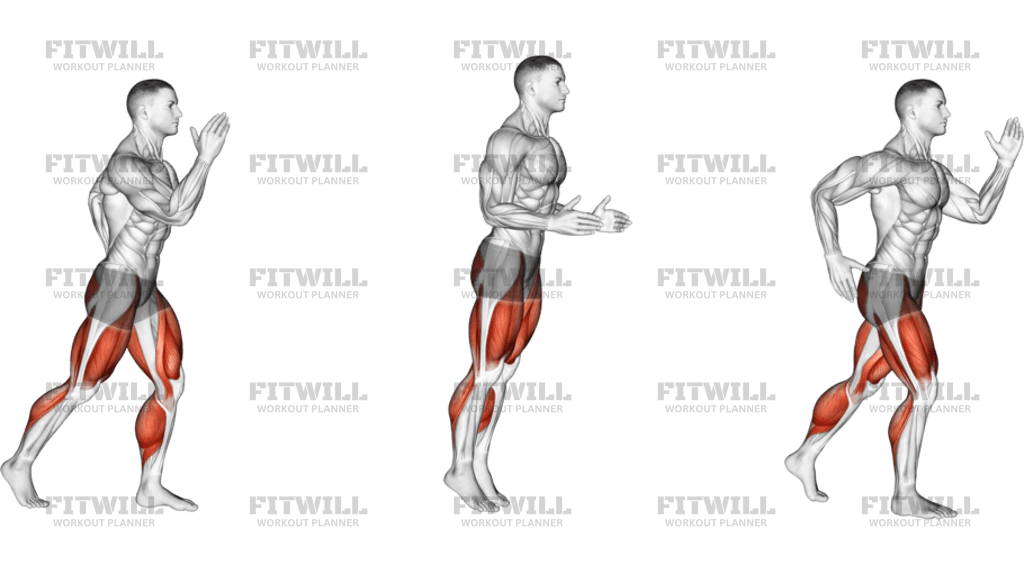
Walking is a low-impact cardio exercise built around a natural heel-to-toe gait. It raises heart rate, builds general work capacity, and trains the lower body to repeat a clean step pattern without excessive bounce, overstriding, or trunk sway. In this record, the movement is body-weight only, so the quality of each step matters more than speed.
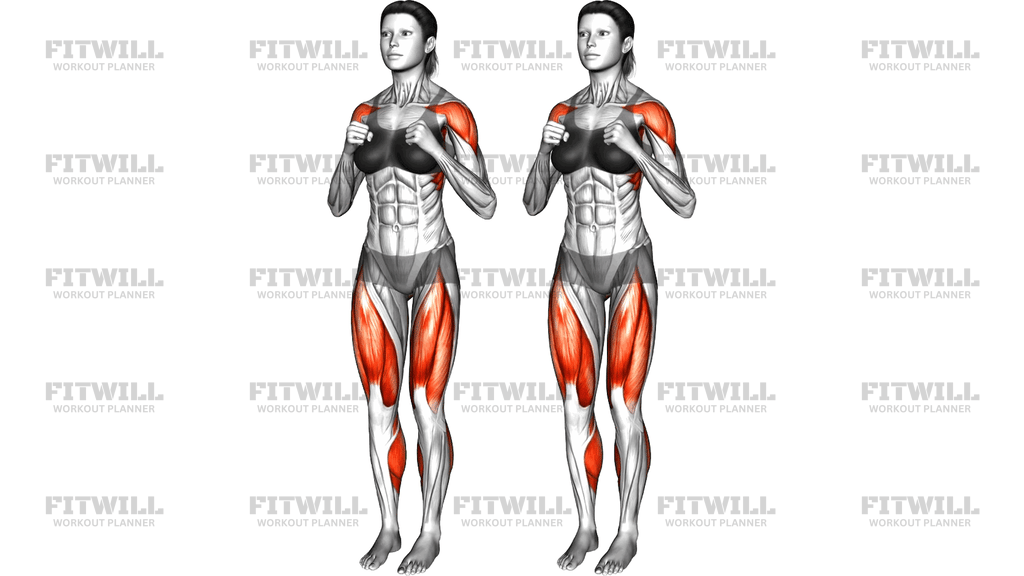
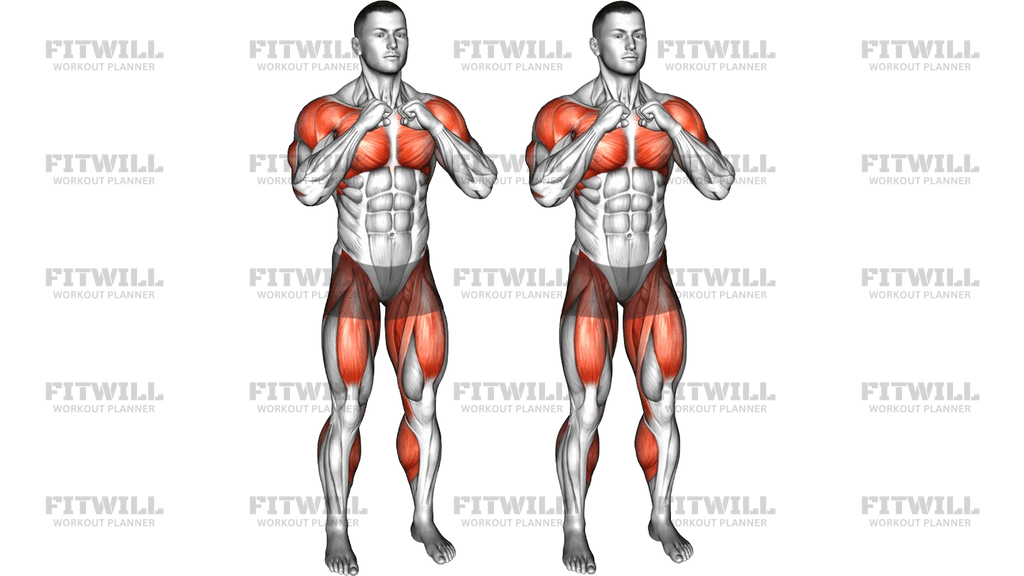
The main emphasis is on the quads, with the calves, glutes, hamstrings, and core stabilizers helping control the stride and keep the pelvis level. In practice, the exercise becomes more effective when the torso stays tall, the arms swing naturally, and the feet land under control instead of reaching far in front of the body. That makes the movement feel smoother and keeps the work where it belongs: on the walking pattern rather than on balance corrections.
Setup still matters even for something as simple as walking. Start from an upright stance with your ribs stacked over your pelvis, shoulders relaxed, and eyes forward. Take a step that is long enough to feel purposeful but not so long that it pulls your hips forward or forces the heel to slam down. Whether you are walking on flat ground, a treadmill, or an incline, the goal is a repeatable stride that you can maintain without tightening your neck or losing your posture.
During each step, let the stance leg accept your weight, roll through the foot smoothly, and push off in a controlled way. The opposite arm should swing naturally to help counter-rotate the trunk. Breathing should stay rhythmic and unforced, with the pace chosen so you can stay relaxed for the intended duration. If the stride starts to get noisy, the shoulders creep up, or the hips begin to shift side to side, the pace is too aggressive for the quality you want.
Walking fits warm-ups, recovery work, and conditioning blocks where you want steady output without high joint stress. It is also useful as a base movement for beginners who need a simple, reliable way to build daily activity and aerobic capacity. The best results come from consistent mechanics, not from forcing speed. Keep the step pattern clean, choose a pace you can sustain, and stop or slow down if the form becomes sloppy or painful.
[ Workout Log & Planner ]
Put your next workout in Fitwill
Keep your plan and training log ready when you are.


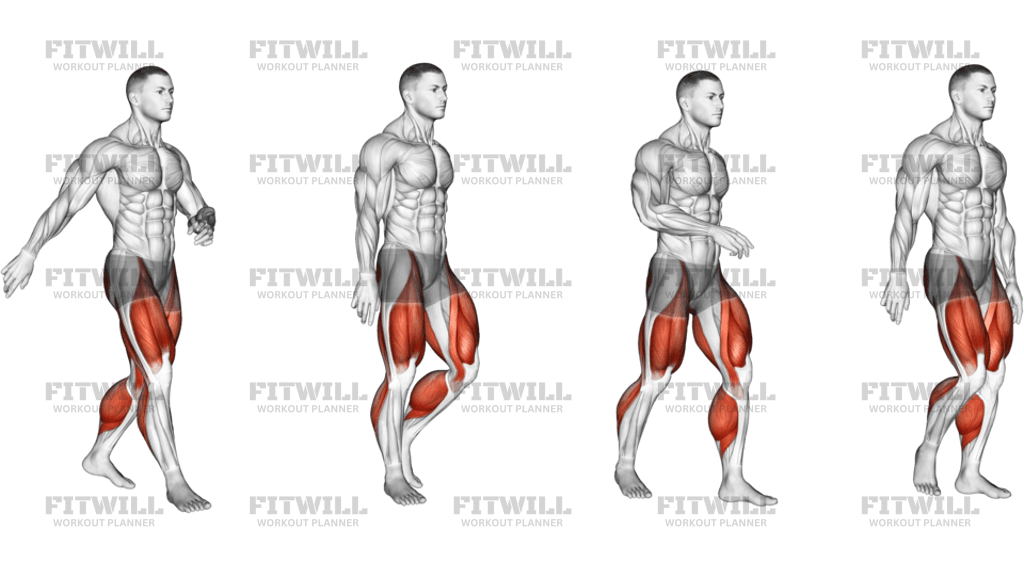
Instructions
- Stand tall with your ribs stacked over your pelvis, shoulders relaxed, and eyes looking straight ahead.
- Start on flat ground or a treadmill at a comfortable pace before increasing speed or incline.
- Keep your feet parallel or only slightly turned out so each step tracks straight ahead.
- Take a short, controlled first step with the heel landing under your center of mass rather than far in front of you.
- Let the weight move through the whole foot from heel to toe as the trailing leg pushes you forward.
- Swing the opposite arm naturally so the right arm matches the left leg and the left arm matches the right leg.
- Keep your torso quiet and level while the legs alternate; avoid twisting the shoulders or bouncing the hips.
- Breathe in a steady rhythm that matches your pace instead of holding your breath.
- Continue for the planned distance, time, or step count, then slow down gradually before stopping.
Tips & Tricks
- Think tall posture, not military stiffness: the chest is open, but the ribs stay down and the lower back does not arch.
- Keep your steps quiet; loud heel strikes usually mean the stride is too long or the pace is too fast.
- Let the arms swing from the shoulders instead of crossing hard in front of the torso.
- If you are using a treadmill, start the belt before stepping on and increase speed in small increments.
- A slightly shorter stride is usually better than reaching forward, especially on inclines or longer sessions.
- Keep the head neutral and avoid staring down at your feet, which tends to round the upper back.
- On hills or fast walks, lean from the ankles only slightly; do not bend at the waist.
- If the hips start rocking side to side, shorten the stride and reduce the pace until the gait feels smooth again.
Frequently Asked Questions
What muscles does walking work most?
Walking primarily targets the quads, while the calves, glutes, hamstrings, and core help control each step.
Is walking a good beginner exercise?
Yes. It is one of the easiest ways to build cardio capacity because the movement pattern is simple and easy to repeat.
How do I keep my stride from getting too long?
Land your foot under your body instead of reaching forward, and keep the pace slow enough that each step feels smooth.
Should I swing my arms while walking?
Yes. A natural opposite arm swing helps balance the body and keeps the gait pattern coordinated.
Is treadmill walking different from outdoor walking?
The mechanics are similar, but treadmill walking usually needs a slightly shorter stride and more attention to posture because the belt keeps moving under you.
What is the most common mistake during walking?
Overstriding and bouncing through the torso are the biggest issues because they waste energy and make the gait less efficient.
Can I use walking for warm-ups or recovery?
Yes. A controlled walk is ideal for warming up, cooling down, or adding low-stress cardio on lighter training days.
How do I make walking more challenging without running?
Increase distance, time, incline, or briskness gradually while keeping the same clean heel-to-toe step pattern.