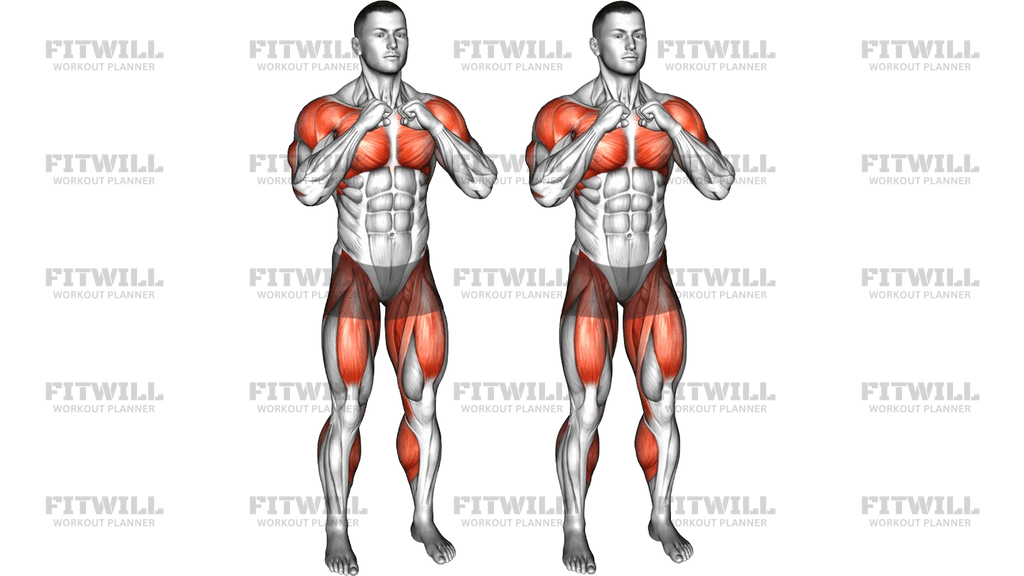
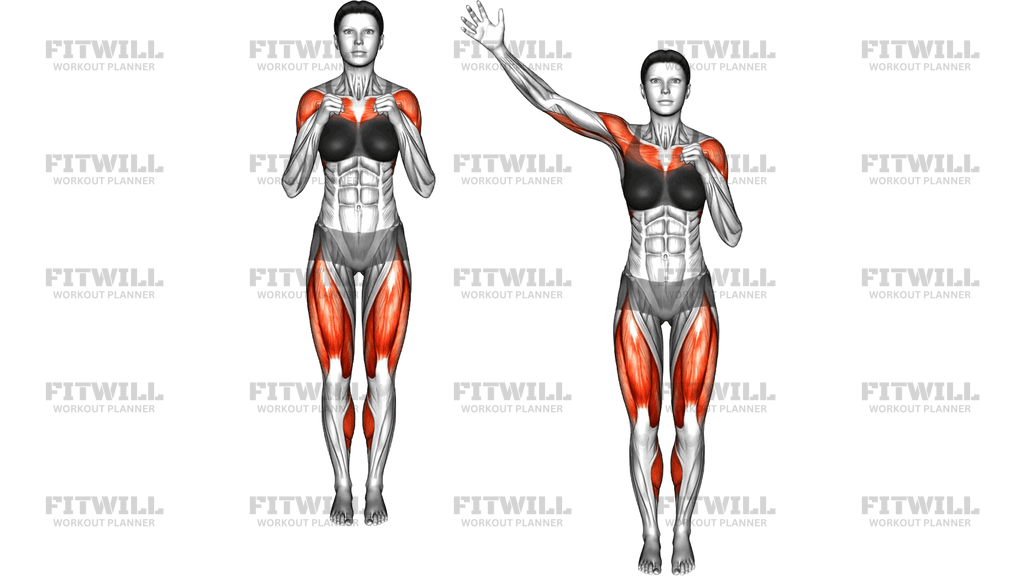
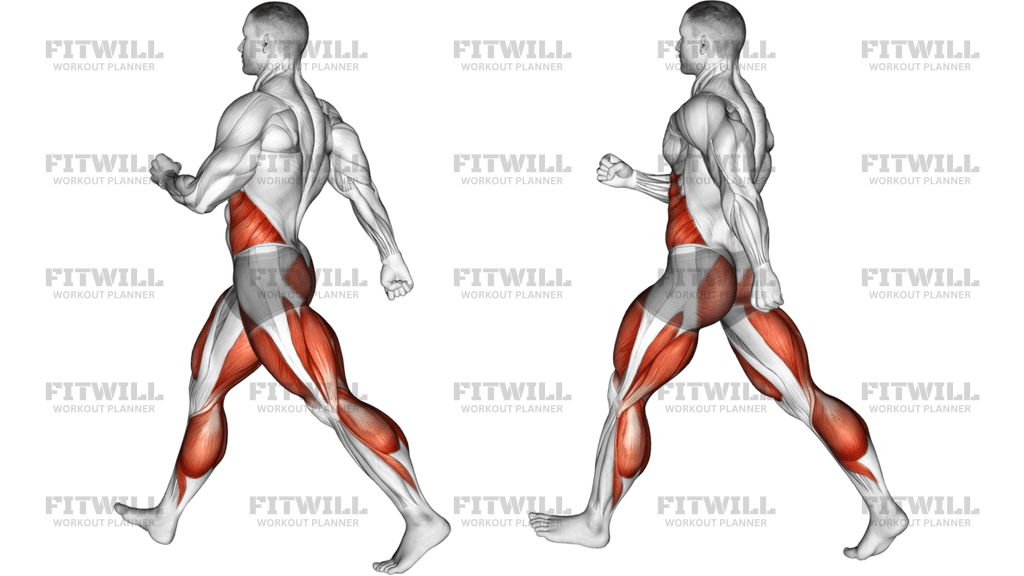
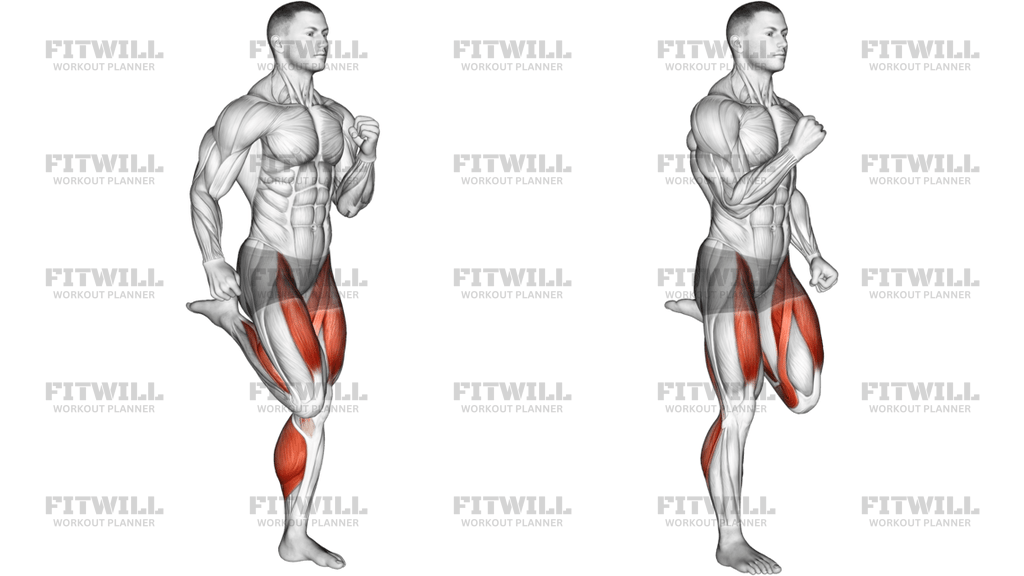
Vertical Mountain Climber
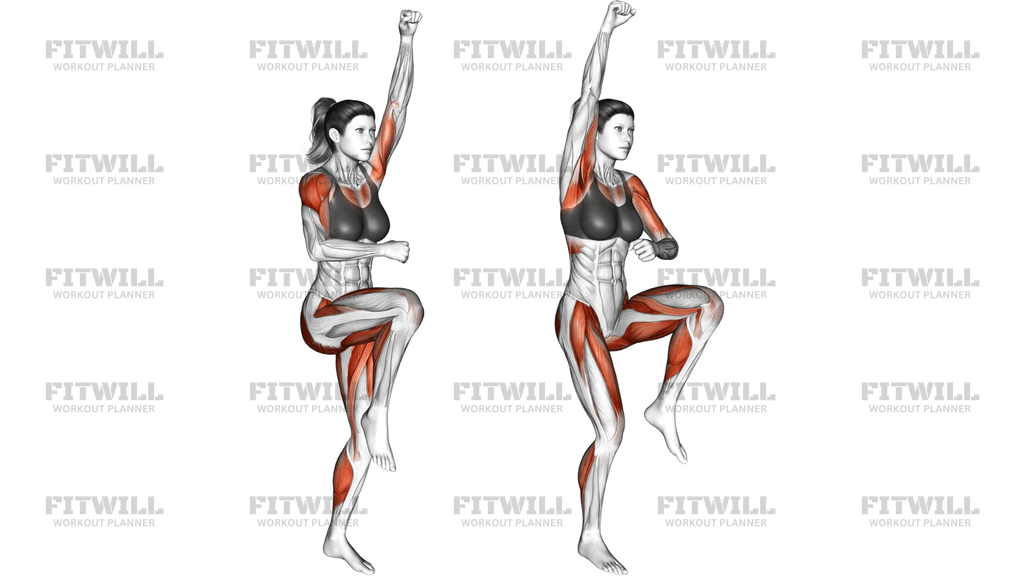
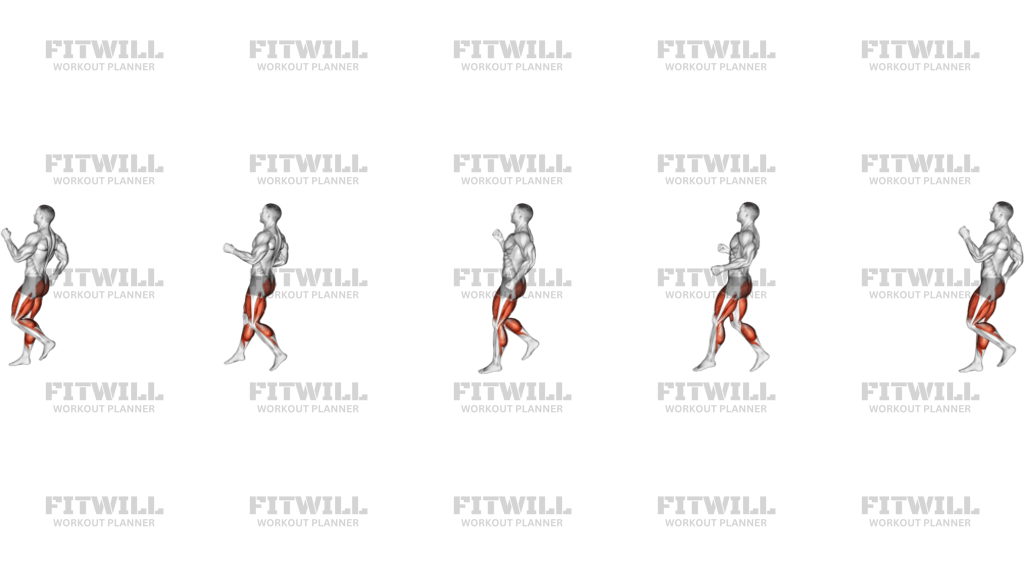
Vertical Mountain Climber is a standing cardio drill that combines alternating knee drives with an overhead arm reach. It is performed with body weight and a brisk, marching rhythm, so the value of the exercise comes from clean coordination rather than external load. The movement looks simple, but the setup matters: a tall torso, stacked ribs and pelvis, and controlled arm and leg timing keep it from turning into a sloppy bounce.
This exercise is best understood as an upright cross-crawl pattern. One knee drives up while the opposite arm reaches overhead, then the sides switch in a smooth alternating cycle. That combination challenges the hip flexors, quads, glutes, calves, and core while also asking the shoulders and upper back to stay organized through the overhead reach. The drill is useful when you want to raise heart rate, rehearse running mechanics, or add a low-equipment conditioning block.
Quality matters more than speed. The knee should come forward and up without the torso folding, the standing foot should stay planted long enough to control balance, and the overhead arm should lengthen instead of shrugging the shoulder toward the ear. If the movement gets choppy, shorten the range and slow the rhythm until you can keep the trunk tall and the transitions smooth.
Use Vertical Mountain Climber in warmups, interval circuits, athletic conditioning, or core-focused sessions where you want a dynamic body-weight pattern that also trains coordination. It is beginner-friendly when performed at a slower pace with a smaller knee lift, and it becomes more challenging as the cadence increases. Keep the reps crisp, breathe steadily, and stop the set when posture starts to drift or the arm and leg pattern loses sync.
Fitwill
Log Workouts, Track Progress & Build Strength.
Achieve more with Fitwill: explore over 9600 exercises with images and videos, access built-in and custom workouts, perfect for both gym and home sessions, and see real results.
Start your journey. Download today!




Instructions
- Stand tall on one foot with your torso stacked, feet hip-width apart, and both arms ready to move in a running pattern.
- Raise one arm straight overhead and keep the other arm bent in front of your chest so you can switch sides cleanly.
- Brace your midsection before you move so your ribs stay down and your pelvis stays level.
- Drive one knee up toward hip height while the opposite arm reaches overhead at the same time.
- Keep the standing leg firm and your lifted foot relaxed instead of kicking the knee out or leaning back.
- Lower the knee under control and switch sides in a smooth, alternating rhythm.
- Exhale as the knee rises and inhale as you return to the tall standing position.
- Continue for the planned time or repetition count without letting the motion turn into bouncing or twisting.
Tips & Tricks
- Think about lifting the knee straight forward and slightly up, not swinging it out to the side.
- Keep your chest tall and your ribs stacked over your hips so the movement stays athletic instead of turning into a crunch.
- Reach the overhead arm long without shrugging the shoulder toward your ear.
- Land softly on the ball of the foot when you switch sides so the drill stays springy rather than noisy.
- Use a shorter knee lift if you cannot keep your balance or if your lower back starts to arch.
- Match the arm and leg switch on purpose; the drill should feel coordinated, not random.
- Choose a pace that lets you keep each rep sharp for the whole interval.
- Stop the set as soon as the torso starts rocking side to side or the knee drive loses height.
Frequently Asked Questions
What does Vertical Mountain Climber train?
It mainly trains cardio capacity and coordination while the hip flexors, quads, glutes, calves, shoulders, and core help control the pattern.
Do I need any equipment for Vertical Mountain Climber?
No. It is a body-weight drill done in place with enough floor space to lift each knee and swing the opposite arm.
How high should the knee come up?
Lift it as high as you can while keeping your torso tall and your standing leg controlled. Hip height is a good target if balance allows it.
What is the biggest form mistake?
Most people lean back, twist the torso, or shrug the overhead shoulder. Keep the rib cage stacked and the arm reach long.
Is this the same as a floor mountain climber?
No. This version is upright and alternating in place, with a knee drive and overhead reach instead of hands on the floor.
Can beginners do Vertical Mountain Climber?
Yes. Beginners should slow the cadence, keep the knee lift smaller, and focus on staying balanced on each switch.
How can I make it harder?
Increase the tempo, lengthen the overhead reach, or use longer intervals while keeping the knee drive and arm switch clean.
Where does this fit in a workout?
It works well in warmups, conditioning blocks, athletic circuits, or core-focused sessions where you want a fast body-weight movement.