Step-Up Crossover
Step-Up Crossover is a bodyweight conditioning drill built around a bench or sturdy box, but it asks for more than a simple step up. You drive onto the platform, then cross the trailing leg over the top and down to the other side, which turns the rep into a balance and coordination challenge as much as a lower-body cardio move. It looks simple, but the crossover path makes every rep depend on foot placement, hip control, and a clean transfer of weight.
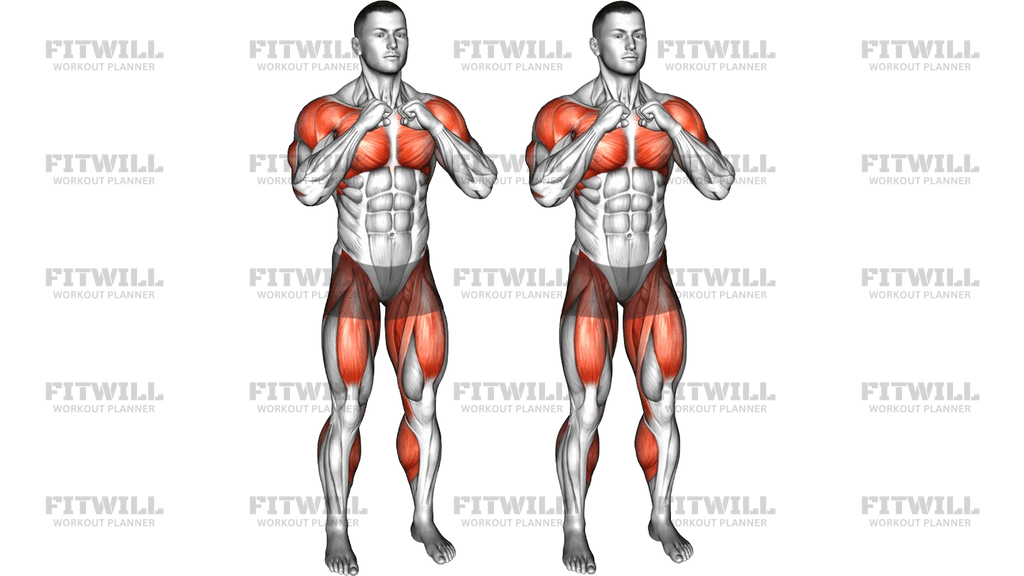
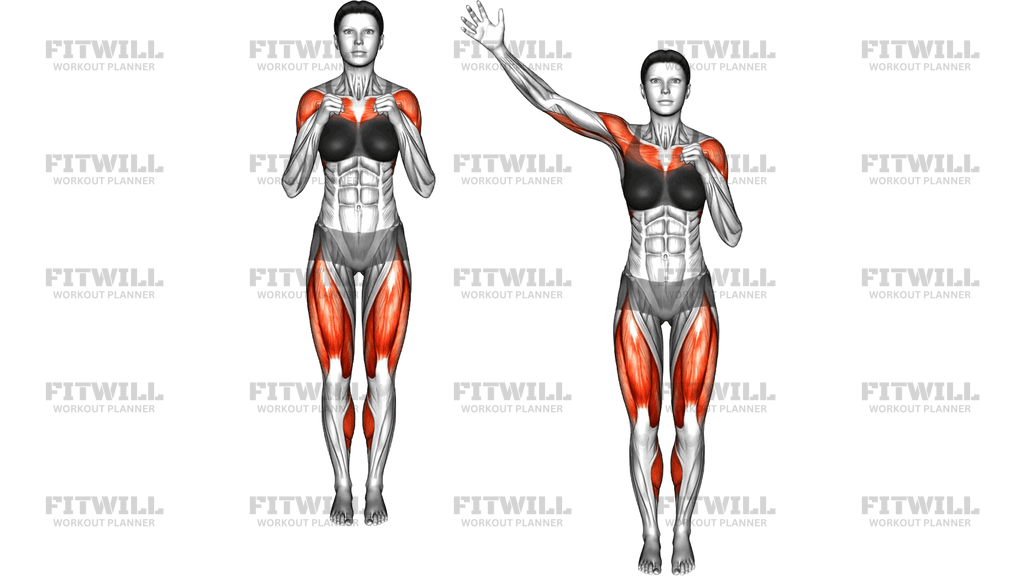
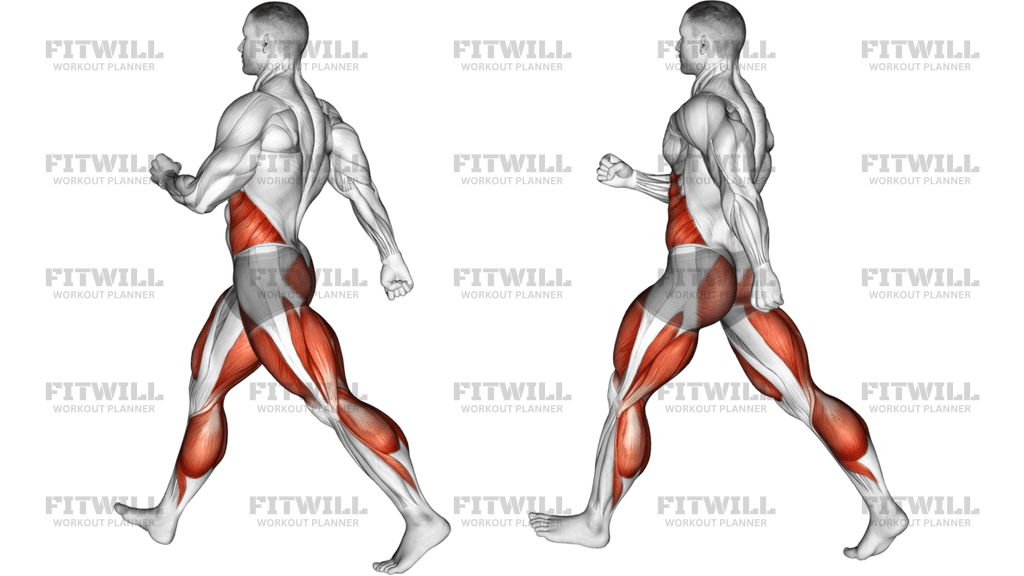
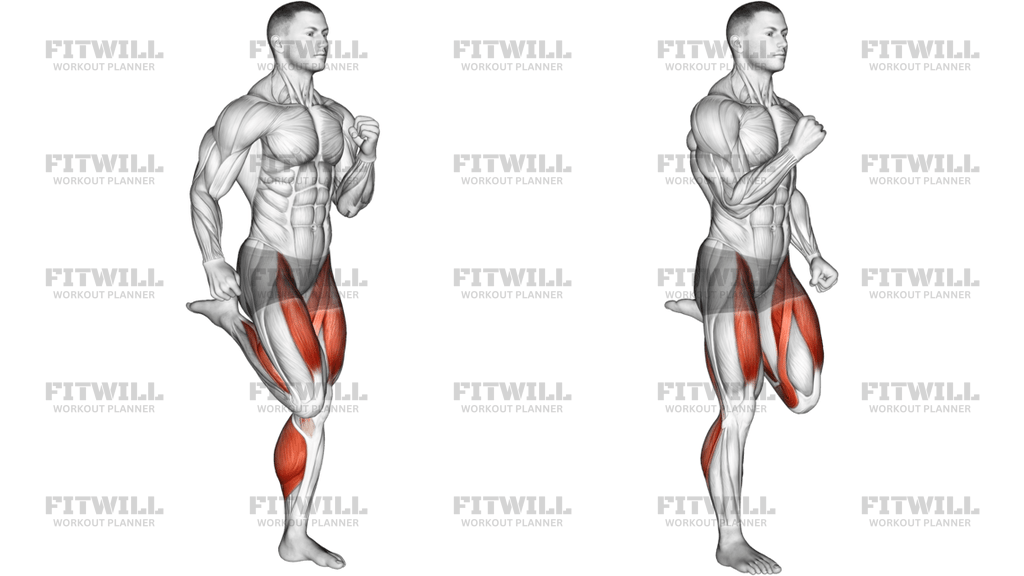
The movement trains the quads, glutes, adductors, calves, and the stabilizers that keep the pelvis level while you travel side to side. Because the working leg has to control both the ascent and the crossover, Step-Up Crossover is useful for general athletic prep, warm-ups, conditioning circuits, and lower-body accessory work where rhythm and posture matter. It is also a useful option when you want a heart-rate boost without adding load.
Setup changes the quality of the whole set. Choose a bench height that lets your planted foot stay flat and your knee track smoothly without your hips twisting or your free foot needing to jump. Stand close enough to place the working foot securely near the edge of the bench, keep your chest tall, and lightly brace before you drive upward. If the platform is too high, the step will feel like a hop instead of a controlled climb.
Each rep should feel like a clean transfer of weight, not a leap. Press through the whole foot on the platform, stand up through the hip and knee, then bring the free leg across your body with control instead of swinging it around. Keep the torso stacked over the stance leg, touch down softly on the far side, and reset without letting the movement turn sloppy. The crossover leg should stay light and deliberate so the working leg does the real job.
Because Step-Up Crossover is often used for conditioning, the goal is smooth repeatable reps rather than rushed reps. A steady tempo keeps the heart rate up while protecting balance and knee tracking. If the knee caves inward, the landing gets loud, or the trunk starts rotating to help the leg, lower the step height or slow the crossover before the set turns into momentum work. Use it where you want athletic coordination, not maximal load, and stop the set when your footwork stops looking clean.
[ Workout Log & Planner ]
Put your next workout in Fitwill
Keep your plan and training log ready when you are.


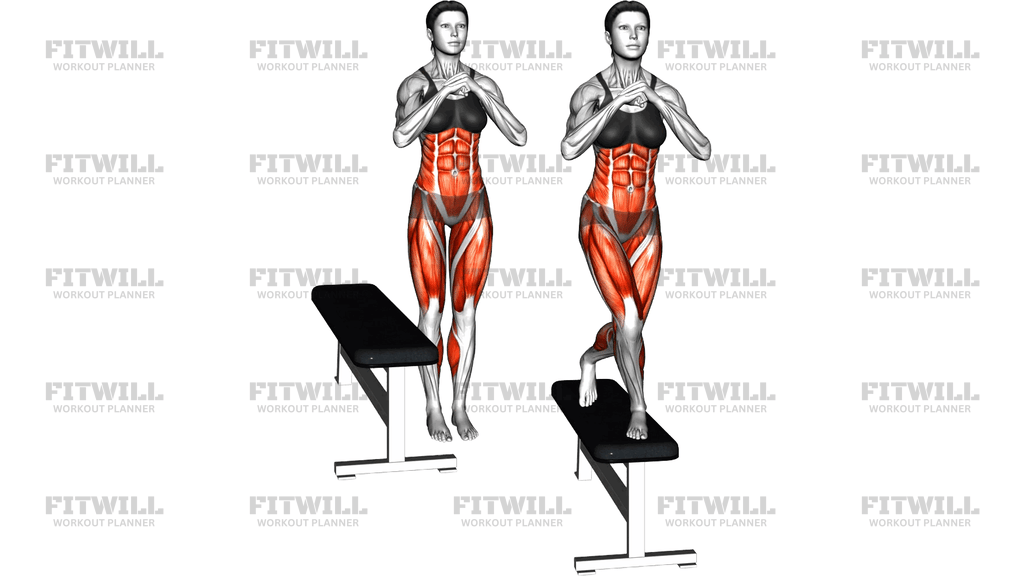
Instructions
- Stand beside a bench or sturdy box and place one foot flat on the platform near the edge.
- Keep your other foot on the floor, your chest tall, and your weight centered over the planted foot.
- Brace lightly and press through the whole foot on the bench to stand up, extending the hip and knee.
- Bring the free knee up and across your body as you rise instead of letting the leg swing straight out to the side.
- Finish tall on the platform with the standing leg straight but not locked and your hips level.
- Step or tap the free foot down on the opposite side of the bench under control and land softly.
- Shift your weight with control and repeat the crossover step on the other side or the same side as programmed.
- Keep breathing steadily through the set, then step back to the floor only after the last rep is finished.
Tips & Tricks
- Use a bench height that lets your working thigh stay around parallel or slightly below; too much height turns the rep into a jump.
- Plant the full foot on the bench so the push comes through the heel and midfoot, not just the toes.
- Keep the standing knee tracking over the second and third toes; if it caves inward, slow the rep down.
- Think about lifting the free knee across your body, not swinging the leg around the bench, to keep the crossover honest.
- Land quietly on the opposite side; a loud landing usually means you are dropping too fast.
- Keep the torso tall with only a small forward lean from the hips so balance stays over the working leg.
- If your hips twist, square your shoulders to the front and reduce the speed of the crossover.
- For conditioning, use a steady rhythm; for strength-endurance, pause briefly at the top before stepping over.
Frequently Asked Questions
What muscles does Step-Up Crossover work most?
It mainly hits the quads and glutes, with the adductors, calves, and core stabilizers helping control the crossover and landing.
Is Step-Up Crossover good for beginners?
Yes, if the bench is low enough to let you step up without hopping or losing balance. Start slow and keep the crossover controlled.
How is this different from a regular step-up?
The crossover adds a side-to-side path, so you get more hip control, balance, and coordination than a straight step-up.
How high should the bench be?
Use a height that lets the working foot stay flat and the hips stay level. Lower the bench if your knee wobbles or your pelvis twists.
Should I hold weights for Step-Up Crossover?
Start with bodyweight only. Add light dumbbells only after you can keep the crossover smooth, quiet, and balanced.
Why do I feel this in my inner thigh?
That is normal because the crossing path loads the adductors and other stabilizers more than a straight step-up does.
How do I keep from wobbling?
Slow the transition at the top, keep your gaze forward, and place the working foot close enough to the bench edge for a clean push.
Can I use Step-Up Crossover in cardio circuits?
Yes. It fits well in warm-ups or conditioning blocks because it raises the heart rate without needing much equipment.