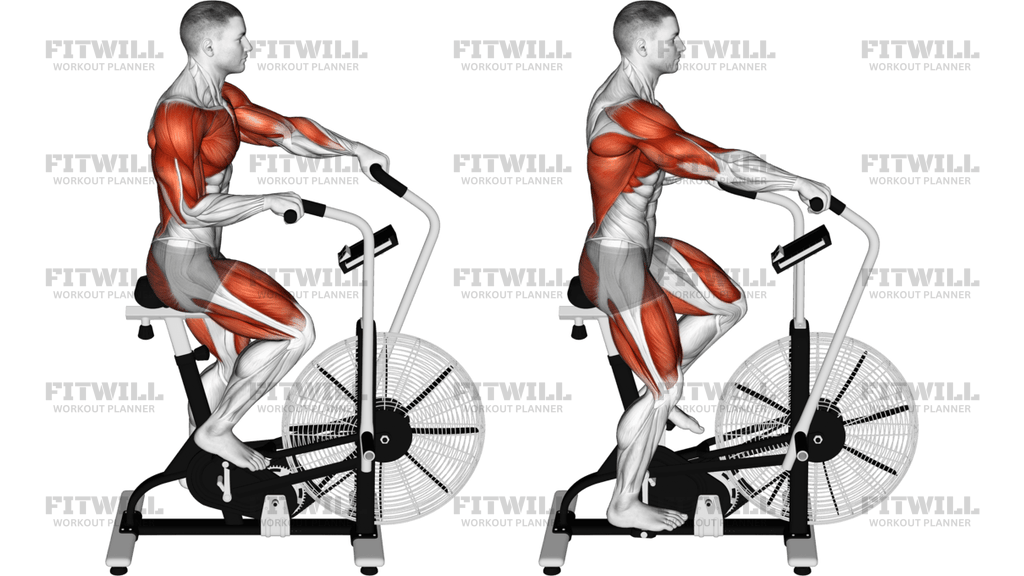
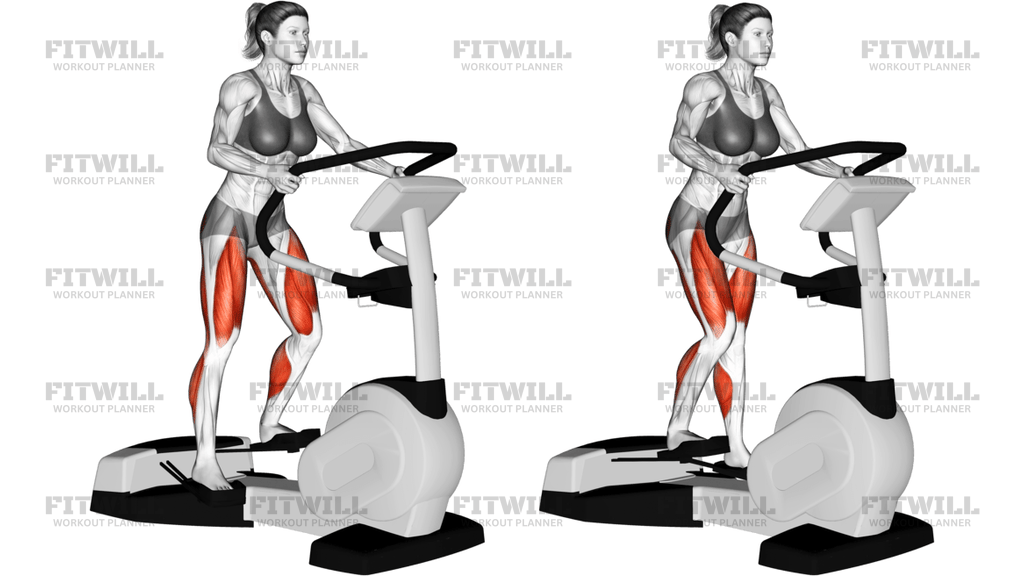
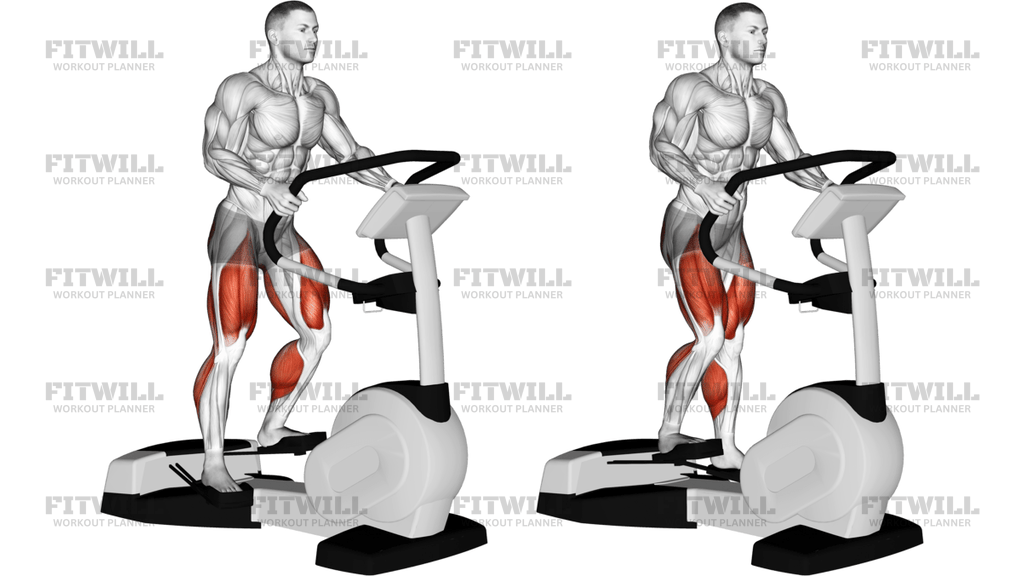
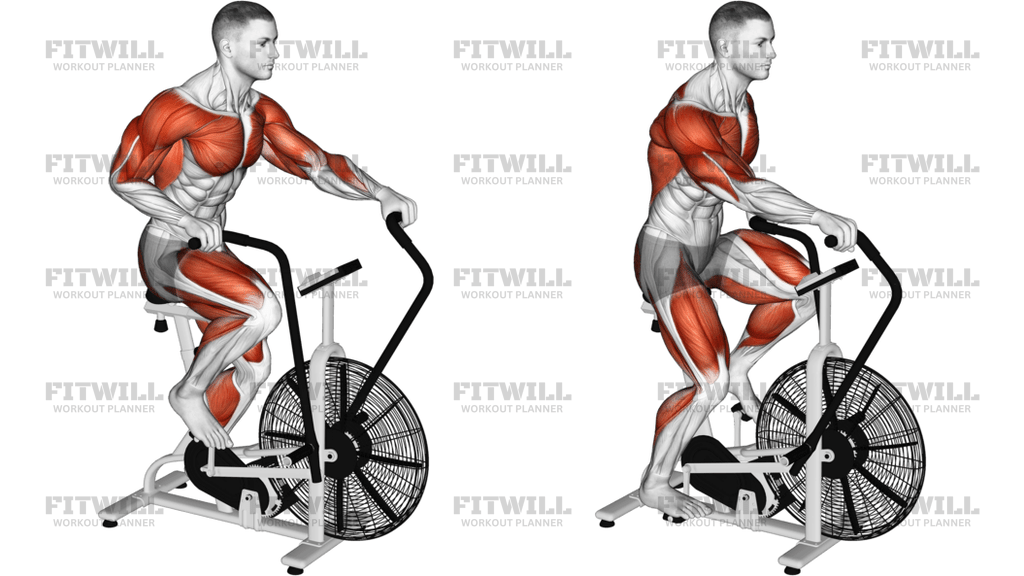
Elliptical Machine Skiing
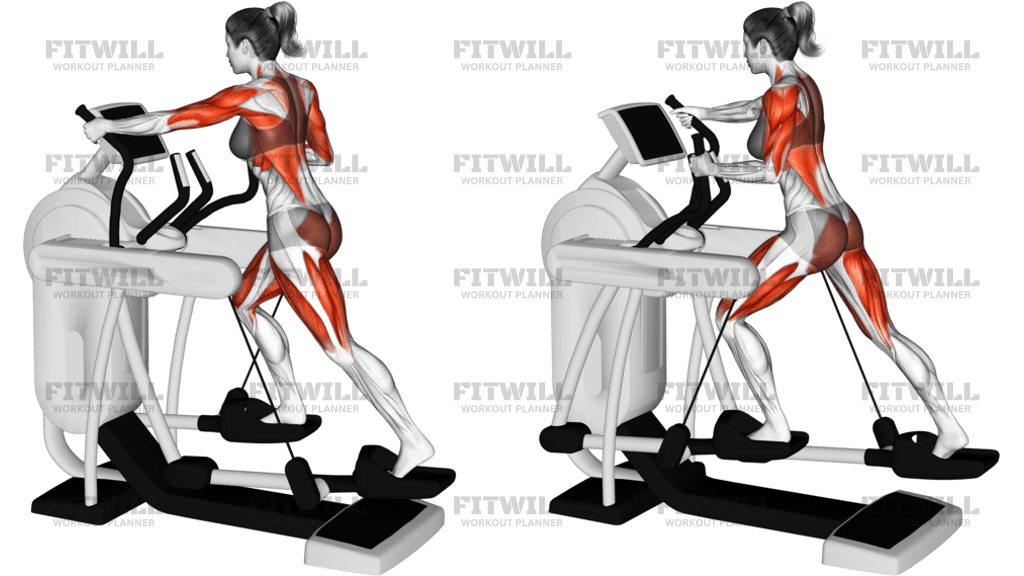
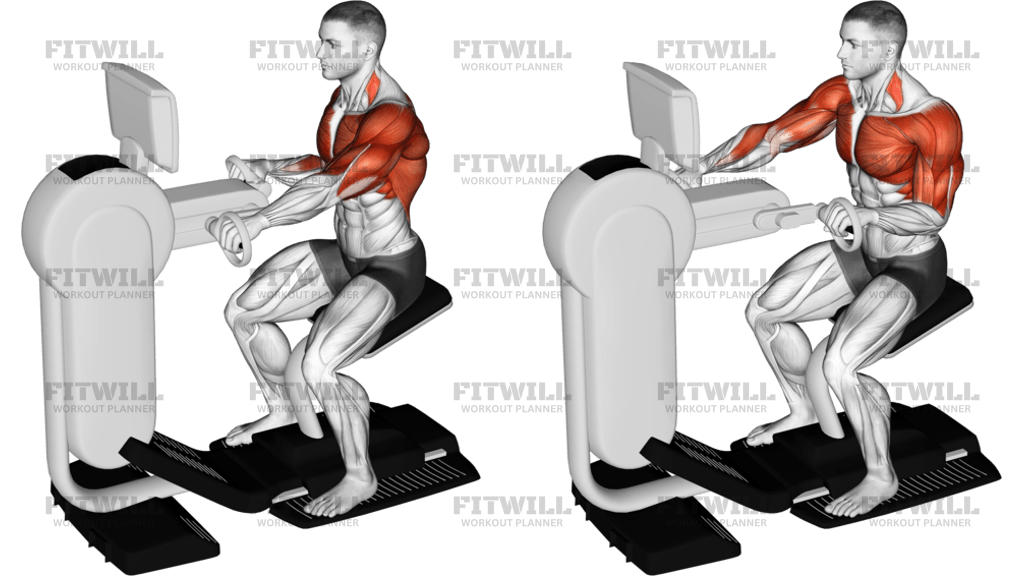
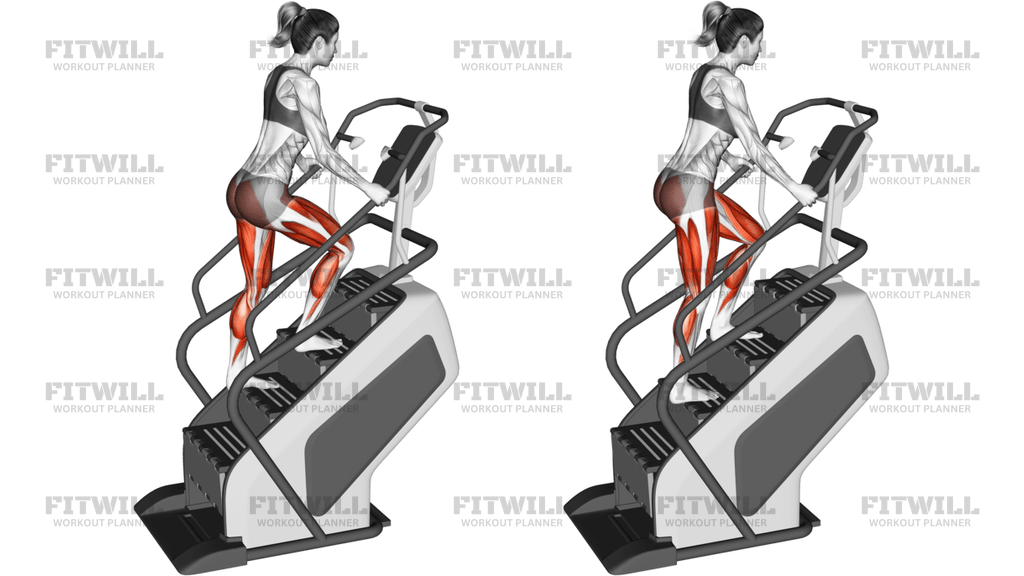
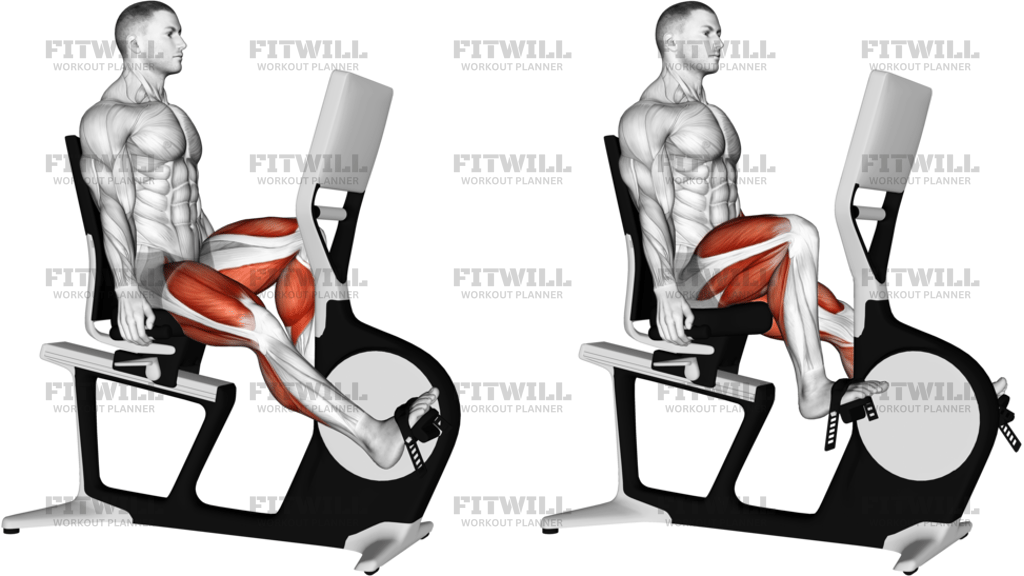
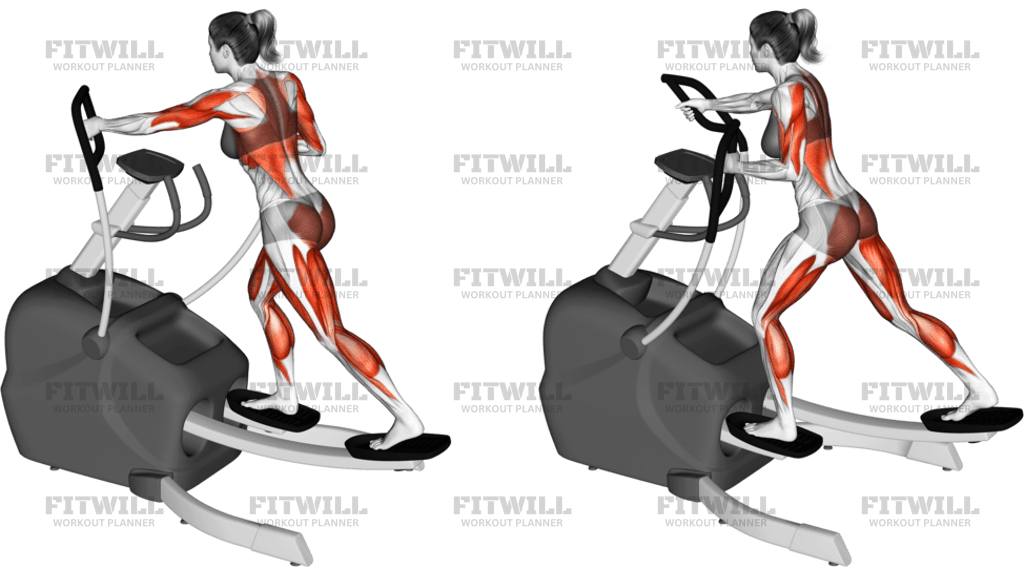
Elliptical Machine Skiing is a low-impact cardio exercise that mimics the rhythm of cross-country skiing on a leverage machine. The moving handles and gliding foot platforms let you train steady breathing, whole-body coordination, and aerobic endurance without the repeated impact of running.
The setup matters because this pattern works best when your torso stays stacked and the machine does the work of guiding the path. With your feet secure on the pedals and your hands on the handles, you should feel a long diagonal line from one arm to the opposite leg. That opposition is what gives the exercise its ski-like feel and keeps the effort spread across the legs, back, shoulders, and core instead of dumping into one joint.
A clean repetition begins with a tall stance, a light hinge from the ankles, and a controlled push-pull through the handles. As one arm drives forward, the opposite leg extends and the other side recovers, creating a smooth alternating rhythm. Keep the shoulders down, the ribs controlled, and the hips square so the machine stays smooth instead of rocking side to side.
This exercise is useful for warmups, steady-state conditioning, and interval work when you want more total-body demand than a simple cardio machine. It can also be a joint-friendly option for athletes who need a conditioning block with less impact. The best results come from smooth, repeatable strides, not from yanking the handles or sprinting so hard that posture collapses.
If the resistance climbs too high or your cadence gets sloppy, the movement stops looking like skiing and starts turning into a shrugging, twisting grind. Keep the motion crisp enough that you can breathe in a controlled rhythm and reset your posture at the end of every stride. That keeps the session aerobic, efficient, and safer for the shoulders, low back, and knees.
[ Workout Log & Planner ]
Put your next workout in Fitwill
Keep your plan and training log ready when you are.


Instructions
- Step onto the pedals with one foot on each platform and take hold of the moving handles at about chest height.
- Set your feet flat and evenly weighted, soften your knees, and stand tall with your ribs stacked over your pelvis.
- Lean only slightly from the ankles so your body is ready to glide, but keep your lower back neutral and your chest open.
- Start by pushing one handle forward while the opposite leg drives back through the pedal and the other side returns.
- Let the handles and pedals travel in a smooth alternating rhythm instead of forcing the motion with your arms alone.
- Keep your hips level, shoulders down, and head in line with your spine as each stride repeats.
- Breathe out through the drive phase and inhale as the recovering side comes back toward you.
- Continue for the planned time or stride count, then reduce the pace before stepping carefully off the machine.
Tips & Tricks
- Let the opposite arm and leg move together so the stride feels diagonal instead of choppy.
- Keep your shoulders away from your ears; shrugging makes the handles feel heavier and shortens the stride.
- Press through the whole foot on the pedal so the machine glides smoothly instead of bouncing off the toes.
- Use enough resistance to feel tension, but not so much that the handles start jerking or the torso twists hard.
- Think about pushing the handle and driving the leg at the same time, which recruits the back and glutes together.
- Keep your chest tall rather than folding forward over the console, especially as fatigue builds.
- Shorten the stride and lower the pace if your low back starts taking over or your hips begin rocking.
- Stop the set before your breathing becomes ragged enough that you cannot keep the rhythm and posture clean.
Frequently Asked Questions
What muscles does Elliptical Machine Skiing work?
It primarily trains cardio capacity while involving the legs, glutes, lats, shoulders, arms, and core to keep the skiing pattern smooth.
Is this a good low-impact cardio option?
Yes. Your feet stay on the pedals, so it is usually easier on the joints than running while still giving a strong conditioning effect.
Should I push the handles or pull them?
Do both in a coordinated rhythm. One side pushes forward while the opposite side returns, so the machine feels like a continuous ski stride.
How much should my torso move during the stride?
Very little. A slight forward lean is fine, but the torso should stay tall and stable instead of swaying or twisting hard.
Can a beginner use this machine?
Yes. Start with low resistance and a slower rhythm so you can learn the opposite-arm, opposite-leg pattern without losing posture.
What is the biggest form mistake on this exercise?
Most people either shrug the shoulders or yank the handles. The movement should stay smooth, with the legs and back sharing the load.
How should I breathe during Elliptical Machine Skiing?
Exhale as you drive the handles and pedal through the working phase, then inhale as the recovering side comes back.
Is this better for steady cardio or intervals?
It works for both. Use a smoother pace for aerobic work or increase resistance and cadence briefly for interval sets.