Ab Roller Crunch
Ab Roller Crunch is a floor-based abdominal exercise that uses an ab roller frame or support handles to guide a short, controlled curling motion. The movement is built around spinal flexion: you start reclined with the knees bent, feet planted, and the torso supported by the roller, then curl the ribs toward the pelvis to lift the shoulders and upper back. That makes it a direct option for training the abs while still demanding enough control from the obliques, hip flexors, and deeper trunk muscles to keep the body lined up.
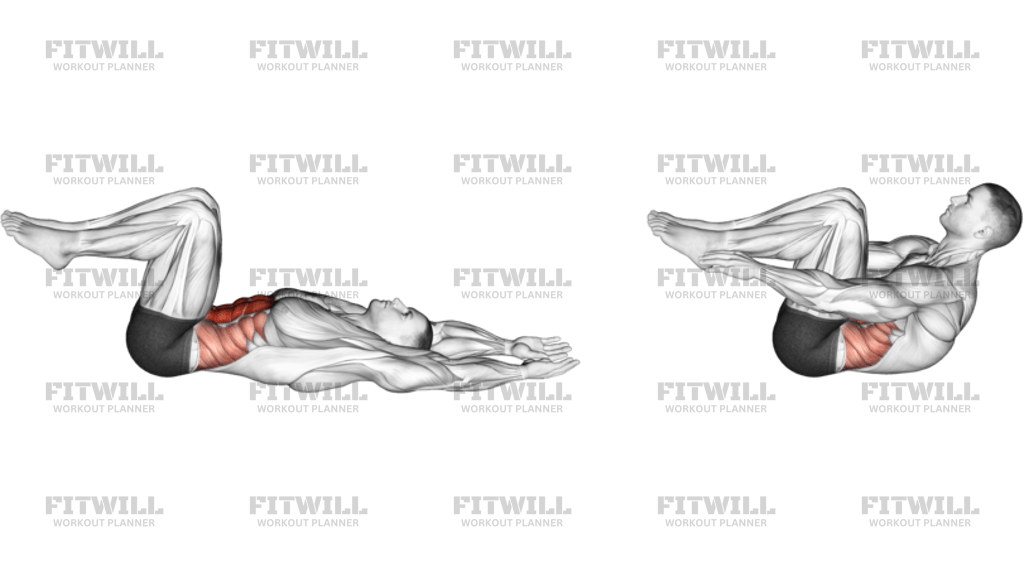
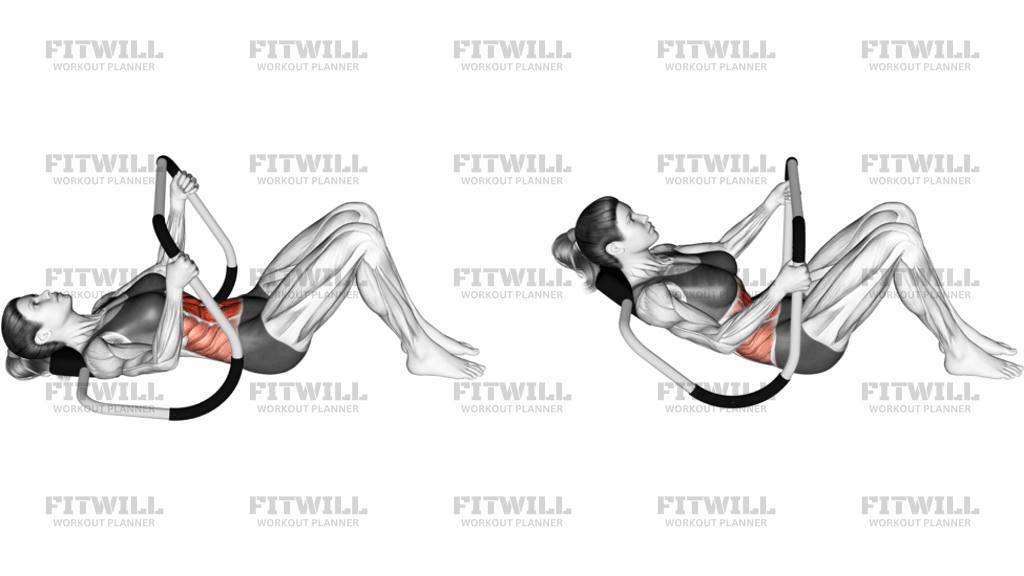
The image shows a curled, supported crunch rather than a full sit-up or a rolling plank. That matters, because the goal is to shorten the distance between the rib cage and pelvis while the lower body stays mostly quiet. A good rep keeps the neck long, the chin slightly tucked, and the pelvis from tipping or sliding. If the hips take over, the exercise stops being an abdominal crunch and turns into a sloppy hip-driven lift.
Setup is the first part of the rep. Lie back with your knees bent and feet flat so you can anchor through the floor. Hold the handles firmly, let the roller/frame support the torso in the starting position, and create tension through the midsection before you move. From there, exhale as you curl up, lift the shoulder blades off the floor, and keep the motion smooth instead of jerking into the top. The return should be just as controlled, with the ribs lowering back down under tension rather than dropping open.
Use Ab Roller Crunch when you want a more guided crunch pattern than a free floor crunch, or when you want to keep the top and bottom positions honest with clear support points. It fits well in a core-focused block, accessory work, or as a controlled abdominal finisher. Keep the range pain-free, choose a resistance or setup that lets you stay strict, and stop the set when the neck starts to lead or the lower back starts to arch. The best reps feel concentrated in the abs, not rushed through the hips or shoulders.
Fitwill
Log Workouts, Track Progress & Build Strength.
Achieve more with Fitwill: explore over 9600 exercises with images and videos, access built-in and custom workouts, perfect for both gym and home sessions, and see real results.
Start your journey. Download today!




Instructions
- Lie on your back with your knees bent, feet flat, and the ab roller frame supporting your torso in the starting position.
- Grip the handles with both hands and keep your shoulders relaxed against the support before you begin the first rep.
- Set your chin slightly tucked and brace your abs so the ribs and pelvis stay stacked.
- Exhale and curl your rib cage toward your pelvis, lifting your shoulders and upper back off the floor.
- Keep your hips heavy and your feet planted so the movement comes from trunk flexion, not from swinging the legs.
- Pause briefly at the top when your abs are fully shortened and your lower back stays controlled.
- Inhale as you lower back to the starting position with the same slow, supported path.
- Reset the brace before each rep and repeat for the planned number of repetitions.
Tips & Tricks
- Keep the curl small and deliberate; this is a rib-to-pelvis crunch, not a full sit-up.
- If the chin reaches forward first, reduce the range and think about lifting the sternum instead.
- Press your feet evenly into the floor so the hips do not pop up to finish the rep.
- Hold the handles just hard enough to stay stable; death-gripping them usually tightens the neck and shoulders.
- Exhale through the crunch to help the abs shorten, then inhale as you lower under control.
- Let the roller support your torso, but do not relax completely into it between reps.
- If your low back arches or your ribs flare open, shorten the range and slow the tempo.
- Stop before the set turns into a momentum exercise; the last clean rep is the one that counts.
Frequently Asked Questions
What does Ab Roller Crunch work most?
It mainly targets the rectus abdominis, with the obliques and deeper core muscles helping stabilize the torso.
Do I need to sit all the way up on the roller?
No. The goal is a controlled crunch and shoulder lift, not a full sit-up or a jerky roll-through.
Where should my feet be during the rep?
Keep both feet flat and planted so the lower body stays stable while the trunk does the work.
Should my neck or shoulders lead the movement?
No. Keep the chin slightly tucked and let the abs curl the ribs toward the pelvis instead of pulling with the neck.
Is this exercise suitable for beginners?
Yes, if they keep the range short and the movement slow. Beginners should avoid forcing a bigger curl than they can control.
What is the most common mistake with the handles?
Holding the handles too tightly and shrugging the shoulders, which usually shifts tension away from the abs.
Where should I feel the top position?
You should feel a strong abdominal contraction with the ribs pulled down, not a big bend through the hips or a strain in the low back.
How can I make the movement harder?
Use a longer, slower eccentric, keep the pause at the top, or increase resistance only if you can keep the curl strict.