Captains Chair Straight Leg Raise
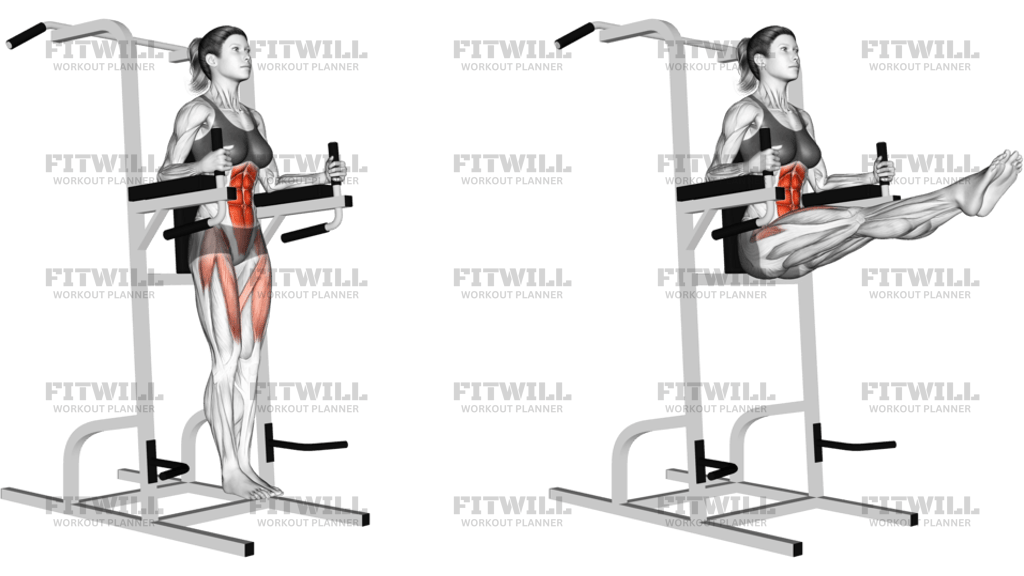
Captains Chair Straight Leg Raise is a supported core exercise performed on a captain's chair or vertical knee-raise station with the forearms on the pads and the back held tall against the support. From that fixed position, you lift both legs straight out in front of you, making the abdominals work to control the pelvis instead of letting the swing come from the hips and lower back.
The main training emphasis is on the abs, especially the rectus abdominis, with the obliques and deep core helping keep the trunk from rocking. The hip flexors also contribute, which is why the exercise feels much harder than a simple hanging knee raise. Keeping the torso quiet and the legs together is what turns the movement into a true abdominal raise instead of a momentum-driven leg swing.
The setup matters. Press the upper arms and forearms firmly into the pads, grip the handles, and let the shoulders stay down instead of shrugging toward the ears. Bring the pelvis slightly under you before the first rep so the low back does not arch excessively. Start with the legs hanging long beneath the hips, then brace before you lift so the station does most of the support and the core does the work.
On each rep, raise the legs together in a smooth arc until they are roughly parallel to the floor or as high as you can control without swinging. Keep the knees straight or only slightly soft, the feet together, and the rib cage from flaring upward. Exhale as you lift, then lower the legs slowly until the pelvis returns to the starting position and the abs are still controlling the descent.
This exercise is a useful accessory for ab-focused sessions, warmups, and bodyweight core work when you want a more demanding version of the captain's chair knee raise. It is also a good progression for people who can already control bent-knee raises and want more lever length. If the lower back starts to arch, the torso swings, or the hip flexors take over completely, shorten the range or regress to a bent-knee version until the movement stays strict.
Use clean reps rather than chasing height. The target is controlled trunk flexion and pelvic lift, not kicking the feet up as high as possible. When the station, shoulder support, and tempo stay organized, the movement becomes a precise lower-abdominal challenge instead of a loose leg raise.
[ Workout Log & Planner ]
Put your next workout in Fitwill
Keep your plan and training log ready when you are.


Instructions
- Step onto the captain's chair and place your forearms on the pads with your hands on the handles.
- Set your upper back against the support, keep your shoulders down, and let your legs hang straight beneath your hips.
- Bring your feet together and brace your abs so the torso stays tall instead of swaying.
- Exhale as you lift both straight legs forward in one controlled arc.
- Raise until the legs are near parallel to the floor or until your pelvis starts to tilt up.
- Pause briefly at the top without kicking or swinging.
- Lower the legs slowly until they return to the hanging start position.
- Reset your brace and repeat for the planned reps.
Tips & Tricks
- Keep your shoulders depressed against the pads; shrugging makes the whole station less stable.
- A small posterior pelvic tilt at the start helps your lower back stay out of the rep.
- If the legs only move because you kick them upward, reduce the range and slow the lowering phase.
- Straight legs make the lever longer, so a slight knee bend is acceptable if it keeps the rep strict.
- Do not let your ribs flare; think about drawing the front of the pelvis up toward the rib cage.
- Lower under control for at least as long as the lift takes so the abs stay loaded.
- Keep the feet together and the thighs squeezed to stop one leg from drifting ahead of the other.
- Stop the set when the swing starts coming from the hips instead of the trunk.
Frequently Asked Questions
What muscles does Captains Chair Straight Leg Raise target most?
It mainly trains the rectus abdominis, with the obliques and deep core helping control the pelvis. The hip flexors assist, especially near the top of the raise.
How should I set up on the captain's chair?
Place your forearms on the pads, grip the handles, keep your shoulders down, and let your back stay tall against the support before you start the first rep.
How high should the straight legs go?
Lift until the legs are close to parallel with the floor or until your pelvis starts to tilt up. If you have to swing to go higher, the range is too ambitious.
Should my knees stay locked during the raise?
They should stay mostly straight, but a slight soft bend is fine if it helps you control the rep and keep the low back from arching.
Is this harder than a bent-knee captain's chair raise?
Yes. Straight legs create a longer lever, so the abs have to control more torque and the movement becomes much more demanding.
Can beginners use this exercise?
Yes, but many beginners should start with bent-knee raises or a shorter range first. Move to the straight-leg version once you can keep the torso still.
What is the most common mistake on this station?
Swinging the legs up with momentum instead of curling the pelvis under control. If the torso rocks, the set is no longer a strict abdominal raise.
How can I make the exercise harder without adding weight?
Slow the lowering phase, add a brief pause near the top, or keep the legs straighter for a longer lever as long as the rep stays controlled.