Lever Pullover Plate Loaded
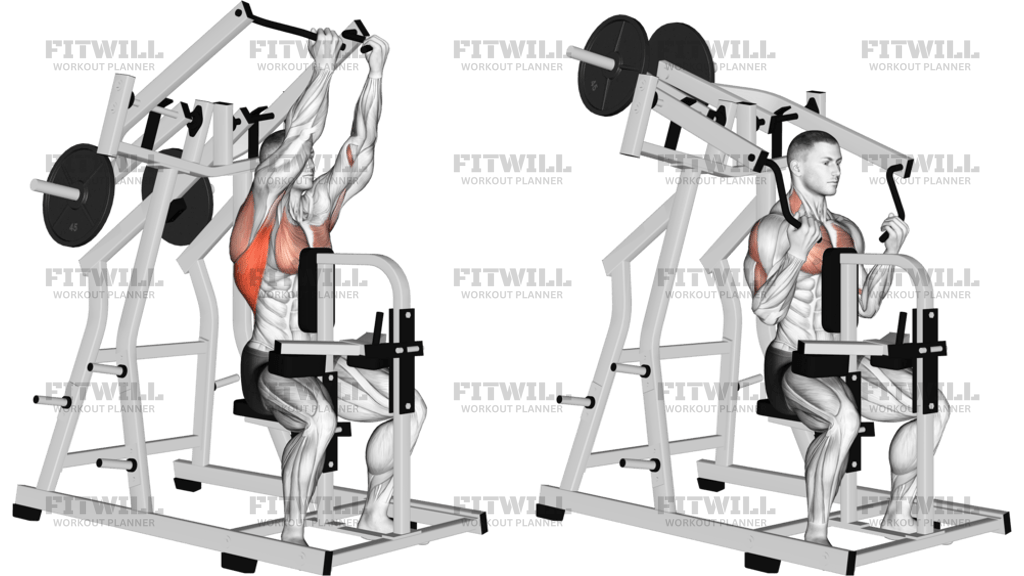
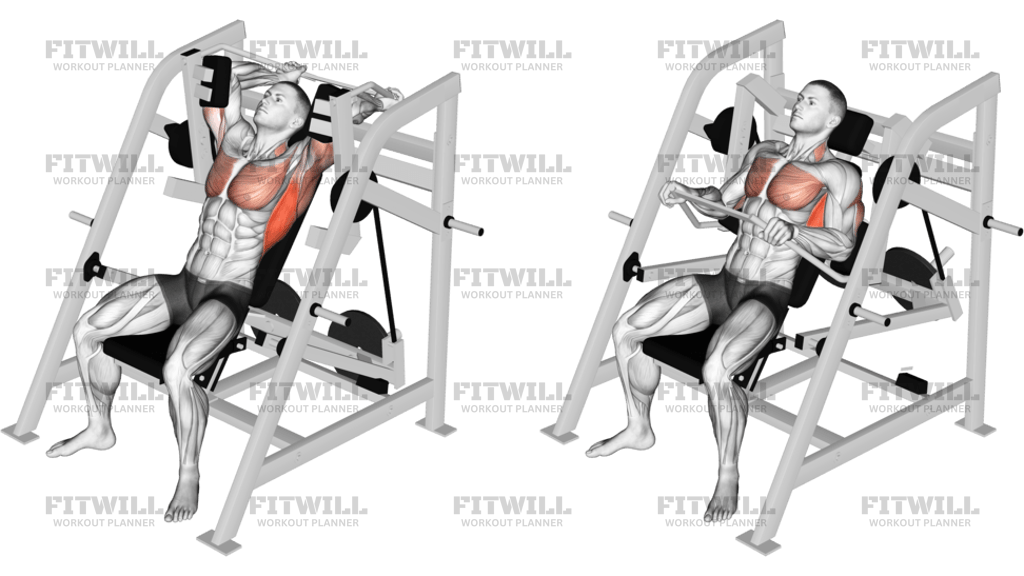
Lever Pullover (Plate Loaded) is a machine pullover that trains shoulder extension with the torso supported, letting you load the lats through a long arc without balancing a dumbbell or bar. The guided path makes it useful for lat-focused hypertrophy, controlled accessory work, and lifters who want a stable way to train the upper body pulling pattern while keeping the rest of the body quiet.
The setup matters because the machine fixes the arc for you, but it still needs a good seat position and shoulder alignment. Sit so your upper back and head are supported, plant both feet, and line the handles up with a comfortable overhead start. That starting position should let you feel the lats lengthen without forcing the shoulders into an uncomfortable pinch.
Each repetition starts from the stretched position. Keep a small bend in the elbows, set the shoulders down away from the ears, and pull the handles in a smooth arc toward the upper chest or upper ribs. The movement should look like the upper arms are being drawn down and back by the lats, not like you are pressing, curling, or yanking the machine with momentum.
A good bottom position feels strong and organized: chest tall, ribs controlled, neck relaxed, and the handles close to the torso without the lower back taking over. Then reverse the rep slowly and guide the handles back overhead until you feel a real lat stretch. The return matters just as much as the pull because it keeps tension on the working muscles and protects the shoulders from a sloppy rebound.
Use Lever Pullover (Plate Loaded) when you want a predictable machine path and a clear lat stimulus with less balance demand than a free-weight pullover. It fits well in back sessions, accessory blocks, and controlled hypertrophy work. Choose a load that lets you keep the same arc, breathing pattern, and torso position from the first rep to the last.
Fitwill
Log Workouts, Track Progress & Build Strength.
Achieve more with Fitwill: explore over 9600 exercises with images and videos, access built-in and custom workouts, perfect for both gym and home sessions, and see real results.
Start your journey. Download today!




Instructions
- Sit on the machine with your upper back and head against the pad, feet flat on the floor, and your chest tall but ribs stacked over your pelvis.
- Adjust the seat so the handles start in a comfortable overhead position and your shoulders are supported without being forced too far back.
- Grip the handles with an overhand grip and keep a slight bend in your elbows that stays nearly the same for the whole set.
- Take a breath, brace your trunk, and set your shoulders down away from your ears before you begin the first rep.
- Pull the handles in a smooth arc down toward your upper chest or upper ribs, letting the lats drive the motion.
- Keep your elbows traveling with the machine arms instead of turning the movement into a curl or a press.
- Pause briefly at the bottom when the handles are close to your torso and your chest position is still organized.
- Reverse the rep slowly and guide the handles back overhead until you feel a controlled stretch through the lats.
- Exhale on the pull, inhale on the return, and reset your posture before starting the next rep.
Tips & Tricks
- If your lower back arches to finish the rep, reduce the load and keep your ribs stacked so the lats do the work.
- A fixed, slight elbow bend is enough; bending and straightening the elbows each rep usually shifts the load toward the arms.
- Think about pulling your upper arms down and around the torso instead of just moving your hands.
- Keep your shoulders from shrugging at the top; the stretch should come from the lats, not a pinchy shoulder joint.
- The bottom position should feel like strong lat tension, not a hard slam into the stack or a jammed chest.
- Slow the return phase so the machine does not yank your arms overhead.
- Choose a grip width that lets your wrists stay neutral and your elbows track comfortably through the arc.
- Stop the set when you can no longer keep the same path and torso position, even if you still have reps left.
Frequently Asked Questions
What muscles does Lever Pullover (Plate Loaded) work?
It mainly targets the lats, with the upper back, biceps, and forearms helping to stabilize and guide the machine.
Is this a chest exercise or a back exercise?
It is primarily a back exercise because the movement is driven by the lats as the arms travel down from an overhead position.
How bent should my elbows be on the handles?
Keep a small bend in the elbows and hold that angle nearly the same throughout the rep.
Where should the handles travel on each rep?
They should move in a smooth arc from overhead down toward your upper chest or upper ribs, depending on the machine layout.
Should I feel a big stretch at the top?
You should feel a controlled lat stretch, but not a sharp pinch in the front of the shoulders.
Can beginners use this machine pullover?
Yes. It is beginner-friendly when you start light, keep the torso fixed, and move the handles with control.
Why do I feel this exercise in my arms?
The biceps and forearms help hold the handles, but if they dominate, lighten the load and focus on driving the elbows down.
What is the most common mistake on this movement?
Rushing the rep and arching the lower back to force the handles lower than the shoulders can control.