Stability Ball Rollout On Knees
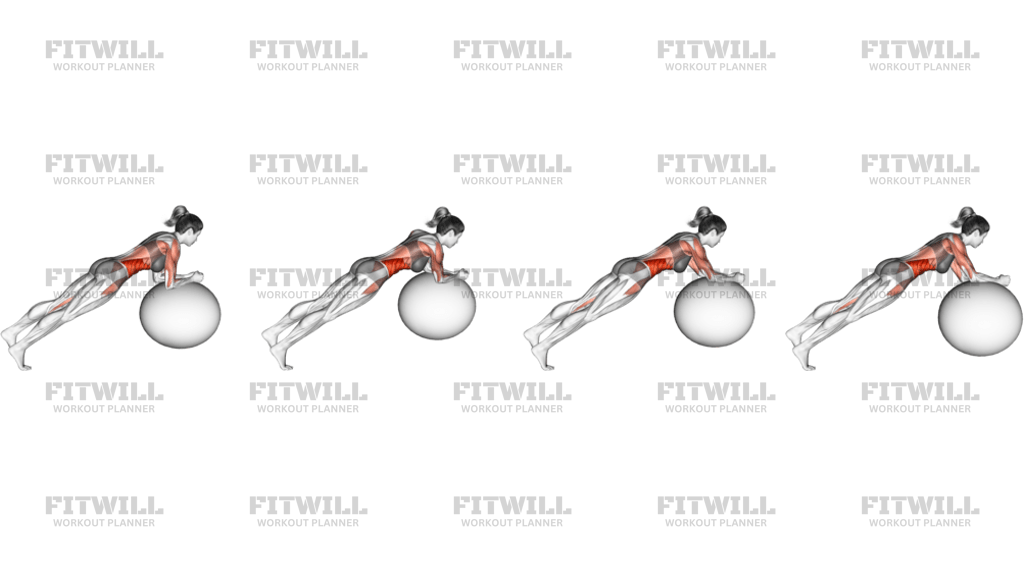
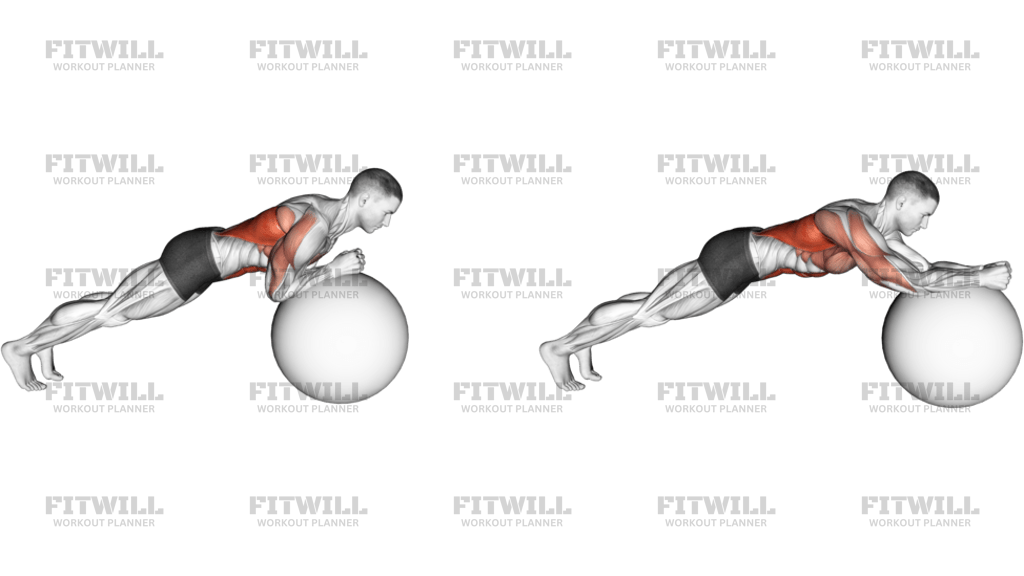
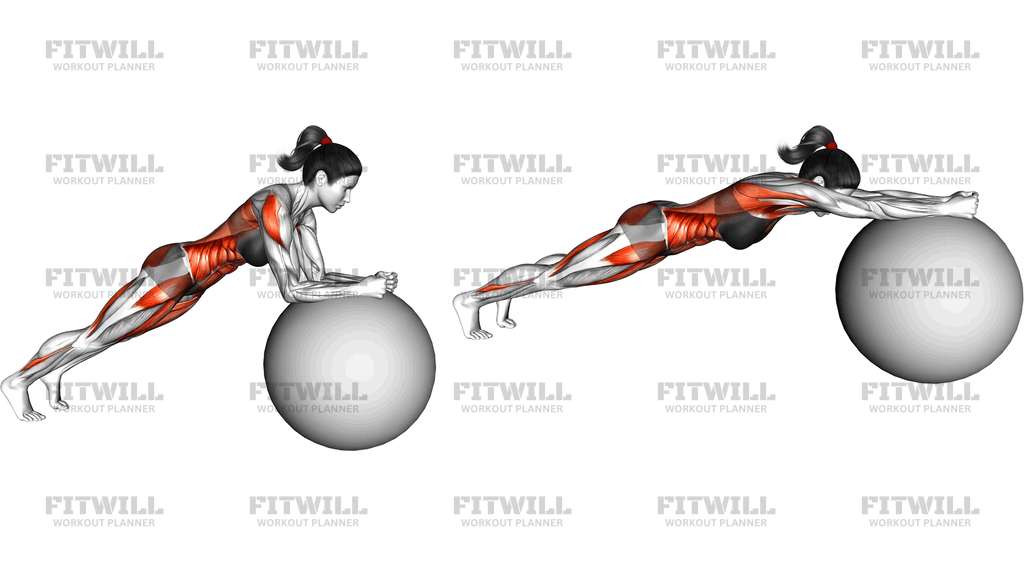
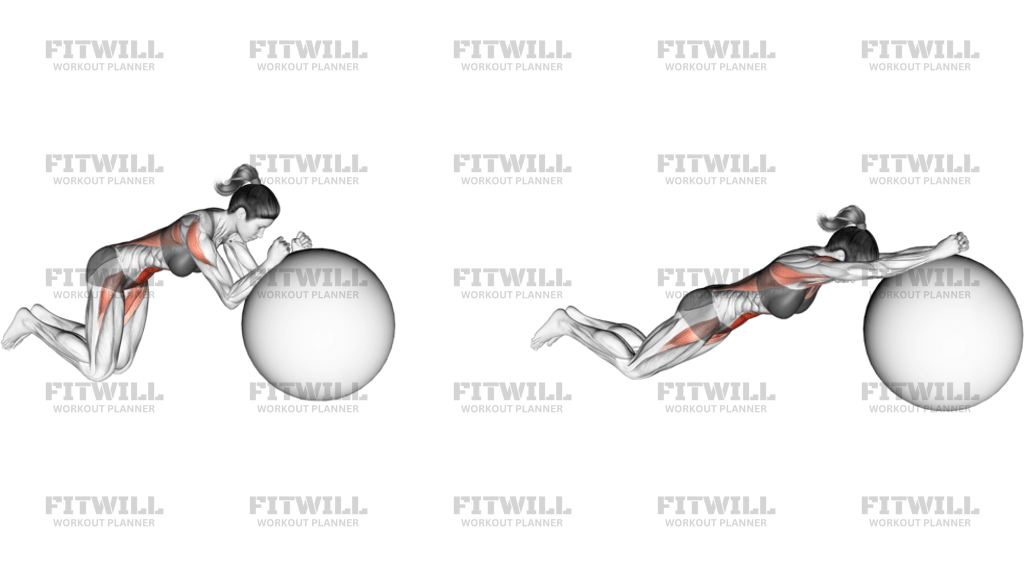
Stability Ball Rollout On Knees is a kneeling anti-extension core exercise that lengthens the body as the ball rolls away from the knees and shortens it again on the return. The movement challenges the abs, obliques, lats, serratus, and hip stabilizers to keep the ribs down and the pelvis from tipping forward while the shoulders move through a long reach. The image shows the athlete starting with the forearms and hands on the stability ball, then extending into a straight line from knees to shoulders before pulling the ball back under control.
This exercise is useful because it teaches trunk stiffness while the shoulders, core, and hips all have to stay organized at the same time. That makes it a strong accessory for planks, presses, overhead work, and any sport or lift that punishes lumbar extension. It is also a practical regression from harder floor rollouts or ab-wheel work, since the ball gives you a little more surface area and lets you scale the range by moving only as far as you can hold position.
The setup matters. A good repetition starts with the knees on a pad, the forearms and hands centered on the ball, and the shoulders stacked over the support before the rollout begins. From there, the ball should travel forward by reaching through the shoulders and tightening the trunk, not by throwing the hips ahead or letting the low back sag. The farther you roll, the more obvious any loss of rib control or pelvic position becomes, so the right range is the one you can own without changing shape.
On the way out, the body should stay long and controlled rather than collapsed. On the way back, the ball should return because the abs and lats are pulling the torso back into place, not because you are yanking with the shoulders or snapping the hips closed. A smooth tempo, a calm neck, and a steady brace usually matter more than trying to force extra distance.
Use Stability Ball Rollout On Knees in core sessions, accessory blocks, or warmups when you want strict anti-extension work with a clear skill component. It is especially effective when the goal is to improve control before moving to more demanding rollout variations. If the lower back takes over, shorten the rollout immediately and rebuild the rep from a tighter kneeling position.
[ Workout Log & Planner ]
Put your next workout in Fitwill
Keep your plan and training log ready when you are.


Instructions
- Kneel on a mat with the stability ball in front of you and place your forearms and hands on top of it, shoulders stacked over the ball.
- Set your knees about hip-width apart, keep your shins and feet relaxed behind you, and organize your torso before the first rollout.
- Brace your abs and glutes so your ribs stay down and your pelvis stays neutral before the ball moves.
- Press your forearms gently into the ball and roll it forward by reaching through the shoulders, not by throwing the hips forward.
- Let your body lengthen as the ball travels away from your knees, but stop before your lower back starts to arch or your shoulders shrug up.
- Pause briefly in the longest position you can hold without losing trunk position.
- Exhale and pull the ball back toward your knees by tightening the abs and lats, keeping the path smooth and controlled.
- Reset with the shoulders back over the ball and repeat for the planned number of repetitions.
Tips & Tricks
- Use a shorter rollout if your low back starts to feel the rep before your abs do.
- Keep the knees on a pad with enough spacing to stay balanced; a narrow kneeling base makes the ball wander more.
- Think about dragging the rib cage back toward the pelvis on the return instead of yanking the ball with the shoulders.
- Press the forearms into the ball lightly so the upper back stays active without turning the rep into a shoulder shrug.
- Roll only as far as you can keep the pelvis from tipping forward; distance is secondary to position.
- Slow the lowering phase so you can control the forward reach instead of dropping onto the front of the ball.
- Keep the neck long and your gaze slightly down so the head does not lead the movement.
- If the ball slips or drifts, widen the knees a little and start the rep from a more compact shoulder-over-ball position.
Frequently Asked Questions
What does Stability Ball Rollout On Knees train most?
It mainly trains the abs for anti-extension, with the obliques, lats, serratus, and hip stabilizers helping keep the torso stacked.
Should my arms be straight or bent on the ball?
This version is usually done with the forearms and hands on the ball, so keep a soft elbow bend rather than locking out hard through the shoulders.
How far should I roll the ball forward?
Roll only until you can no longer keep the ribs down, the pelvis neutral, and the lower back quiet. The best range is the longest clean range, not the farthest one.
Why do I feel this in my lower back?
That usually means the rollout is too long or the brace is too loose, so shorten the range and keep the rib cage from flaring as the ball moves out.
Is this exercise good for beginners?
Yes, if you start with a short range and a stable kneeling setup. If you cannot keep the torso firm, regress to a shorter rollout or a static kneeling plank.
What is the main mistake to avoid?
The biggest mistake is letting the hips drift forward and the low back arch while trying to chase a longer rollout.
Can I make this harder?
Yes, make the rollout longer, slow the tempo, or hold the extended position for a brief pause while keeping the same kneeling setup.
What should I do if the ball feels unstable?
Place the knees slightly wider, start with the ball closer to the body, and reduce the range until the rollout path stays smooth.