V-Up Down With Stability Ball
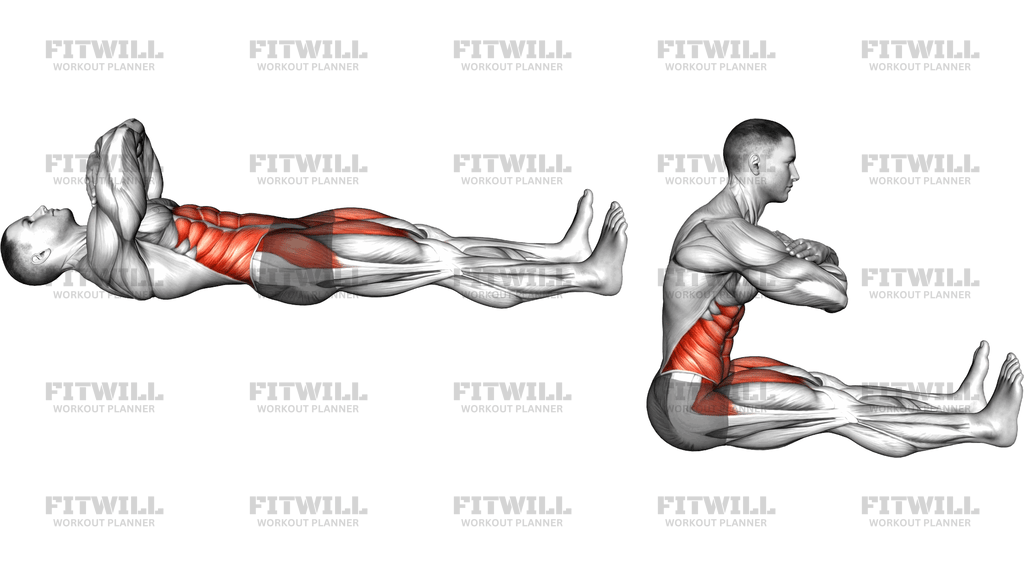
V-Up Down With Stability Ball is a floor-based core exercise that combines a hollow-body style descent with a V-up on the way up. You lie on your back, hold the stability ball in both hands, and fold the torso and legs together so the body makes a controlled V before lowering back down. The ball gives you a clear target and a small amount of external load, which makes tempo and position more important than speed.
The main work is the rectus abdominis, with the hip flexors, obliques, and transverse abdominis helping to keep the trunk from collapsing as the legs extend. Because both the torso and the legs are moving at the same time, the setup matters: if the ribs flare, the lower back arches, or the shoulders shrug, the rep quickly turns into momentum instead of abdominal control.
Start on a mat with the legs long, the ball held overhead, and the lower back gently set toward the floor. As you exhale, curl the shoulders up and lift the legs at the same time, bringing the ball toward the shins or feet as the hips fold. Keep the neck relaxed, the chin slightly tucked, and the reach smooth so the movement stays crisp through the middle of the range.
Lower with the same discipline. Extend the arms and legs away from each other without letting the back snap open, then reset under control before the next rep. This movement fits core circuits, abs-focused finishers, and athletic warm-ups when you want a strict trunk exercise that challenges coordination as much as strength. If your hip flexors take over or the low back starts to arch, shorten the range before adding more reps or speed.
A clean rep feels like a compact fold at the hips, not a swing. Keep the ball moving in a straight line, avoid throwing the legs down, and finish each repetition with the torso and pelvis under control. Beginners can bend the knees slightly or work a smaller V until they can keep the lower back quiet and the ball path steady; more advanced lifters can slow the lowering phase before chasing higher volume.
[ Workout Log & Planner ]
Put your next workout in Fitwill
Keep your plan and training log ready when you are.


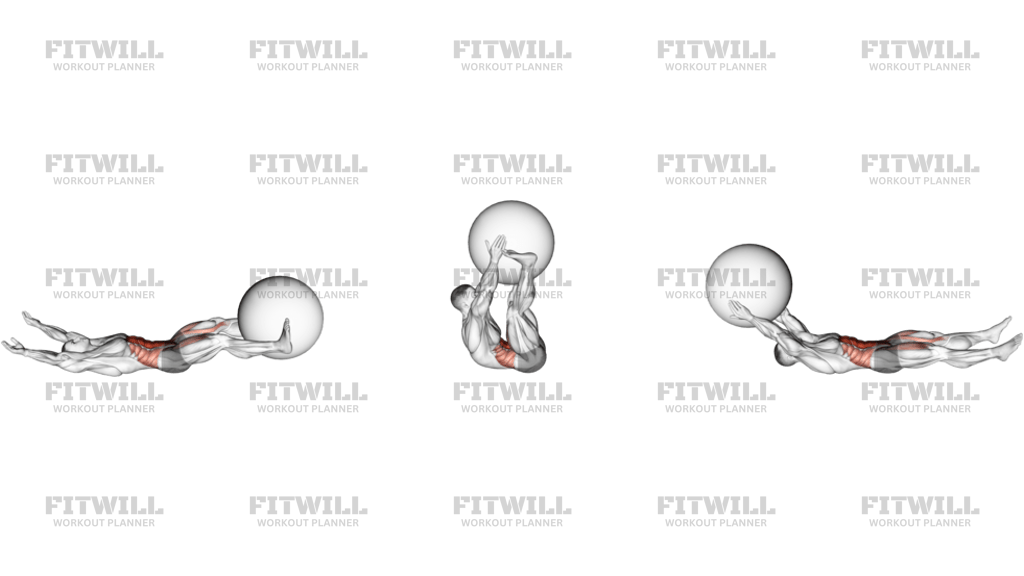
Instructions
- Lie on a mat face up and hold the stability ball with both hands overhead, arms straight, legs long, and feet together.
- Set your ribs down, lightly tuck the pelvis, and press the lower back toward the mat so you start from a braced position.
- Exhale and lift your head, shoulders, arms, and straight legs at the same time, folding your body into a V.
- Bring the ball toward your shins or toes as your torso comes up, keeping the arms long instead of letting them bend.
- Balance briefly near the top with the chest lifted and the core tight.
- Inhale and lower the torso and legs together at the same pace, keeping the ball under control on the way back.
- Stop the descent before the low back arches or the shoulders collapse into the floor.
- Reset your breath and repeat for the planned reps.
Tips & Tricks
- Keep the ball centered between your hands so it does not drift side to side as you rise.
- If your hip flexors cramp first, shorten the leg lever a little and keep the toes pointed.
- A slight knee bend is better than letting the legs swing and steal tension from the abs.
- Keep the chin tucked just enough to spare the neck; look toward the ball, not behind you.
- Lower slowly enough that your low back stays quiet all the way down.
- The rep should feel like a smooth fold from ribs to hips, not a sit-up with fast legs.
- Use a mat or soft floor so the tailbone and back are not taking the impact.
- Stop the set as soon as you lose the ability to keep the ball path and torso speed matched.
Frequently Asked Questions
What muscles does V-Up Down With Stability Ball work most?
It primarily targets the rectus abdominis, with the obliques, transverse abdominis, and hip flexors assisting during the fold and return.
Is the stability ball supposed to touch my feet?
In most versions, the ball moves toward the shins or toes at the top position, but the key is a controlled V-shape rather than forcing a touch.
Can I bend my knees on this exercise?
Yes. A small knee bend can make the movement more manageable if straight legs pull too hard on the hip flexors or low back.
What is the most common mistake?
Swinging the legs or yanking the ball upward. The rep should stay smooth, with the trunk and legs lifting together under control.
Should my lower back stay on the floor the whole time?
It should stay close to the mat at the start and during the lowering phase. If it arches hard, reduce the range or slow the descent.
Is this a good beginner core exercise?
It can be, if you keep the range small and the knees slightly bent. Beginners should focus on control before chasing a full straight-leg V-up.
How do I make the exercise harder?
Slow the lowering phase, keep the legs straighter, or extend the time spent in the top fold without losing position.
When should I stop a set?
Stop when the ball starts drifting, the neck tightens, or the low back begins to arch. Those are signs the core is losing control.