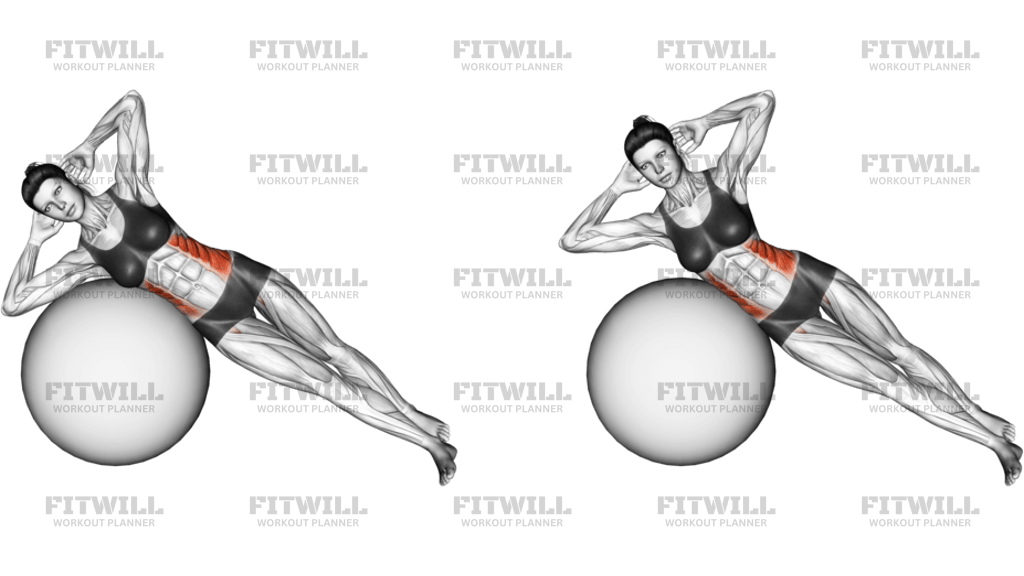
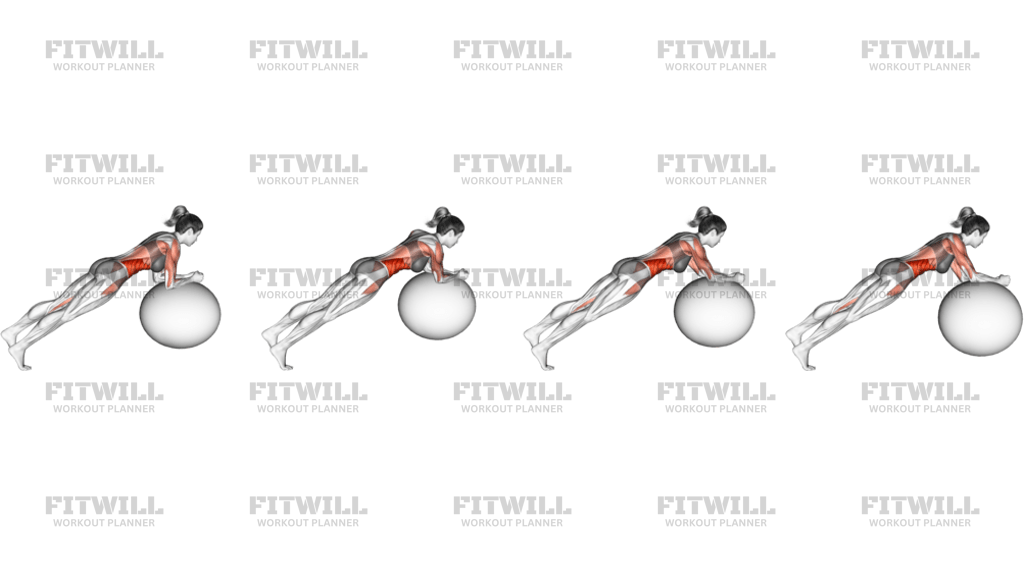
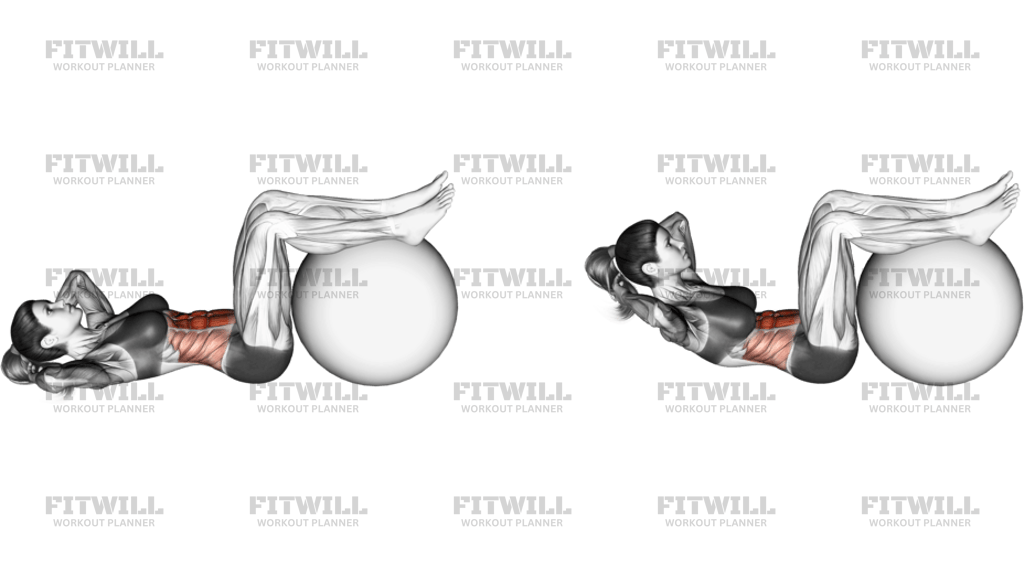
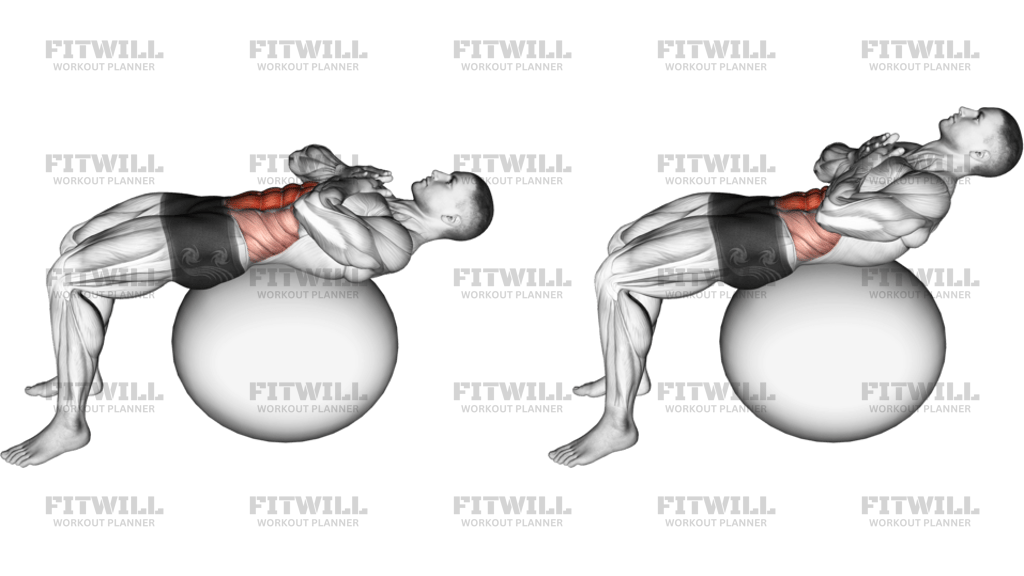
Stability Ball Crunch Full Range Hands Behind Head
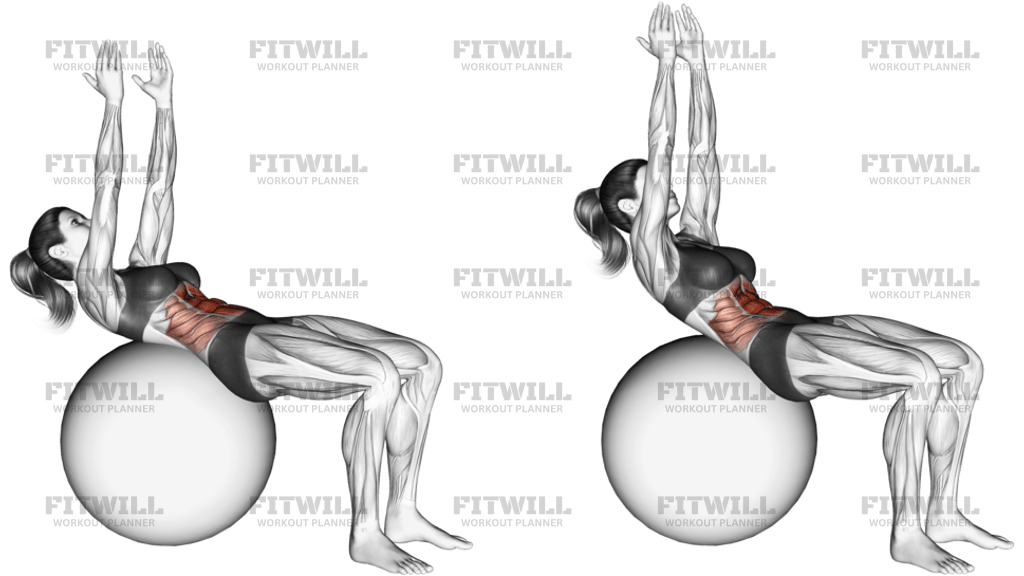
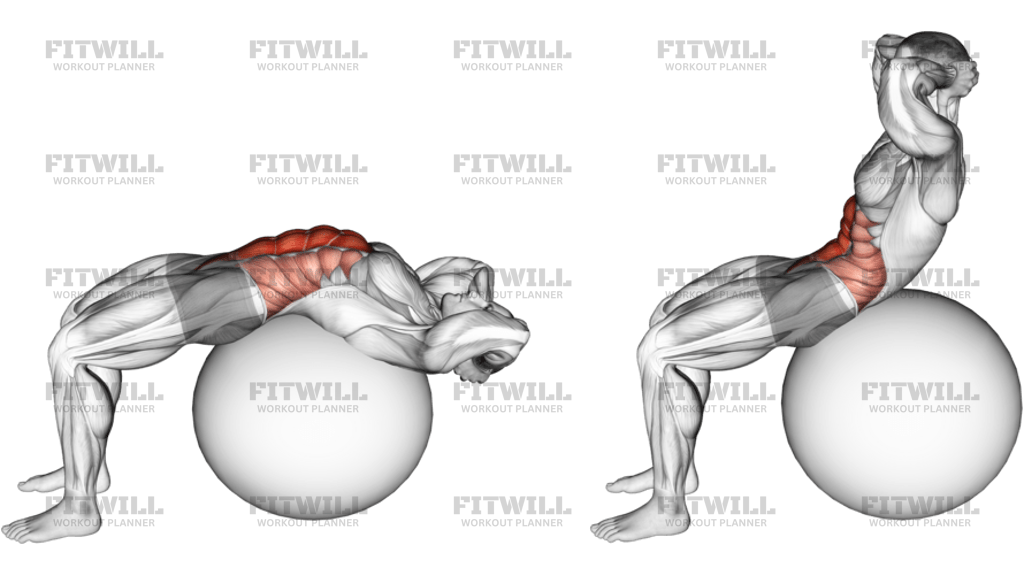
Stability Ball Crunch Full Range Hands Behind Head is a core exercise that uses the curve of a stability ball to let your torso move through a larger crunch than a floor version. The setup creates a long starting position, then asks the abs to shorten the trunk smoothly while the ball supports the mid-back and lets the spine move without a bench or machine.
The main target is the rectus abdominis, with the obliques and deep core helping keep the ribs stacked and the torso steady. Because the body starts draped over the ball, the exercise also asks the hip flexors and the muscles around the neck and shoulders to stay quiet enough that the abs can do the work. That makes the setup important: if the ball is too high, too low, or the feet are too close together, the movement becomes unstable before the first rep even starts.
A good repetition begins with the upper back supported on the ball, feet planted firmly, and hands only lightly supporting the head. From there, curl the ribs toward the pelvis and lift the shoulder blades and upper torso until the abs are fully shortened, then lower under control until the torso opens back over the ball. The goal is not to yank the head forward or swing the body upward, but to flex the spine in a smooth arc and keep tension on the midsection the whole time.
This version is useful when you want a more controlled crunch than a floor sit-up and a larger range of motion than a short floor crunch. It fits well in accessory work, core circuits, or warm-ups where you want spinal flexion with a stable base. Keep the movement pain-free, especially in the neck and lower back, and stop short of any range that causes the hips to slide or the ball to roll away.
Because the exercise puts the torso in a stretched position at the bottom, tempo matters. Lower slowly, keep the chin gently tucked, and breathe out as you curl up so the trunk stays organized instead of bouncing on the ball. If you can only keep the motion clean with a smaller range, that is the correct version for that set; a controlled partial rep on the ball is better than losing position in search of extra height.
[ Workout Log & Planner ]
Put your next workout in Fitwill
Keep your plan and training log ready when you are.


Instructions
- Sit on the stability ball and walk your feet forward until your mid-back and upper back are supported on the ball and your knees are bent with both feet flat on the floor.
- Place your hands lightly behind your head, keep your elbows wide, and let your hips drop just enough that your torso can lengthen over the ball without losing foot contact.
- Set your feet about hip-width apart and brace your midsection so your ribs stay from flaring as you begin the first rep.
- Exhale and curl your ribs toward your pelvis, lifting your shoulder blades and upper torso off the ball in a smooth crunch.
- Keep your hands relaxed behind your head and avoid pulling on your neck as you rise.
- Pause briefly at the top when your abs are fully shortened and your torso is rounded forward.
- Inhale as you lower slowly and let your upper back roll back over the ball until you feel the stretch through your trunk again.
- Keep your feet planted and repeat for the planned reps, then sit up carefully and step off the ball.
Tips & Tricks
- If the ball sits too high on your back, the crunch turns into a neck pull; aim for the ball to support the mid-back and lower shoulder blades.
- Keep your chin slightly tucked so your elbows can stay open without your head drifting forward.
- Drive the curl from your ribs, not from swinging the shoulders toward your knees.
- Let the ball create the stretch at the bottom, but stop before your hips slide or your low back pinches.
- Keep your feet flat and planted; if they lift, shorten the range or move them a little farther away.
- Exhale through the crunch so the abs tighten before the top of the rep instead of after it.
- Use a slower lowering phase than lifting phase to keep tension on the rectus abdominis.
- If your hands start pulling hard on your head, lower the reps or place your fingertips behind your ears instead.
Frequently Asked Questions
What muscle does Stability Ball Crunch (Full range hands behind head) target most?
The rectus abdominis is the main muscle working, with the obliques and deeper core muscles helping keep the torso controlled.
Can beginners perform this exercise?
Yes. Beginners should keep the feet planted, use a smaller curl, and avoid pulling the head forward.
Where should the stability ball sit during Stability Ball Crunch Full Range Hands Behind Head?
It should support your mid-back and lower shoulder blades so your torso can arc over the ball without your neck hanging back.
Should I pull on my head during Stability Ball Crunch Full Range Hands Behind Head?
No. Your hands are only there for light support, and the elbows should stay open while the abs lift the torso.
Why use a stability ball instead of doing crunches on the floor?
The ball gives you a longer start position and a smoother range of spinal flexion, which can make the crunch feel more controlled and more challenging.
What should I do if my neck feels strained?
Reduce the range, keep the chin slightly tucked, and make sure you are not tugging on your head as you crunch.
How high should I curl up on each rep?
Curl until the shoulder blades clear the ball and the abs are clearly shortened, but stop before the movement turns into a sit-up.
What is the most common mistake with this crunch variation?
Letting the head lead the movement is the biggest issue; the curl should start from the ribs and upper trunk, not the neck.