Lying Elbow To Knee
Lying Elbow To Knee is a bodyweight floor exercise that trains the obliques through a short, controlled crunch and twist. It is useful when you want to work the side of the waist without loading the spine with heavy resistance. The movement is simple, but the quality of each rep depends on how well you keep the rib cage, pelvis, and neck organized as you rotate.
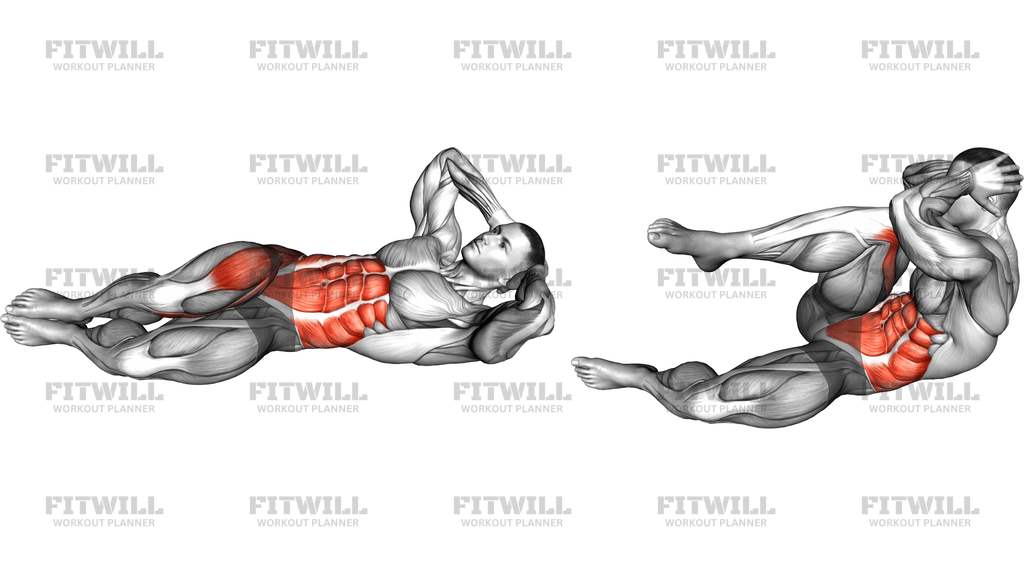
This version emphasizes the external obliques, with the rectus abdominis, transversus abdominis, and hip flexors helping to stabilize and guide the curl. In a good rep, the torso does the work and the elbow simply follows the rotation of the rib cage. If the shoulders, neck, or lower back start doing most of the work, the set usually becomes more of a tug-of-war than a clean core exercise.
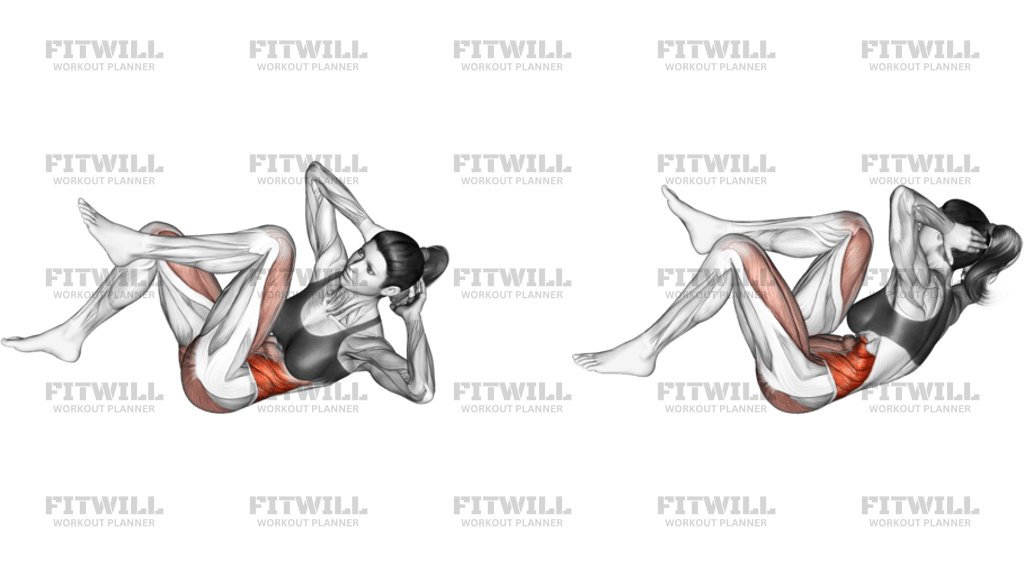
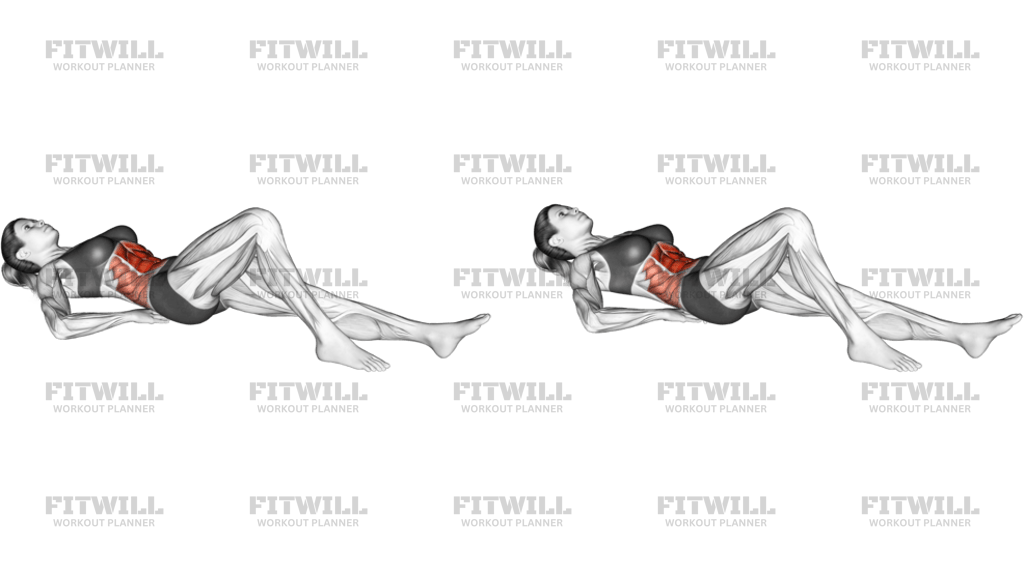
The setup matters because the floor gives you very little room to cheat. Lie on your back with one knee bent, the other leg positioned as shown, and your hands lightly supporting the head rather than pulling it forward. Keep the elbows open and the lower ribs quiet before you begin the first crunch. That starting position lets you rotate through the trunk instead of collapsing into the hips or yanking on the neck.
On each rep, curl the shoulder blades off the floor and bring the opposite shoulder toward the raised knee, then lower with control until your back is nearly flat again. The best range is the one where you can keep the pelvis steady and the neck relaxed. A smaller, cleaner rep is better than a larger swing that turns the movement into momentum work.
Lying Elbow To Knee fits well in a core circuit, warm-up, or accessory block where you want controlled trunk flexion and rotation without equipment. It is approachable for beginners because the load is only body weight, but it still rewards precision and patience. Keep the motion smooth, breathe out as you crunch, and stop the set if the movement starts shifting into the lower back or the hip flexors instead of the obliques.
[ Workout Log & Planner ]
Put your next workout in Fitwill
Keep your plan and training log ready when you are.


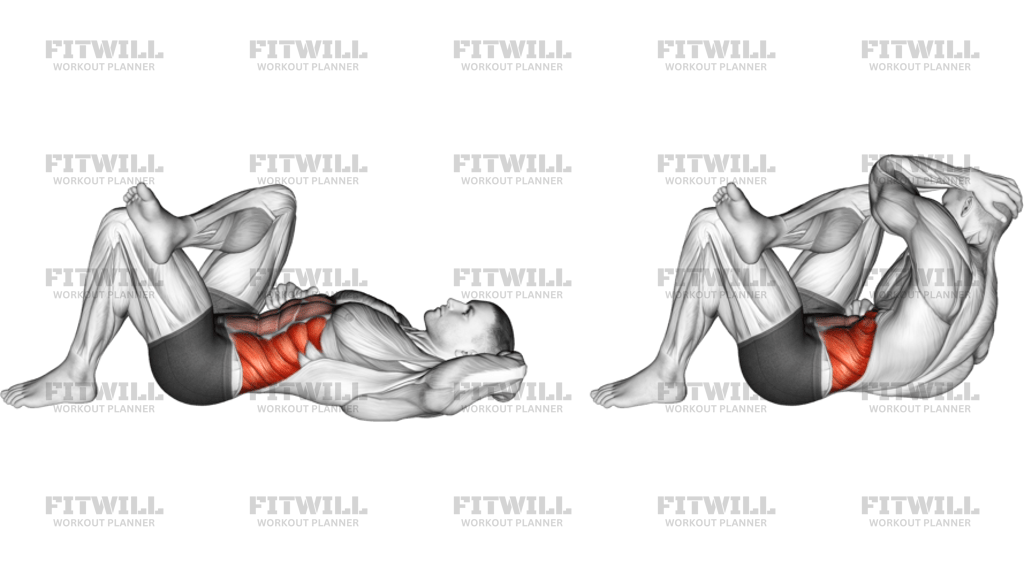
Instructions
- Lie on your back on the floor with one knee bent, the other leg set as shown, and your hands lightly behind your head.
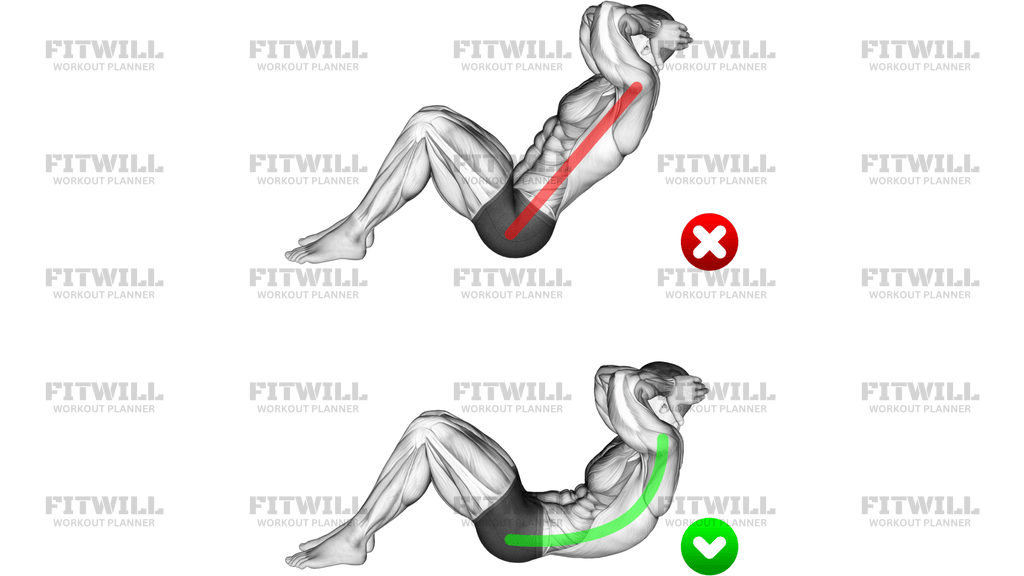
- Keep your elbows wide, your chin slightly tucked, and your lower back gently pressed toward the floor before you start.
- Brace your midsection and exhale as you curl your shoulder blades off the floor.
- Bring the opposite shoulder toward the raised knee by rotating your rib cage, not by pulling on your head.
- Pause briefly when your elbow and knee come closest, keeping the neck relaxed and the pelvis steady.
- Lower your upper back to the floor under control while keeping tension through the waist.
- Reset the starting leg position and repeat on the other side if you are alternating reps.
- Keep the reps smooth and stop before momentum takes over or your lower back starts arching.
Tips & Tricks
- Keep your fingertips light behind the head; if your elbows are doing the work, the neck will feel it first.
- Think about lifting the shoulder blade toward the opposite knee instead of trying to smash elbow to knee at any cost.
- If your lower back arches off the floor, shorten the range and make the crunch smaller.
- Let the rib cage rotate, but keep the hips mostly quiet so the movement stays in the obliques.
- Exhale through the crunch to help the ribs close down and make the twist easier to control.
- Do not let the top knee drift wildly across the body; a small, deliberate curl is usually cleaner.
- Slow the lowering phase so the shoulders do not drop and bounce between reps.
- If the hip flexors take over, keep one foot grounded longer and reduce how high the knee comes up.
- Stop a rep short of neck tension or lower-back pinching; this exercise should feel crisp, not forced.
Frequently Asked Questions
What muscle does Lying Elbow To Knee target most?
The obliques do most of the work, especially as you curl and rotate the torso toward the raised knee.
Should I feel Lying Elbow To Knee in my neck?
No. Your hands should only support the head lightly; if the neck is straining, reduce the range and keep the elbows wider.
Is Lying Elbow To Knee the same as a bicycle crunch?
It is very similar, but this version is usually smaller and more controlled, with less leg cycling and more focus on the side crunch.
How high should my shoulder blades come off the floor?
Only high enough to rotate the rib cage toward the knee. If you sit all the way up, the movement turns into a hip-flexor-driven crunch.
Can beginners do Lying Elbow To Knee?
Yes. It is a good beginner core exercise as long as the range stays small and the neck stays relaxed.
Why does my hip flexor burn before my abs?
The knee is probably coming too high or the torso is not curling enough. Keep the movement smaller and lead with the shoulder, not the leg.
Do I need to alternate sides every rep?
You can alternate sides rep by rep or finish one side before switching. Either way, keep the same control and range on both sides.
What is the safest way to make Lying Elbow To Knee harder?
Slow the lowering phase, pause at the top, or add more reps before you make the range bigger.