Lever Shoulder Press Plate Loaded Version 3
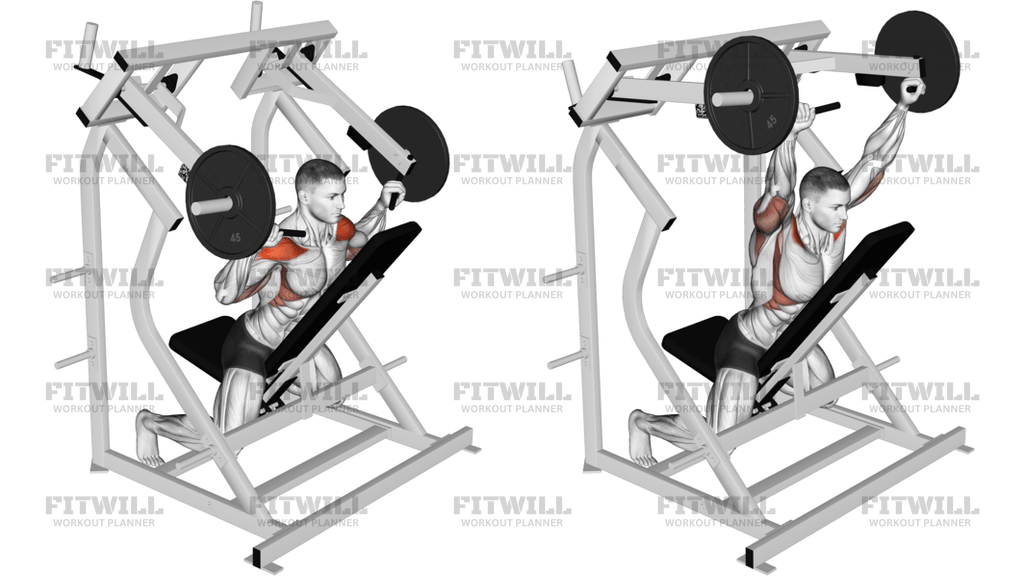
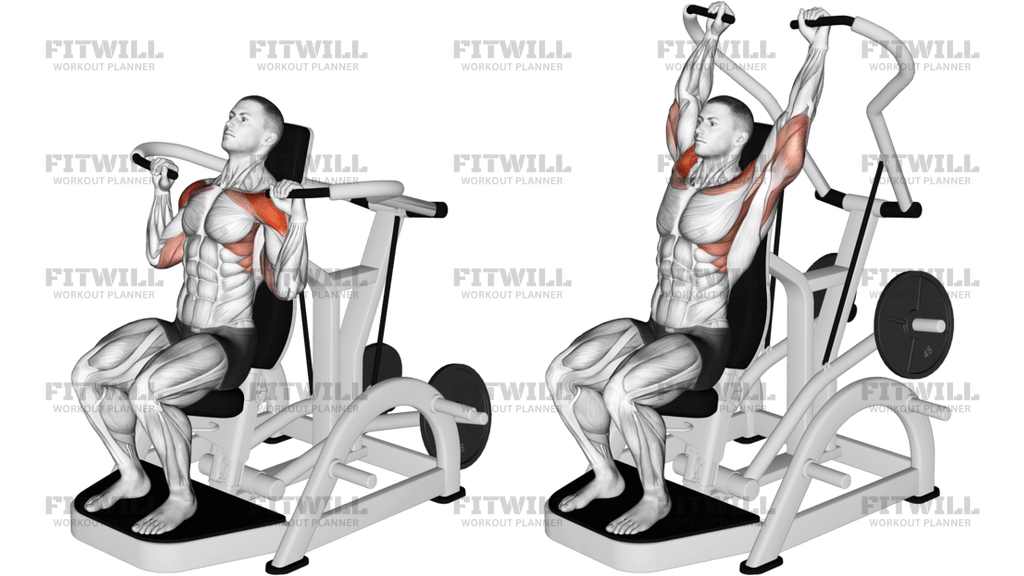
Lever Shoulder Press Plate Loaded Version 3 is a seated machine press for building overhead pressing strength with more stability than a free barbell. The back pad, fixed path, and independent handles let you focus on driving the elbows up and extending the arms overhead without having to balance the load. That makes it useful for lifters who want to train shoulders hard while keeping the movement pattern predictable.
The main emphasis is on the delts, especially the front and side heads, with triceps helping finish each press and the upper back working to keep the torso pinned to the pad. In anatomy terms, the primary mover is the deltoids, with support from triceps brachii, trapezius, and rhomboids. Because the machine guides the path, the setup matters more than on many other presses: seat height, back contact, and handle position determine whether the load sits over the shoulders or drifts forward.
Start with the seat adjusted so the handles begin around shoulder level and your forearms are close to vertical. Keep your back and head against the pad, plant both feet, and brace before you press so the torso does not slide or arch. When the path is correct, the handles travel up and slightly inward in a smooth arc, finishing with the arms overhead without locking the shoulders into an uncomfortable shrug.
Lower the handles under control until the elbows come back to roughly shoulder height or just below it, then press again without bouncing out of the bottom. The best repetitions feel smooth and repeatable, not forced. If the machine feels awkward, check seat height first; a small adjustment often fixes wrist angle, elbow track, and shoulder comfort immediately.
Use Lever Shoulder Press Plate Loaded Version 3 when you want a direct shoulder-focused press for moderate-to-heavy work, controlled hypertrophy sets, or a safer press variation when free weights feel too unstable. It fits well after warm-up sets or as a main accessory press in an upper-body session. Keep the range pain-free, keep the chest tall against the pad, and stop a set when the handles start drifting forward or your lower back begins to take over.
Fitwill
Log Workouts, Track Progress & Build Strength.
Achieve more with Fitwill: explore over 9600 exercises with images and videos, access built-in and custom workouts, perfect for both gym and home sessions, and see real results.
Start your journey. Download today!




Instructions
- Adjust the seat so the handles start around shoulder height, then sit with your upper back and head against the pad.
- Plant both feet flat on the platform or floor, keep your ribs stacked over your hips, and take a firm grip on the handles.
- Set your elbows slightly in front of your torso and keep your wrists stacked over your forearms before the first rep.
- Brace your midsection and press the handles upward in a smooth arc until your arms are nearly straight overhead.
- Keep the handles moving slightly inward as you press so the path stays controlled and centered over your shoulders.
- Pause briefly at the top without shrugging your shoulders toward your ears or arching away from the pad.
- Lower the handles slowly until your elbows return to shoulder height or just below it.
- Keep breathing steady through each rep and reset your feet, back, and grip before the next set or final rep.
Tips & Tricks
- If the handles start too low, your shoulders will feel jammed at the bottom; raise the seat until the press begins near shoulder level.
- Keep your forearms vertical at the bottom so the handles sit over the middle of the hand instead of folding the wrists back.
- Do not flare the elbows straight out to the sides; a slightly forward elbow track is usually more comfortable on this machine.
- Press up and slightly in rather than straight forward so the load stays over the shoulder joint instead of drifting away from the body.
- Do not slam into full lockout if the machine stack or lever arms feel harsh on the joints; stop just short of a hard snap.
- If your lower back arches off the pad, the load is too heavy or the seat is too low for your build.
- Use a slower lowering phase to keep tension on the delts and avoid dropping into the bottom position.
- Keep your neck long and relaxed; shrugging hard at the top usually turns the set into a trap-dominant grind.
Frequently Asked Questions
What muscles does Lever Shoulder Press Plate Loaded Version 3 work most?
It mainly trains the delts, with triceps helping finish the press and the upper back assisting with stability.
Is Lever Shoulder Press Plate Loaded Version 3 good for beginners?
Yes. The guided path and back pad make it easier to learn than a free-standing overhead press, as long as the seat height is set correctly and the load stays light at first.
How high should the handles come down on this machine?
They should lower to about shoulder height or just below it. If they dip much lower, your shoulders may roll forward and the bottom position can become uncomfortable.
What is the biggest mistake on Lever Shoulder Press Plate Loaded Version 3?
The most common issue is setting the seat too low and turning the press into a steep, awkward grind. That usually forces the shoulders forward and makes the wrists and elbows work harder than they should.
Should I keep my back glued to the pad during the set?
Yes. Light contact is fine, but if your lower back starts lifting or your chest shoots forward, the load is too heavy or the seat position needs to change.
Can I use a neutral grip on this lever shoulder press?
If the machine handles allow it, a more neutral hand position can be easier on some shoulders and wrists. Use the grip that lets you press without the elbows flaring hard.
How many reps should I do on Lever Shoulder Press Plate Loaded Version 3?
Most lifters use it for moderate sets of about 6-12 reps, depending on whether the goal is strength or muscle growth.
What if the machine hits my shoulders too early at the bottom?
Raise the seat a notch or two. The goal is to start with the handles near shoulder level, not from a deep stretched position that forces the elbows too far back.