Barbell Standing Twist
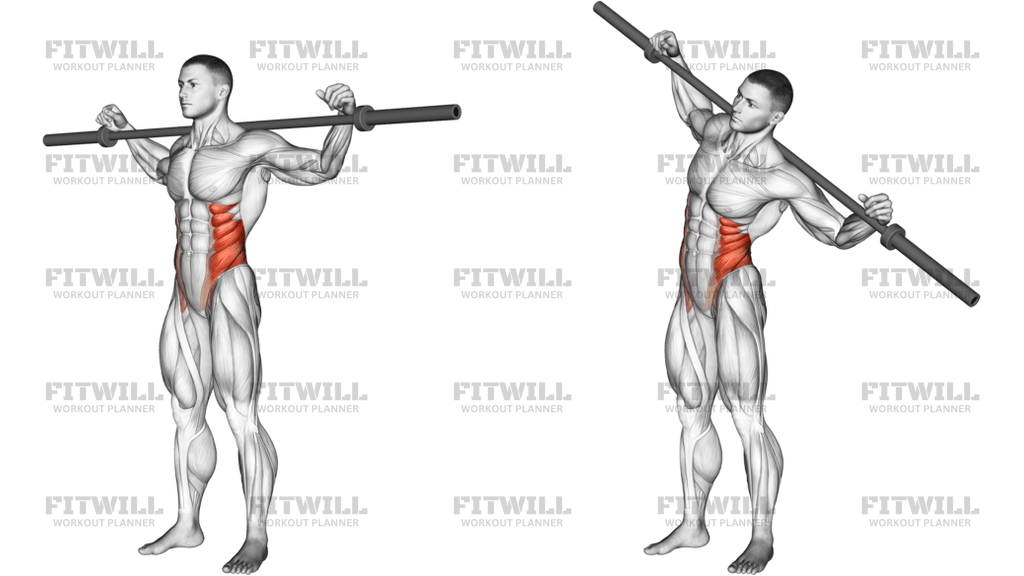
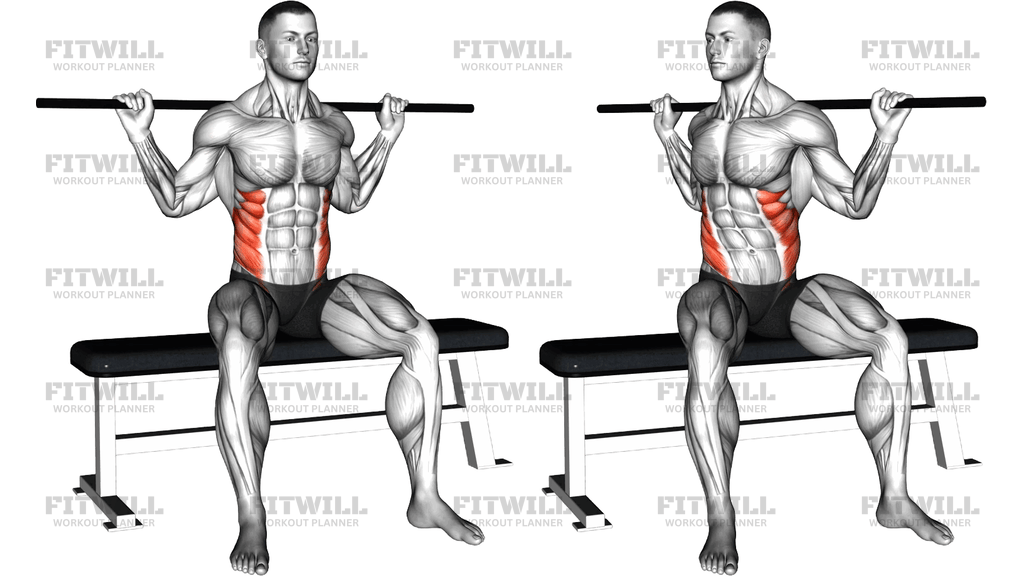
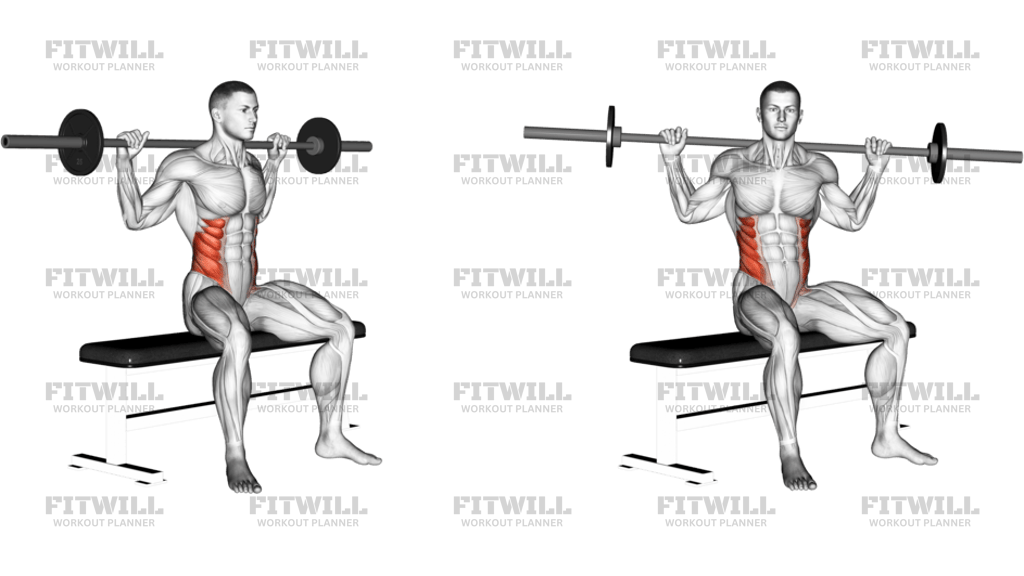
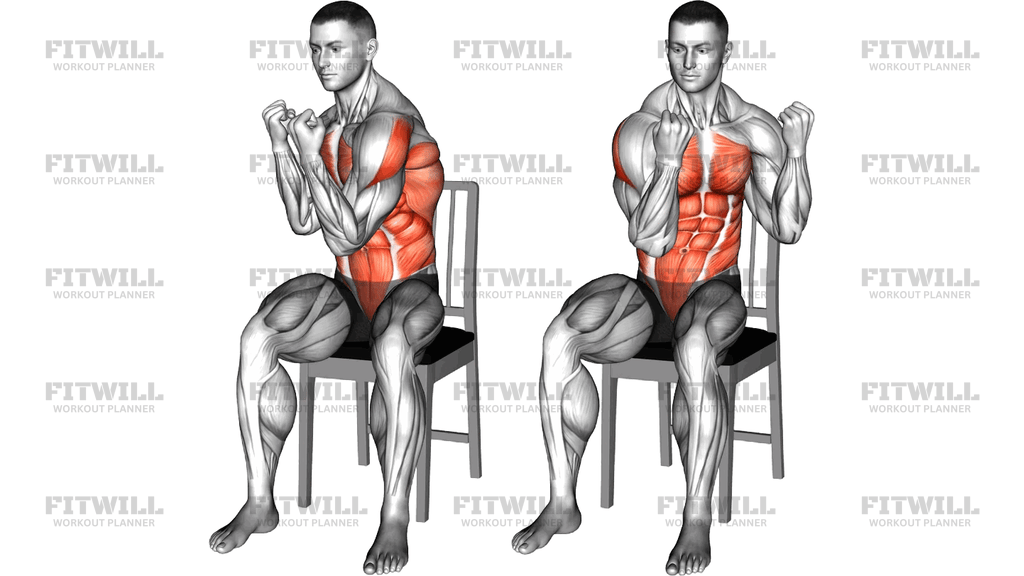
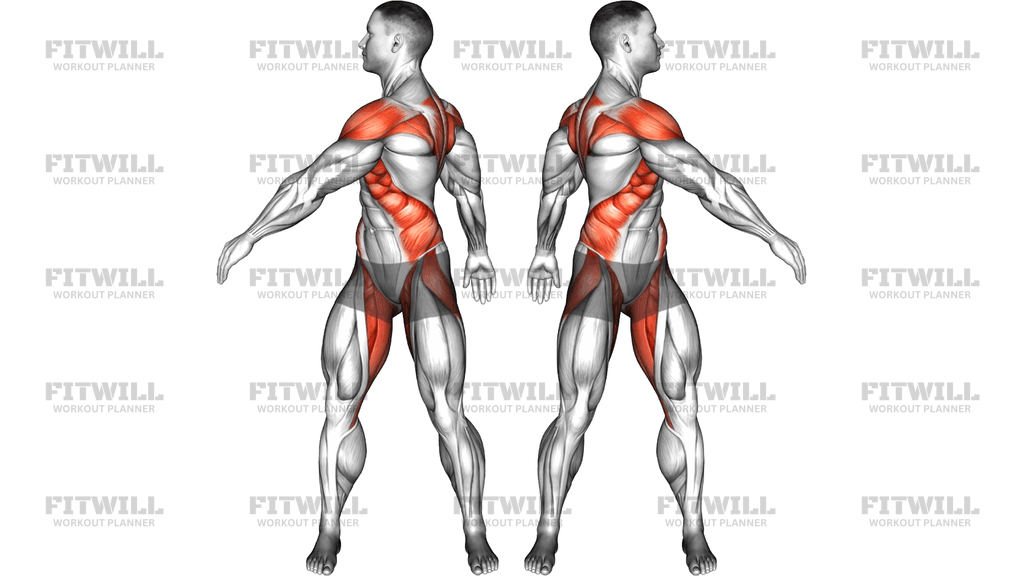
Barbell Standing Twist is a standing trunk-rotation exercise where the bar rests across the upper back and the torso turns side to side under control. It targets the obliques while also asking the deep abdominals, spinal stabilizers, and hips to resist unwanted sway. The movement is useful when you want rotational core work that feels more direct than a plank variation and more controlled than a fast, swinging twist.
The setup matters because the barbell changes the leverage on your torso. Place the bar across the rear delts and upper traps, take a stable stance, and keep the chest tall with the ribs stacked over the pelvis. From there, the goal is not to heave the bar around; it is to rotate the ribcage while keeping the hips mostly square and the feet planted. That distinction is what keeps the work where it belongs and reduces stress on the lower back.
At the top of each rep, keep the neck long and the elbows slightly lifted so the bar stays anchored on the shoulders. Rotate smoothly to one side until you reach a controlled end range, pause briefly, then reverse through center and repeat to the other side. The movement should look even and deliberate from rep to rep, with no bouncing, no stepping, and no jerking through the middle.
Use a very light load if you are learning the exercise. This is a coordination and control drill as much as a strength movement, so heavier is not better if it forces the pelvis to spin or the knees to cave. A smaller, cleaner twist with the abs working hard is more valuable than a big, sloppy range that comes from momentum.
Barbell Standing Twist fits best in accessory core work, rotational training blocks, or warmups for athletes who need controlled trunk rotation. It is most appropriate when your goal is bracing, anti-sway control, and oblique engagement rather than maximum power. If your low back feels pinched or your hips are turning first, shorten the range, lighten the load, and slow the tempo until the torso is doing the work cleanly.
[ Workout Log & Planner ]
Put your next workout in Fitwill
Keep your plan and training log ready when you are.


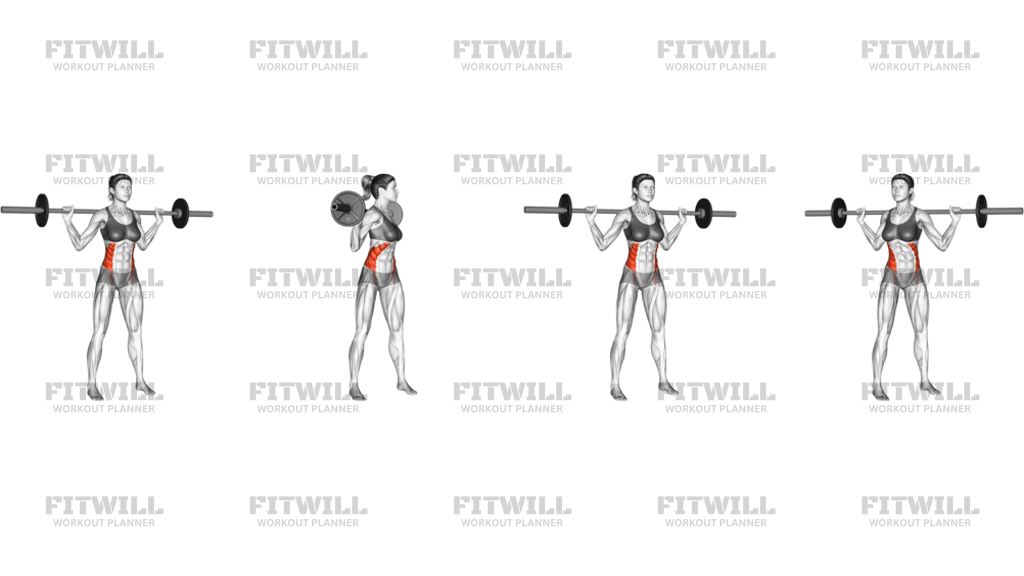
Instructions
- Place the barbell across your rear delts and upper traps, then stand upright with your feet about hip- to shoulder-width apart.
- Hold the bar with a wide overhand grip, lift your chest, and keep your elbows slightly out so the bar stays pinned to your shoulders.
- Unlock your knees, stack your ribs over your pelvis, and brace your abdomen before you start rotating.
- Turn your torso and shoulders to one side while keeping both feet flat and your hips mostly facing forward.
- Rotate only as far as you can without the pelvis swaying, the knees drifting, or the lower back pinching.
- Pause for a moment at the end of the turn, then bring your torso back through center under control.
- Repeat the same rotation to the other side with the same tempo and range of motion.
- Keep breathing steady, exhaling as you rotate and inhaling as you return to center.
- Finish the set by returning to a tall neutral stance before re-racking or lowering the bar carefully.
Tips & Tricks
- Keep the bar resting on the upper back, not in your hands; the grip is only there to steady the position.
- Think of turning the ribcage over quiet hips instead of swinging the whole body.
- A small, smooth twist will train the obliques better than a big jerk that comes from momentum.
- If your feet start pivoting, the load is too heavy or the range is too wide for this set.
- Keep your chin level and your neck relaxed so the head does not whip around faster than the torso.
- Slow down the return to center; the lowering phase should feel as deliberate as the twist itself.
- Use light resistance and higher control quality, especially if you feel the lower back doing the work.
- Stop the set if the pelvis spins first or if the movement starts to feel like a standing back crank.
Frequently Asked Questions
What does Barbell Standing Twist train most?
It mainly trains the obliques, with the deep abs and spinal stabilizers helping keep the torso organized during the turn.
Where should the bar sit during this exercise?
The bar should rest across the rear delts and upper traps, similar to the start of a back squat, with the hands only steadying it.
Should my hips turn with the barbell?
A little natural movement is fine, but the hips should stay mostly square so the rotation comes from the torso instead of a full-body swing.
Can beginners do this movement?
Yes, but only with a very light bar and a short, controlled range of motion while learning how to keep the pelvis still.
What is the most common mistake?
The biggest mistake is letting the feet, knees, and hips spin together, which turns the drill into momentum instead of trunk rotation.
How heavy should I go?
Use enough load to feel the obliques working, but not so much that you need to jerk through the twist or arch your lower back.
Is this exercise safe for the lower back?
It can be fine when the range is small and controlled, but forcing aggressive rotation or using too much load can irritate the lumbar spine.
When should I use Barbell Standing Twist in a workout?
It works well as accessory core work, rotational prep, or a light conditioning drill, usually after your main lifts.