Barbell Sitting On Floor Oblique Twist
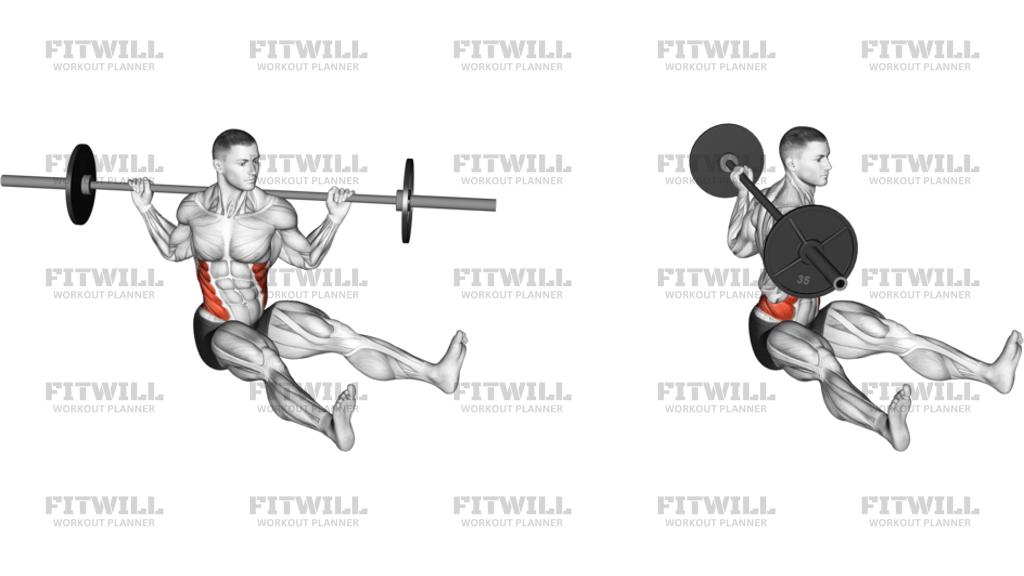
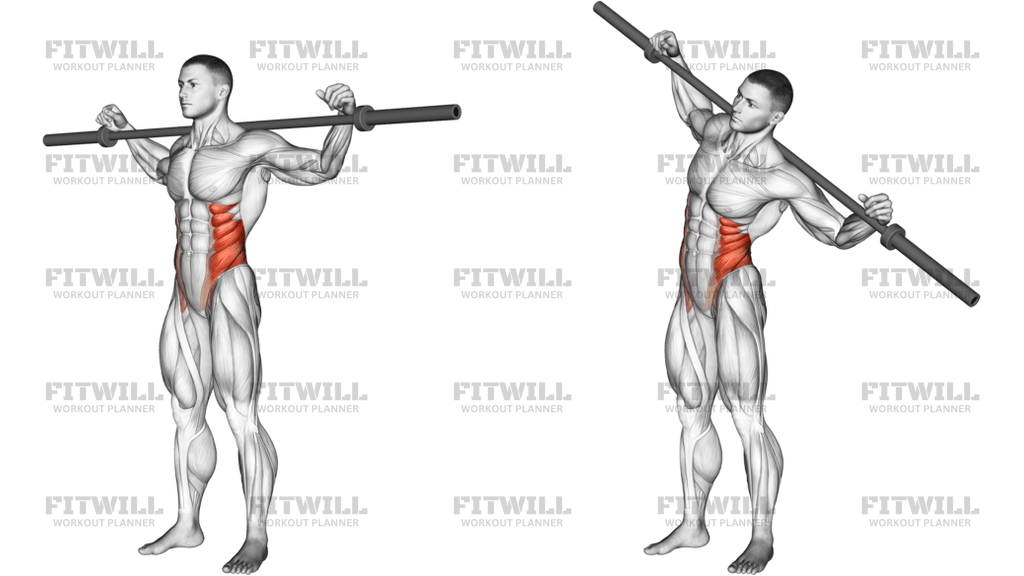
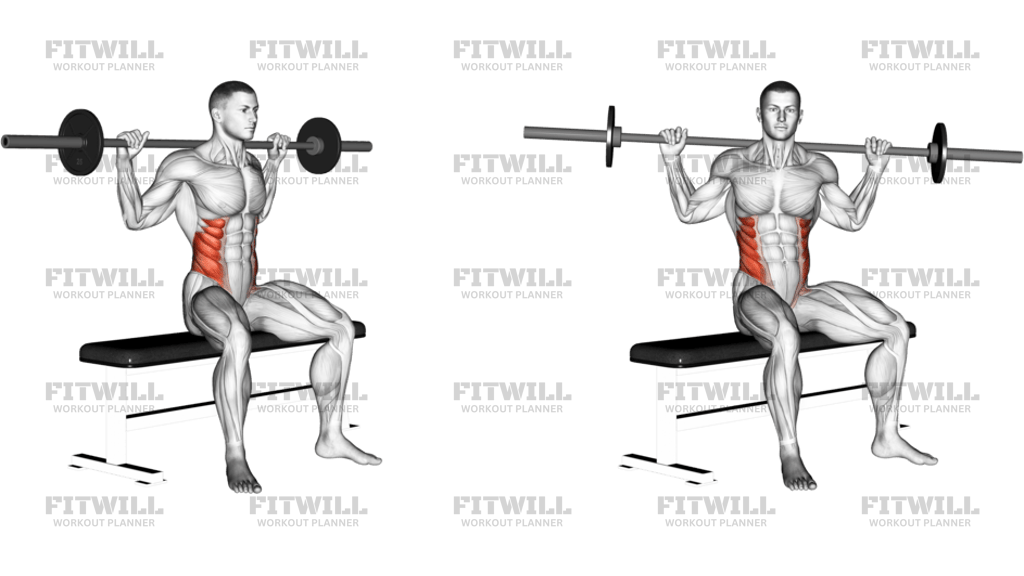
Barbell Sitting On Floor Oblique Twist is a seated floor core exercise built around controlled torso rotation with the barbell resting across the upper back and shoulders. It trains the obliques and deep trunk stabilizers while asking you to keep the pelvis quiet, the ribs stacked, and the load balanced across the traps. The movement is small, deliberate, and very different from a swinging twist: the goal is to rotate the ribcage without letting the lower back or hips take over.
The setup matters because the bar has to stay secure while the torso turns. Sit tall on the floor with the legs extended forward, then place the bar across the upper traps or rear-shoulder shelf and take a wide overhand grip to steady it. Your hands should guide the bar, not press it into your neck. From there, brace the abdomen so the spine stays long and the chest does not collapse as you rotate from side to side.
The rep itself should feel like the shoulders and sternum move together as one unit. Turn to one side under control, stop before the pelvis starts following the bar, then come back through center and rotate to the other side. The farther you twist, the more tempting it becomes to sway, round, or lean back, so the best range is the one you can repeat without losing position. If the feet lift, they should stay quiet and controlled; if that makes you unstable, keep them grounded.
This exercise is useful as accessory core work, a warm-up drill for trunk control, or a higher-rep finisher when you want anti-extension and anti-rotation control to matter more than load. It can also expose side-to-side asymmetry, because one direction often feels tighter or less coordinated than the other. Use the mismatch as feedback and keep the range honest instead of forcing both sides to look identical.
Treat the barbell like a balance challenge, not a momentum tool. Choose a light load that lets the shoulders stay relaxed, the neck stay neutral, and the breathing stay smooth. If the bar starts sliding, the torso starts jerking, or the low back feels like it is twisting harder than the waist, reduce the load or shorten the range and keep the rep clean.
Fitwill
Log Workouts, Track Progress & Build Strength.
Achieve more with Fitwill: explore over 9600 exercises with images and videos, access built-in and custom workouts, perfect for both gym and home sessions, and see real results.
Start your journey. Download today!




Instructions
- Sit on the floor with your legs extended forward and place the barbell across your upper traps or rear shoulder shelf, then take a wide overhand grip to steady it.
- Keep your chest tall, shoulders down, and neck long so the bar rests securely without pressing into the base of the neck.
- Set both feet lightly on the floor or lift them only if you can keep your pelvis still and your torso balanced.
- Brace your abs before the first rep so the ribs stay stacked over the pelvis as you rotate.
- Turn your shoulders and ribcage to one side in a smooth, controlled arc while the hips stay rooted to the floor.
- Pause briefly at the end of the twist without leaning back, rounding forward, or letting the knees drift the movement.
- Return through center under control, then rotate to the opposite side with the same range and tempo.
- Exhale as you twist and inhale as you pass back through the middle, keeping the breath quiet and steady.
- Stop the set if the bar starts sliding, the neck tenses up, or the low back takes over the rotation.
Tips & Tricks
- Keep your hands wide enough that the bar sits on the traps, not on the cervical spine.
- Think about turning the sternum and shoulders together instead of letting the arms or elbows swing the bar.
- Use a smaller range if the pelvis starts to follow the bar; the rep should come from the waist, not the hips.
- If lifting the feet makes you wobble, keep the heels down and make the torso rotation the only moving part.
- Slow, even reps usually train the obliques better than fast side-to-side pulses.
- Keep the chin neutral and avoid chasing the twist with the head, which can strain the neck.
- Choose a light bar or unloaded bar first; the limiting factor here is control and balance, not brute strength.
- Reset between reps if the bar drifts on your shoulders instead of trying to save the position mid-rep.
Frequently Asked Questions
What muscles do barbell sitting on floor oblique twists work?
They primarily hit the obliques and the deeper trunk stabilizers that control rotation. The shoulders mostly hold the bar in place.
Where should the bar sit during this exercise?
The bar should rest across the upper traps or rear shoulder shelf, with the hands wide enough to keep it stable. It should not ride on the neck.
Should my feet stay on the floor or lift up?
Both can work. Feet on the floor make the exercise easier to control, while lifting them increases the balance demand if your torso stays steady.
Is this the same as a seated Russian twist?
No. A Russian twist usually moves the hands or weight in front of the body, while this variation keeps the bar across the shoulders and rotates the upper torso around a fixed base.
How do I know if I am twisting too far?
If your lower back rounds, your hips slide, or the bar starts wobbling, the range is too big. Stop the twist earlier and keep the ribcage in control.
Can beginners use this movement?
Yes, but beginners should start with a very light bar and keep the feet down until they can rotate without losing balance.
What is the most common mistake?
The usual mistake is swinging the bar from side to side instead of rotating the torso with control. That turns the drill into momentum work instead of core work.
How should I breathe during the reps?
Exhale as you rotate into the twist and inhale as you come back through center. Keep the breath steady so the trunk stays braced.