Arm Slingers Hanging Straight Legs
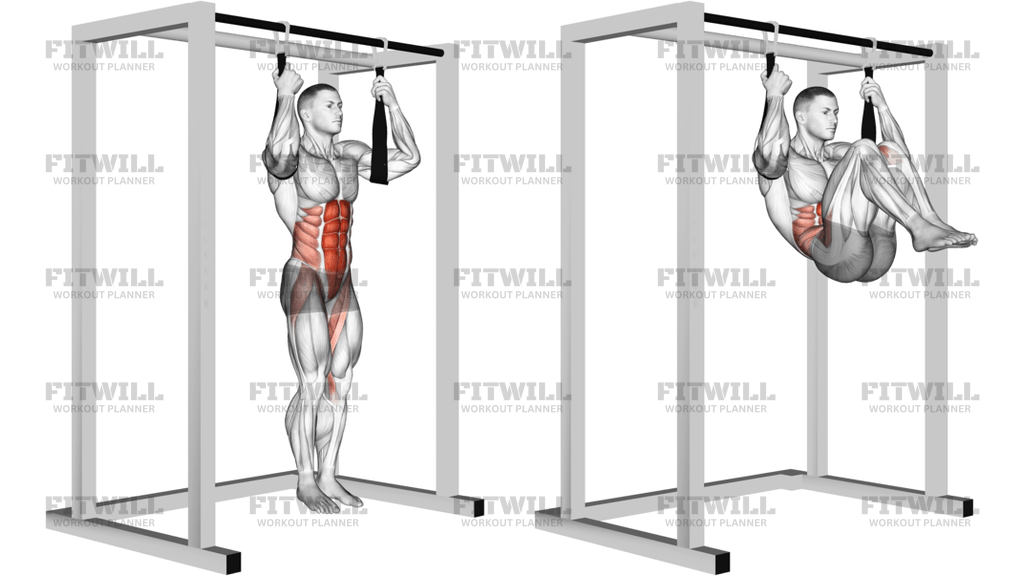
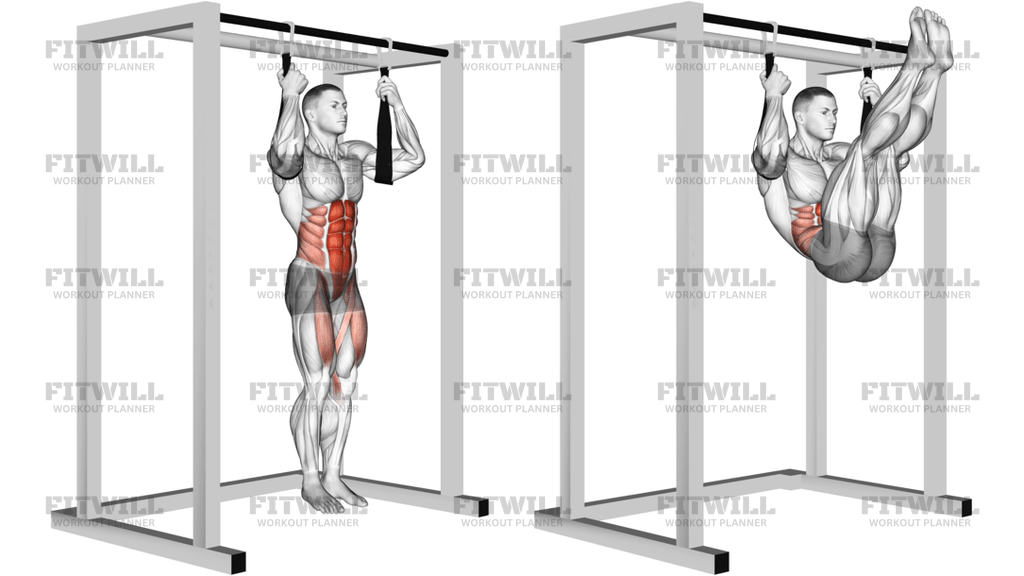
Arm Slingers Hanging Straight Legs is a suspended core exercise performed from arm slings on a pull-up frame. Your upper arms are supported by the slings while your torso hangs freely, which shifts the work toward the abs and hip flexors without demanding a full hanging grip. The straight-leg position makes the lever long and unforgiving, so the rep has to stay smooth from the first inch of movement to the last.
The main training effect comes from resisting extension and curling the pelvis upward under control. The rectus abdominis does most of the visible work, while the obliques, transverse abdominis, hip flexors, and shoulder stabilizers help keep the body from swinging or twisting. That makes the setup important: if the slings are too high, the shoulders shrug; if the torso is loose, the legs turn into a pendulum instead of a core raise.
At the start, settle into the slings with the upper arms supported, shoulders packed down, ribs closed, and legs hanging together beneath the hips. From there, the lift should begin by bracing the trunk and drawing the feet forward in one controlled arc. The goal is not to kick the legs up. The goal is to fold the body with the pelvis, keep the knees straight or nearly straight, and stop the rep before momentum takes over.
This exercise is useful for athletes and lifters who want stronger lower-abdominal control, better anterior pelvic stability, and cleaner body tension in suspended positions. It fits well in core-focused sessions or as accessory work after upper-body training. Because the lever is long, small form errors matter: a loose swing, an overarched back, or a rushed lowering phase quickly moves tension away from the target muscles.
If the shoulders feel pinched or the lower back starts to arch, reduce the range of motion or bend the knees slightly until you can keep the pelvis tucked and the movement strict. The best reps are quiet reps: no kicking, no jerking, and no chasing height at the expense of control. Treat each repetition as a controlled compression of the torso rather than a leg swing.
[ Workout Log & Planner ]
Put your next workout in Fitwill
Keep your plan and training log ready when you are.


Instructions
- Adjust the arm slings so your upper arms are supported comfortably and the bar sits above you with enough clearance for straight legs.
- Step into the slings, let your body hang tall, and bring your legs together with your feet pointing down under your hips.
- Set your shoulders down away from your ears, tighten your grip on the straps or handles, and keep your neck relaxed.
- Brace your abs and tilt your pelvis slightly backward so your ribs stay down before the first rep starts.
- Exhale and raise both straight legs forward in one smooth arc instead of kicking or swinging them.
- Keep your knees locked or nearly locked and your thighs together as the feet travel upward.
- Lift only as high as you can without losing the tucked pelvis or letting the torso swing back.
- Pause briefly at the top, then lower the legs slowly until they return to the vertical hanging position.
- Reset the body between reps if you start to sway, and stop the set when you can no longer control the descent.
Tips & Tricks
- Let the slings carry the upper arms, but keep the shoulders actively depressed so the neck does not take over.
- Think about curling the pelvis toward the ribs; that cue keeps the abs working better than trying to lift the feet higher.
- Keep the legs squeezed together from the start so the body is less likely to twist or swing.
- A slower lowering phase usually matters more than the top position on this movement, so control the descent.
- If your lower back arches, shorten the range before you add reps.
- Bending the knees a little is a useful regression when straight legs make the set too sloppy.
- Do not chase toes-to-bar height if it forces a kip; the target is strict trunk control.
- Keep your gaze neutral instead of craning the chin forward, which often pulls the rib cage out of position.
Frequently Asked Questions
What muscle does Arm Slingers Hanging Straight Legs target most?
The main emphasis is on the abs, especially the rectus abdominis, with the hip flexors and obliques helping stabilize the raise.
Why use arm slings instead of hanging from a bar?
The slings support the upper arms and reduce grip demand, which lets you focus more on trunk control and the straight-leg raise itself.
How high should I raise my legs?
Raise them only as high as you can without swinging or arching your lower back; hip height is enough for many clean reps.
Should my knees stay straight the whole time?
Yes, keep them straight or nearly straight to preserve the long lever, but a slight bend is fine if it helps you keep the rep strict.
What is the most common mistake on this exercise?
The biggest error is using momentum from the hips and torso instead of controlling the lift with the abs.
Can beginners do Arm Slingers Hanging Straight Legs?
Yes, but only with a reduced range, strict control, and often with a slight knee bend until the hanging position feels stable.
What should I do if my lower back starts to arch?
Shorten the raise, tuck the pelvis more strongly, or regress to bent-knee raises until you can keep the torso stacked.
Is this more of a core exercise or a hip flexor exercise?
It is primarily a core exercise, but the hip flexors assist heavily during the upward phase of the straight-leg raise.