Deadlift Hips WRONG-RIGHT
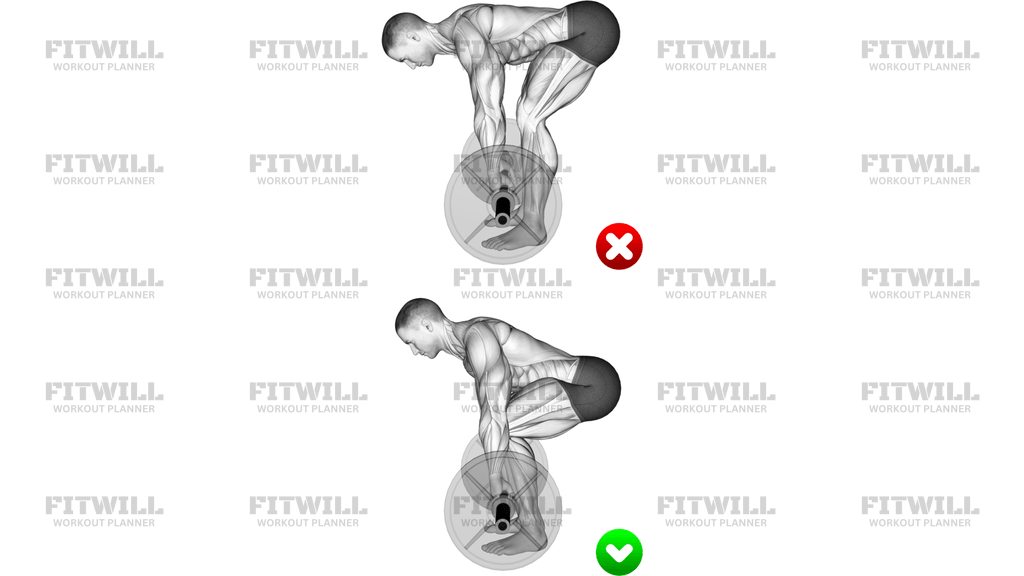
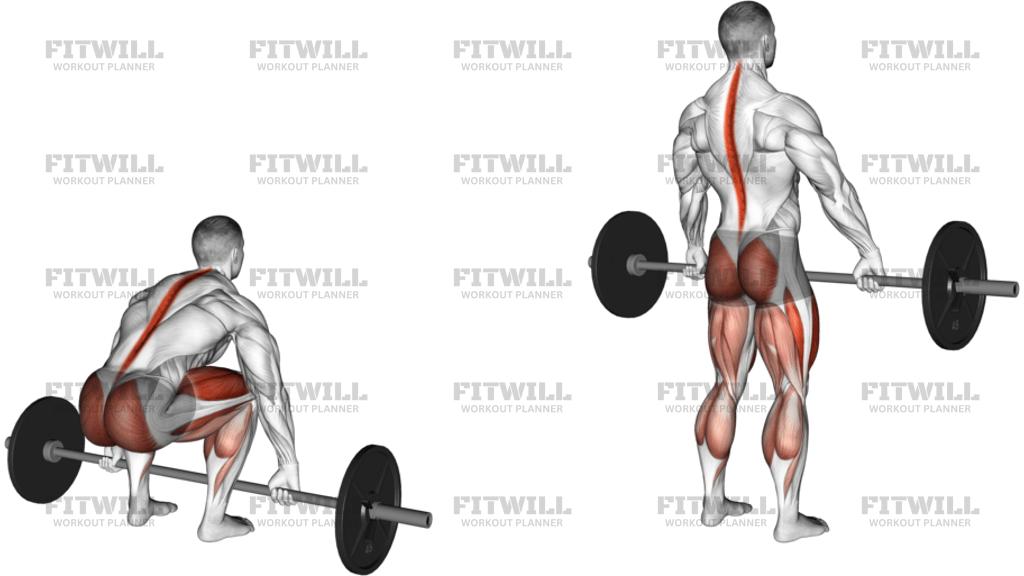
Deadlift Hips Wrong-Right is a setup drill for learning where the hips should be before a conventional barbell deadlift leaves the floor. It contrasts the common mistake of starting with the hips too high and the torso too flat with a stronger start that keeps the bar close, the back neutral, and the legs ready to drive.
That hip position matters because a deadlift is not just a back pull. When the bar starts over the midfoot and the hips are placed between a squat and a stiff-leg hinge, the legs can share the load and the bar can move more cleanly off the floor. If the hips rise too early, the pull usually turns into a longer, weaker lever that shifts stress away from the legs and into the low back.
The correct setup begins before the plates move. Stand with the bar over the middle of your feet, hinge back, bend the knees until the shins are close to the bar, and take your grip just outside the legs. From there, lower the hips only enough to keep the chest long, the shoulders slightly in front of the bar, and the spine neutral rather than rounded.
Once the setup feels organized, pull tension into the bar before you lift. Brace the midsection, tighten the lats, and push the floor away so the bar rises close to the shins and thighs instead of drifting forward. The point of this drill is to feel the difference between an overhigh starting position and a more efficient deadlift start that lets the hips and knees extend together.
Use Deadlift Hips Wrong-Right as a teaching variation, a warm-up drill, or a light accessory set before heavier deadlifts. It is useful for beginners learning the hinge, and for experienced lifters who keep yanking the bar with the back or letting the hips shoot up first. Keep the load light enough that you can repeat the same hip position on every rep and reset cleanly between pulls.
Fitwill
Log Workouts, Track Progress & Build Strength.
Achieve more with Fitwill: explore over 9600 exercises with images and videos, access built-in and custom workouts, perfect for both gym and home sessions, and see real results.
Start your journey. Download today!




Instructions
- Stand with the barbell over the middle of your feet and set your feet about hip-width apart with your toes slightly turned out.
- Hinge at the hips, bend your knees, and lower your hands to the bar so your shins come close without pushing the bar forward.
- Grip the bar just outside your legs and keep your arms straight while you flatten your upper back.
- Lower your hips until your chest stays long, your shoulders are slightly in front of the bar, and your weight is balanced through the whole foot.
- Pull your lats tight as if you are trying to keep the bar against your shins, then brace your abdomen before the pull starts.
- Drive the floor away and let the bar rise in a straight path, keeping it close to your legs instead of letting it drift forward.
- Finish the lift by extending the hips and knees together until you stand tall without leaning back.
- Lower the bar under control by hinging the hips first, then bend the knees once the bar clears them and reset the same start position for the next rep.
Tips & Tricks
- If your hips jump up before the bar breaks the floor, lower them a little less and start with more tension in the bar.
- Keep the bar brushing the shins and thighs; a gap between the bar and legs usually means the hips started too high or the lats are loose.
- Think 'chest long' rather than 'chest up' so you do not overarch the low back while you set the start position.
- Your start should feel like the middle ground between a squat and a stiff-leg deadlift, not one extreme or the other.
- Use a pause just off the floor if you keep yanking the bar with your back instead of pushing through the feet.
- Let the knees and hips rise together on the first pull; if the knees shoot back immediately, the setup is too low or too far from the bar.
- Keep your head in line with your spine and avoid looking up hard, which often makes the ribcage flare and the hips drift forward.
- Choose a light enough load that you can repeat the same hip height on every rep and reset without losing position.
Frequently Asked Questions
What is Deadlift Hips Wrong-Right meant to teach?
It teaches the difference between a poor deadlift start with the hips too high and a stronger start where the legs, hips, and back are stacked well enough to lift the bar smoothly.
Is Deadlift Hips Wrong-Right the same as a regular deadlift?
No. It is a teaching drill that helps you find the right start position before you load a standard barbell deadlift more heavily.
Where should the bar be before I pull?
It should sit over the middle of your feet, close enough that your shins can reach it without the bar rolling forward.
How low should my hips be in the correct setup?
Low enough that your legs can help drive the bar, but not so low that you turn the pull into a squat or round your lower back.
What muscles should I feel working here?
You should feel the glutes, hamstrings, core, and upper back holding the start position and driving the bar off the floor.
Can beginners use Deadlift Hips Wrong-Right?
Yes. It is especially useful for beginners because it teaches bar position, hip height, and bracing before they handle heavier deadlifts.
What is the most common mistake in this drill?
Starting with the hips too high, which makes the bar drift away from the legs and turns the lift into a back-dominant pull.
How do I fix a rounded back at the start?
Bring the bar a little closer, raise the hips slightly, and stop lowering until you can keep the spine neutral with your shoulders just in front of the bar.