Close-Grip Chin-Up
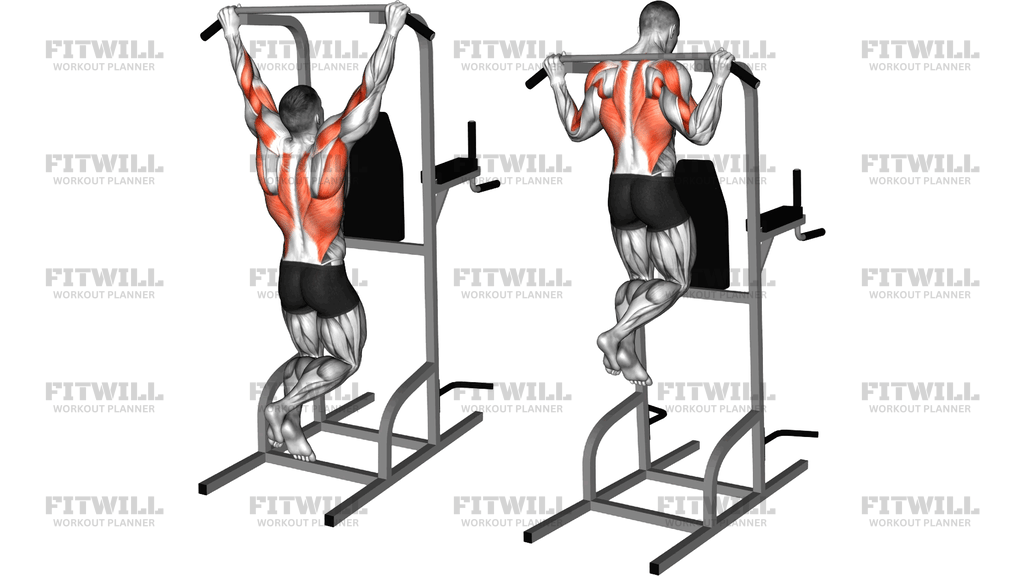
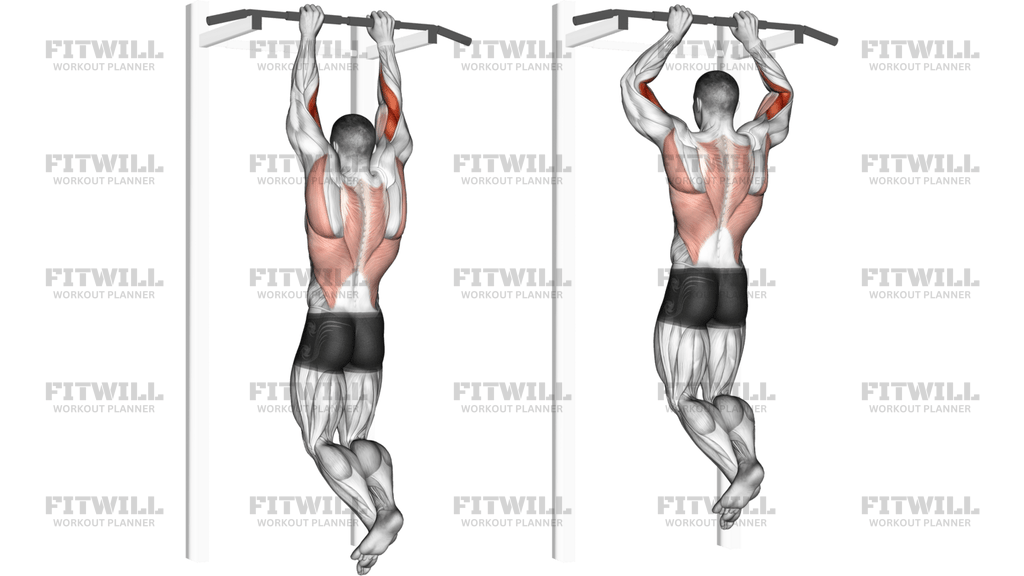
Close-Grip Chin-Up is a body-weight vertical pull performed from a hanging position on a fixed bar with the hands set close together. The narrow grip changes the feel of the rep compared with a wider pull-up: the elbows travel more tightly alongside the ribs, the lats work hard to bring the torso up, and the biceps and forearms contribute strongly to each repetition.
The setup matters because a close chin-up is easy to turn into a swing if the body is loose at the bottom. Start in a straight-arm hang, cross the ankles or keep the legs quiet, and stack the ribs over the pelvis before you pull. That stable start lets the shoulders move through a clean path instead of shrugging toward the ears or drifting forward under load.
As you pull, think about driving the elbows down and slightly back while the chest rises toward the bar. The goal is not to yank the chin forward, but to move the whole body as one controlled unit. At the top, finish with the chin clearly over the bar or the upper chest close to the hands, then lower under tension until the arms are straight again.
This exercise is useful for back and arm strength, grip endurance, and strict body-weight pulling control. It is often programmed for strength work, upper-body accessories, or progression toward harder chin-up variations. Because the movement is demanding on the shoulders and elbows, the best version is the one you can repeat without kipping, rib flare, or a collapsing bottom position.
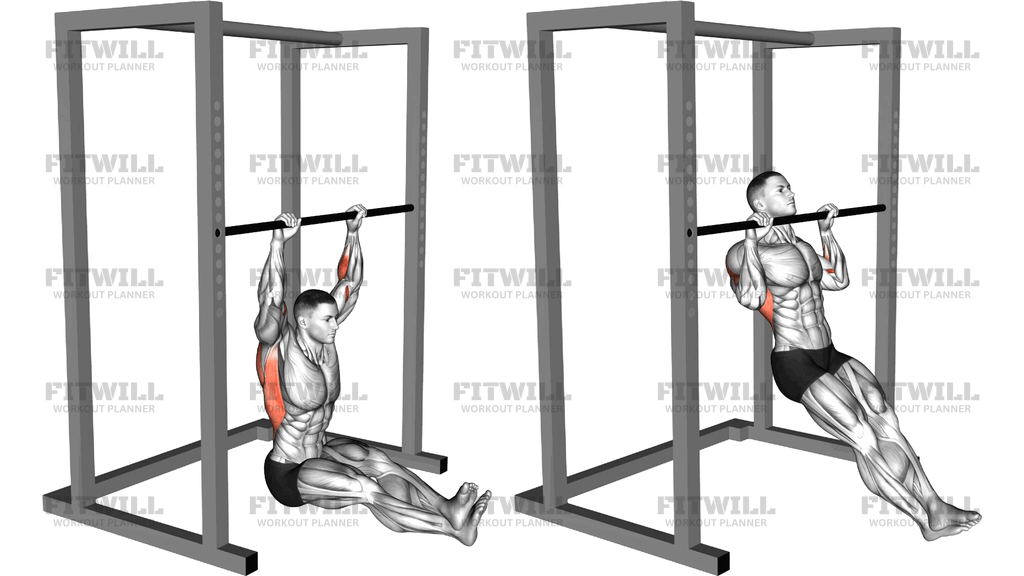
If your close-grip chin-up is strong and clean, it can be loaded with a belt or used for higher-quality volume. If it is not yet strict, band assistance, an assisted pull-up machine, or slow eccentrics are better options than forcing reps. The target is a smooth pull and a controlled return, with enough range to train the lats and biceps without losing joint position.
[ Workout Log & Planner ]
Put your next workout in Fitwill
Keep your plan and training log ready when you are.


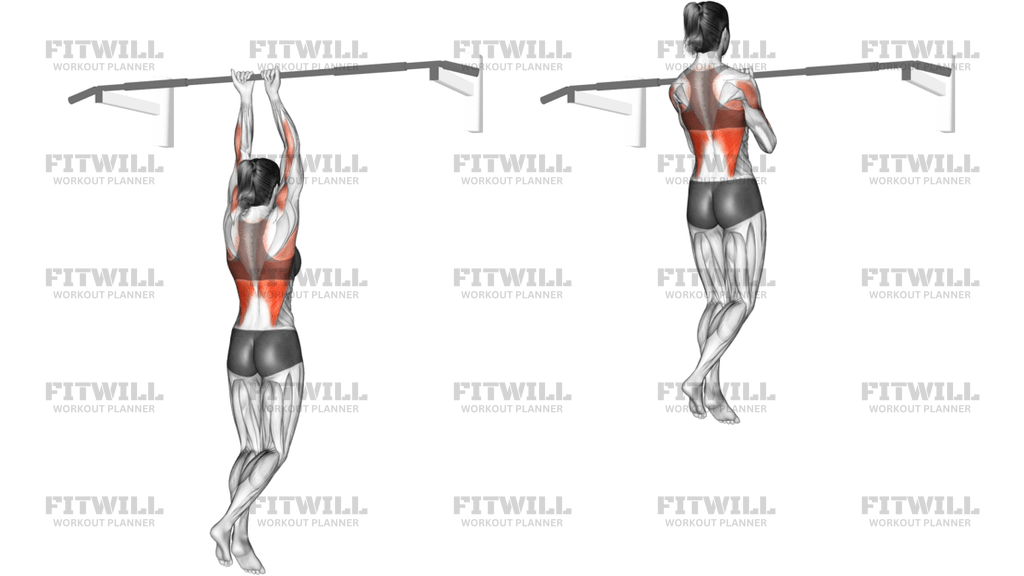
Instructions
- Grab the bar with a close underhand grip, hands a few inches inside shoulder width, and hang with the arms fully straight.
- Cross the ankles or keep the legs quiet so the body stays long and does not swing at the bottom.
- Set the shoulders down away from the ears, stack the ribs over the pelvis, and brace lightly before the first pull.
- From the dead hang, begin the rep by pulling the shoulder blades down and then bending the elbows.
- Drive the elbows down toward the ribs while lifting the chest toward the bar instead of reaching the chin forward.
- Keep the neck long and the wrists firm so the pull stays smooth through the forearms and biceps.
- Finish with the chin over the bar or the upper chest close to the hands, then pause briefly without shrugging.
- Lower yourself under control until the arms are straight again and the shoulders are back in the hanging start position.
- Reset your breath and body position before the next rep, repeating only as long as the swing stays minimal.
Tips & Tricks
- A grip that is only slightly narrower than shoulder width is usually enough; if the hands get too close, the wrists and elbows often feel cramped.
- Start each rep by pulling the shoulders down first. If the shoulders rise toward the ears, the set usually turns into a biceps-dominant tug instead of a clean chin-up.
- Keep the chest proud without flaring the ribs hard. A small amount of torso lean is normal, but excessive arching makes the rep unstable.
- Crossing the ankles can help reduce leg movement and keep the line of pull tidy, especially when fatigue starts to build.
- If you cannot hold a dead hang without pain or losing position, use a band, assisted machine, or a shorter eccentric instead of forcing full body weight reps.
- Lower slowly enough that the elbows and shoulders stay organized on the way down; dropping from the top makes the bottom position harder to control.
- Think about bringing the elbows to the ribs rather than trying to touch the chin to the bar. That cue usually keeps the lats engaged better.
- If grip fails before the back does, use chalk or reduce volume so the forearms do not end the set early.
- Stop the set once the body starts kicking or the shoulders lose their packed position. Clean reps are the point of this movement.
Frequently Asked Questions
What does a close-grip chin-up train most?
It strongly trains the lats and biceps, with the upper back and forearms helping to stabilize and finish the pull.
How close should my hands be on the bar?
Usually just inside shoulder width. Close enough to feel a narrow pull, but not so narrow that the wrists or elbows get pinched.
Should the grip be underhand or overhand?
A chin-up uses a supinated, palms-facing-you grip. If your station uses neutral handles, that becomes a different chin-up variation.
Do I need to start from a dead hang?
Yes, if your shoulders tolerate it well. A straight-arm hang gives you a clean start, but assisted or shortened ranges are fine if full hang position is uncomfortable.
What is the most common mistake on the bar?
Swinging, shrugging, and turning the rep into a kick. The torso should stay quiet while the elbows drive down.
Can beginners use this exercise?
Yes, but most beginners should use band assistance, an assisted pull-up machine, or slow negatives until they can keep the rep strict.
Do I have to pull my chest all the way to the bar?
No. Bring the chin over the bar or the upper chest close to the hands while keeping the shoulders packed and the neck relaxed.
How do I make the movement harder without changing the form?
Add a small amount of load with a belt, slow the lowering phase, or add controlled volume while keeping the same close grip and dead-start position.