Barbell Incline Bench Press
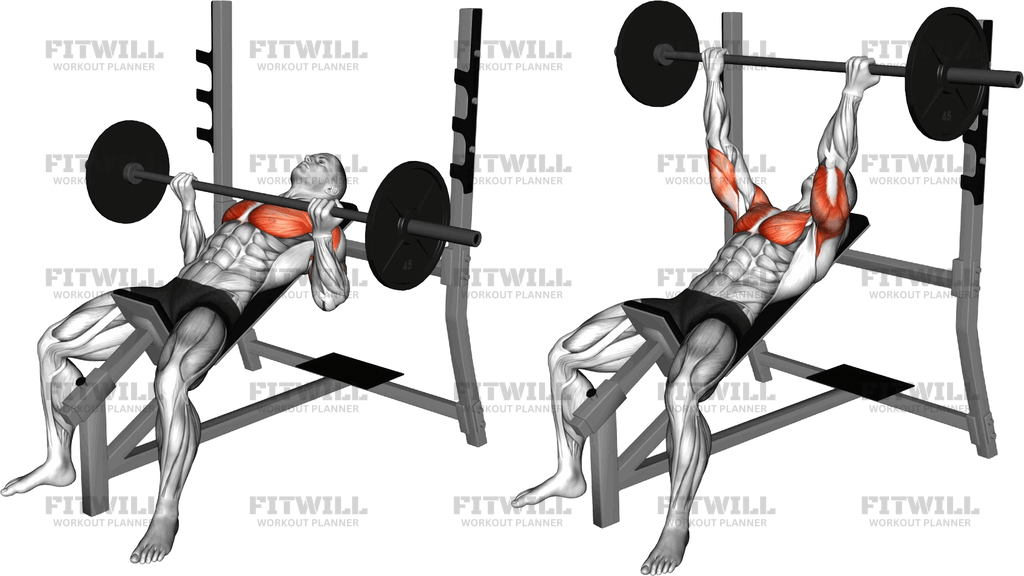
Barbell Incline Bench Press is a pressing exercise performed on an incline bench with a barbell, usually set around a moderate angle so the upper chest does more of the work than it would on a flat bench. It is a strong choice when you want to build pressing strength, add size to the chest and front shoulders, and practice a bar path that stays controlled from the unrack to the final lockout.
The setup matters more here than it does in many simpler lifts. A stable bench angle, firm upper-back position, and planted feet let you press from a solid base instead of chasing the bar with your shoulders. That is why Barbell Incline Bench Press is often used in strength blocks, upper-body hypertrophy sessions, or accessory work after heavier flat pressing.
The main work comes from the pectoralis major, with the anterior deltoids and triceps helping finish each rep. If the bench is too steep, the shoulders usually take over; if it is too flat, the movement starts to resemble a standard bench press. Keeping the angle moderate helps you keep tension where you want it while still letting the bar travel through a strong, repeatable path.
Good reps start with the shoulder blades set back and down on the bench, the bar unracked under control, and the elbows tucked just enough to protect the shoulders. Lower the bar toward the upper chest or upper sternum area, pause briefly if needed, and press the bar back up while keeping the wrists stacked over the elbows. The goal is a smooth press, not a bounce off the chest or a loose, drifting lockout.
This exercise works well for lifters who want more upper-chest emphasis than a flat bench can provide, but it still demands honest technique. Use a load you can lower under control, keep your ribs from flaring excessively, and stop the set if your shoulders roll forward or the bar starts to wobble. Done well, Barbell Incline Bench Press is a straightforward way to build pressing strength with clear mechanical focus and easy-to-repeat form.
[ Workout Log & Planner ]
Put your next workout in Fitwill
Keep your plan and training log ready when you are.


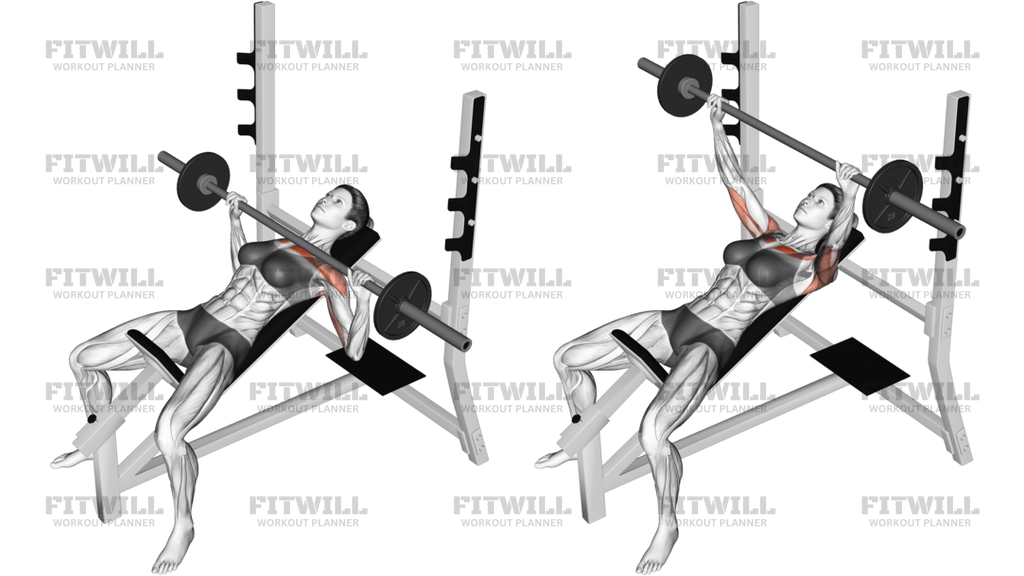
Instructions
- Set the bench to a moderate incline and lie back with your head, upper back, and glutes supported on the pad.
- Plant both feet flat on the floor and keep them set wide enough that you can stay stable without your hips sliding.
- Grip the bar slightly wider than shoulder width and stack your wrists over your elbows before you unrack it.
- Pull your shoulder blades back and down into the bench so your chest stays high without over-arching your lower back.
- Unrack the bar and bring it over your upper chest with straight but not locked elbows.
- Lower the bar in a controlled line toward the upper chest or upper sternum while keeping the elbows at a comfortable angle.
- Pause briefly when the bar reaches the bottom position, then press it up and slightly back toward the rack until the arms are fully extended.
- Keep your feet driving into the floor and exhale as you press the bar away from your chest.
- After the last rep, guide the bar back into the hooks before sitting up.
Tips & Tricks
- A moderate bench angle usually keeps the upper chest involved without turning the lift into a shoulder press.
- If your elbows flare straight out, narrow the angle slightly so the bar path feels smoother and the shoulders stay happier.
- Let the bar touch high on the chest, not down near the lower ribs, or the press turns into a different angle than intended.
- Keep your wrists stacked over your forearms; bent-back wrists make the bar feel heavier and less stable.
- Do not bounce the bar off the chest. A brief, controlled touch is enough for this lift.
- Keep your shoulder blades pinned to the bench for the whole set instead of letting them slide forward on the way down.
- If the bar drifts toward your face on the way down, slow the eccentric and aim the bar slightly lower on the return path.
- Use a load that lets you keep the same touch point and bar path on every rep, especially after the first few reps.
- Stop the set when the bar speed drops so much that your hips lift or your shoulders lose position.
Frequently Asked Questions
What does Barbell Incline Bench Press train most?
It emphasizes the upper chest while also loading the front shoulders and triceps during the press.
How steep should the incline bench be?
A moderate incline is usually best. If the bench is too steep, the movement shifts toward the shoulders instead of the chest.
Where should the bar touch on Barbell Incline Bench Press?
The bar should come down to the upper chest or upper sternum area, not the lower chest.
Should my elbows flare out on this press?
No. Keep them slightly tucked so the press stays strong and the shoulders stay in a better position.
Can beginners do Barbell Incline Bench Press safely?
Yes, if they start with a light load, a stable bench angle, and a controlled bar path.
Why do my shoulders take over during this exercise?
That usually happens when the bench is too steep, the elbows flare too much, or the shoulder blades are not set back and down.
What grip width works best on the barbell?
A slightly wider-than-shoulder-width grip usually gives a strong press without forcing the shoulders into an awkward position.
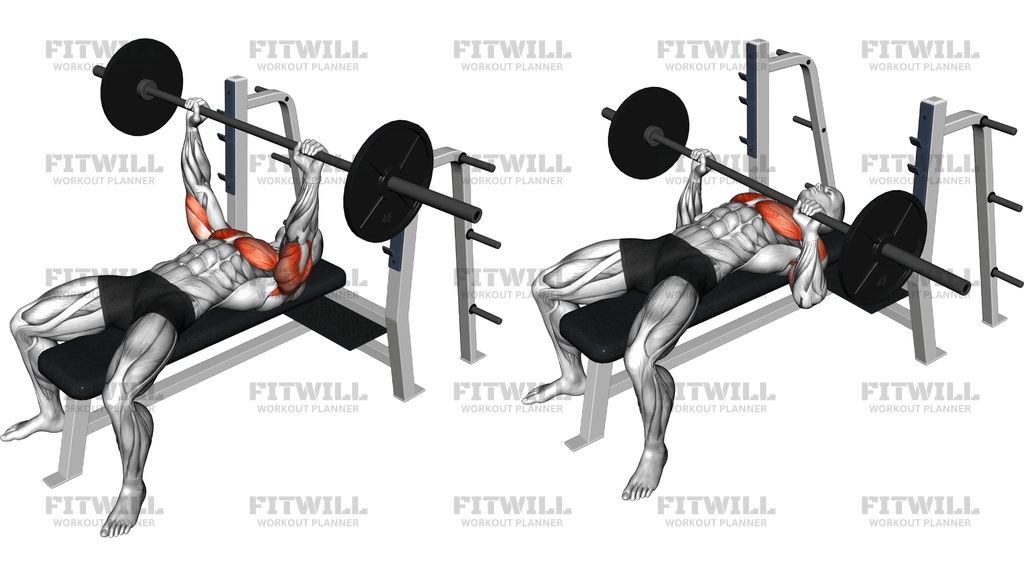
How is Barbell Incline Bench Press different from a flat bench press?
The incline increases upper-chest and front-shoulder demand, while the flat bench usually spreads the load more evenly across the chest.
What is a common mistake on Barbell Incline Bench Press?
Letting the bar drift around, bouncing it off the chest, or losing upper-back tightness are the biggest form breakers.