Cable Seated Twist
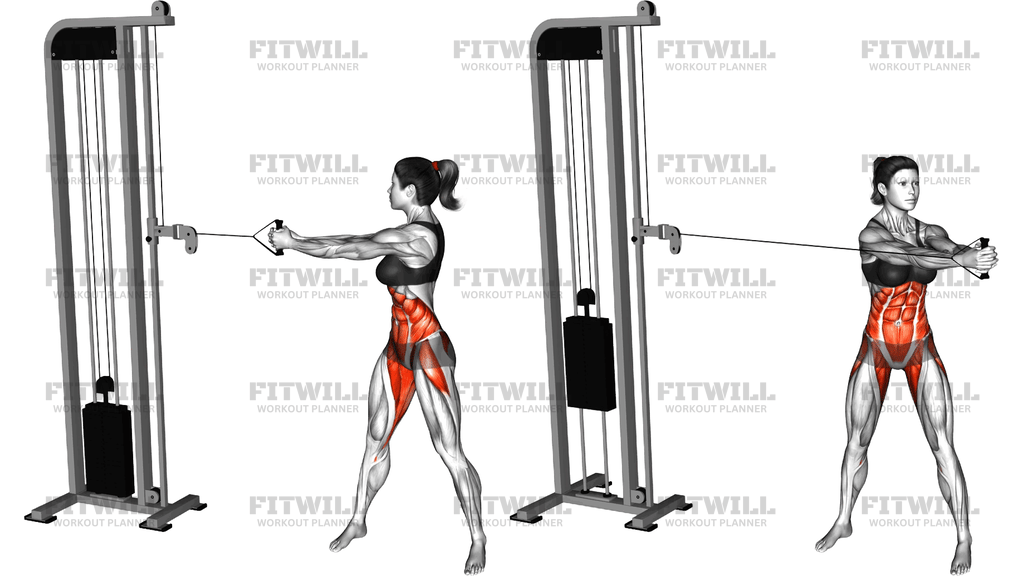
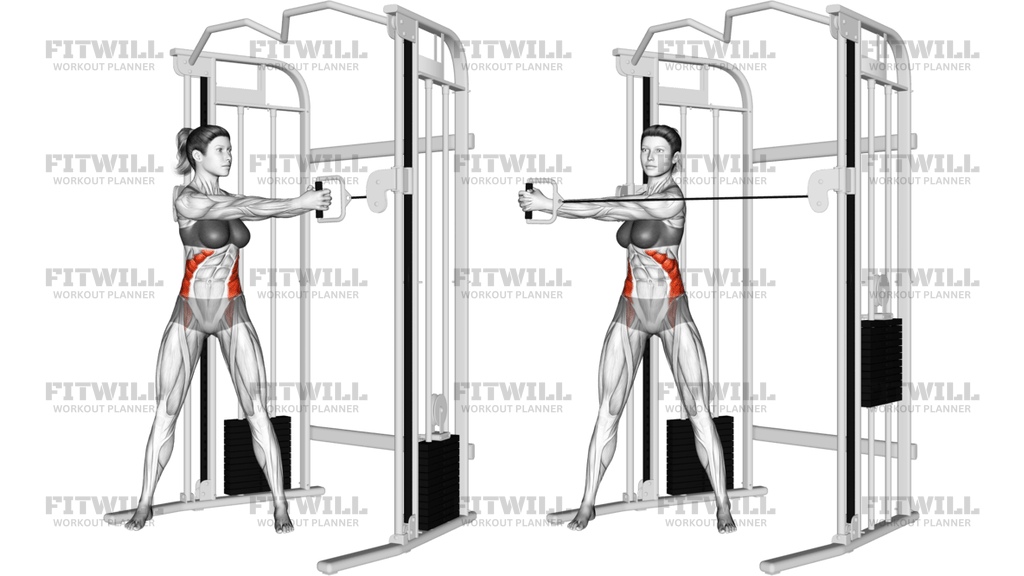
Cable Seated Twist is a seated rotational core exercise that loads the obliques through a controlled turn of the torso against cable resistance. In the version shown here, you sit upright on a bench beside the stack, hold a single handle with both hands, and rotate the trunk while the hips stay grounded. The cable keeps tension on the torso through both the twist and the return, so the exercise rewards precision more than speed.
The primary target is the external obliques, with the rectus abdominis, transverse abdominis, and spinal stabilizers helping keep the ribcage stacked over the pelvis. Because you are seated, the lower body is there to stabilize rather than drive the movement, which makes the exercise useful when you want trunk rotation without much leg or hip contribution. It fits well in warm-ups, accessory core work, or athletic sessions where controlled rotation matters.
Setup matters more than load. Sit tall with both feet planted, brace lightly through the midsection, and start with the handle centered in front of the chest so the shoulders stay relaxed and the elbows remain almost straight. Rotate from the ribcage and upper trunk as one unit instead of pulling the handle with the arms or letting the hips slide off the bench. The best reps feel organized from the first inch of motion, not forced at the end range.
Turn smoothly to the side, pause briefly when the torso is fully rotated, then return slowly until the handle is back in front of the chest and the cable still has tension. Exhale as you twist and inhale on the way back, keeping the neck long and the shoulders down so the work stays in the obliques instead of the traps or lower back. If the motion starts to feel jerky, shorten the range and clean up the path before adding load.
Cable Seated Twist is usually best with moderate or lighter loads and repeatable reps. If the bench shifts, your knees swing, or the torso leans back to fake extra range, the load is too heavy or the setup is off. Used well, it teaches controlled rotation and anti-rotation in the same rep, which makes it a strong choice for anyone who wants more trunk control without needing much equipment.
[ Workout Log & Planner ]
Put your next workout in Fitwill
Keep your plan and training log ready when you are.


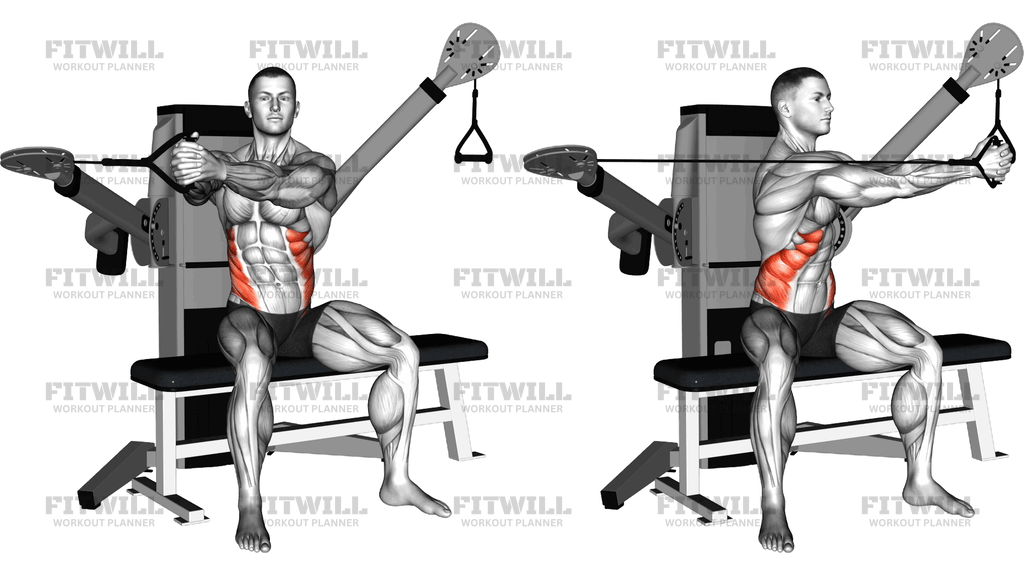
Instructions
- Set a bench beside a cable stack and clip a single handle to the cable at about chest height.
- Sit sideways on the bench with both feet flat, knees bent, and your hips square on the pad.
- Hold the handle with both hands at arm's length in front of your chest, keeping a soft bend in the elbows.
- Stack your ribs over your pelvis, pull your shoulders down, and brace your midsection before the first twist.
- Rotate your torso away from the cable in one smooth motion, letting the shoulders and handle travel together.
- Keep your hips planted and avoid sliding or leaning back as you turn to the end range.
- Pause briefly at the strongest turned position, then exhale and return slowly until the handle is back in front of your chest.
- Reset your posture between reps and stop the set if the cable starts yanking your shoulders or your lower back takes over.
Tips & Tricks
- A slightly lighter stack is usually better than forcing bigger rotation with your arms.
- Keep both sit bones on the bench; if one hip lifts, shorten the range.
- Think "ribcage turns, pelvis stays quiet" to keep the movement in the obliques.
- If your shoulders shrug, lower the pulley or sit a touch farther from the stack.
- A slow return keeps the cable loaded and prevents the weight from snapping you back.
- Let your elbows stay almost straight, but don't lock them so hard that the shoulders tense up.
- Plant the feet wide enough to stop your knees from swiveling with the twist.
- Stop just before the torso starts leaning backward; extra lean turns the exercise into a hip and lower-back compensation drill.
Frequently Asked Questions
What muscles does Cable Seated Twist work?
Primarily the obliques, with the rectus abdominis and deep core muscles helping stabilize the trunk.
Do I need to keep my hips still during Cable Seated Twist?
Yes. The clean version rotates through the torso while the hips stay anchored on the bench.
Should my arms bend in Cable Seated Twist?
Keep them mostly straight so the cable does not turn into a curl or press.
How heavy should the cable stack be?
Use a load that lets you twist and return without jerking, leaning back, or losing control of the handle.
Is Cable Seated Twist good for beginners?
Yes, if you start light and focus on a small, smooth rotation with both feet planted.
Why do I feel Cable Seated Twist in my lower back?
That usually means you are leaning back, over-rotating, or letting the hips drift instead of keeping the ribcage stacked over the pelvis.
What if the handle pulls me off balance?
Sit a little closer to the machine, plant the feet wider, and reduce the load until the torso can control the pull.
Can I use this instead of a Russian twist?
Yes, it gives you a similar rotational core stimulus with more consistent cable tension and less momentum.