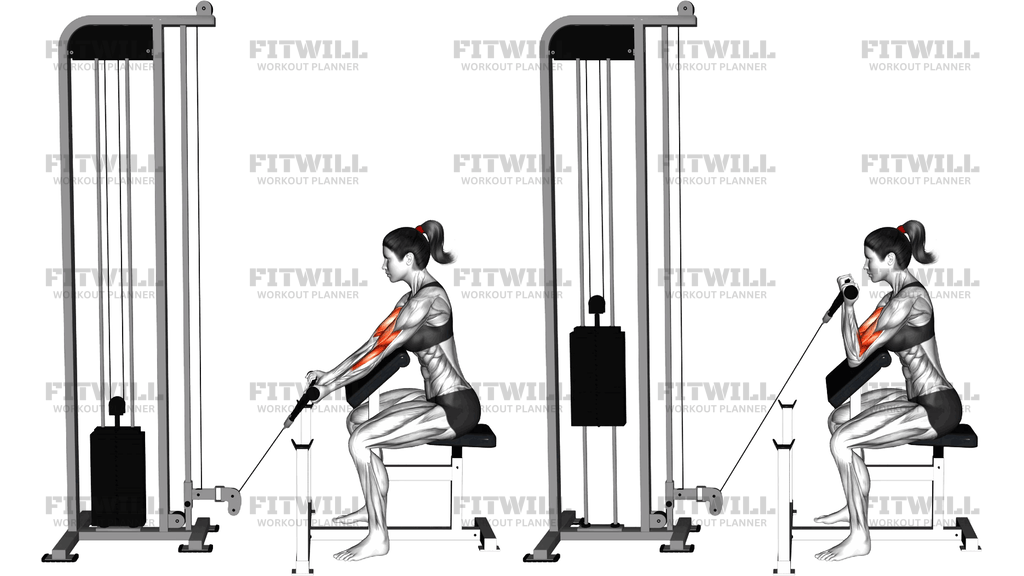
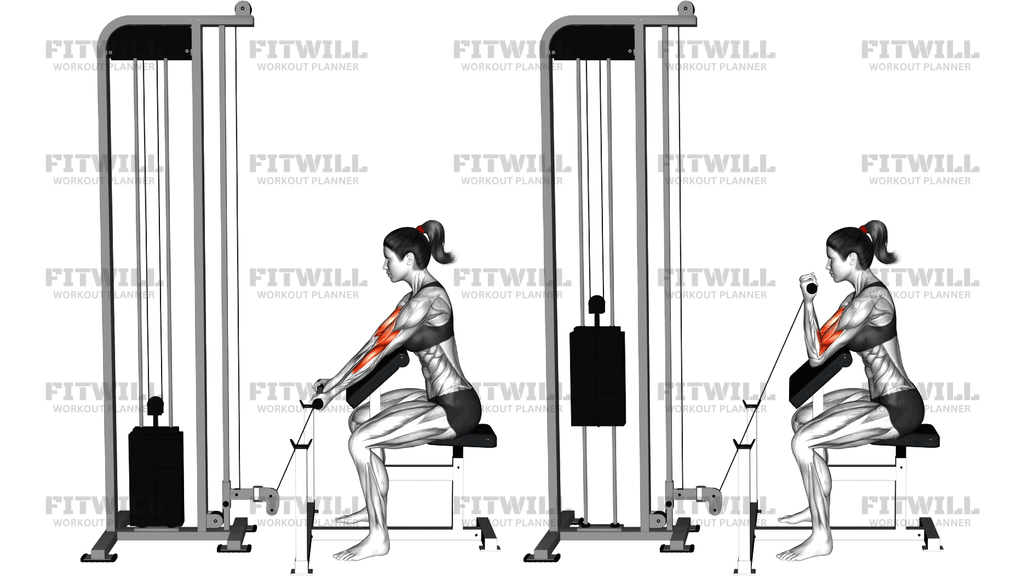
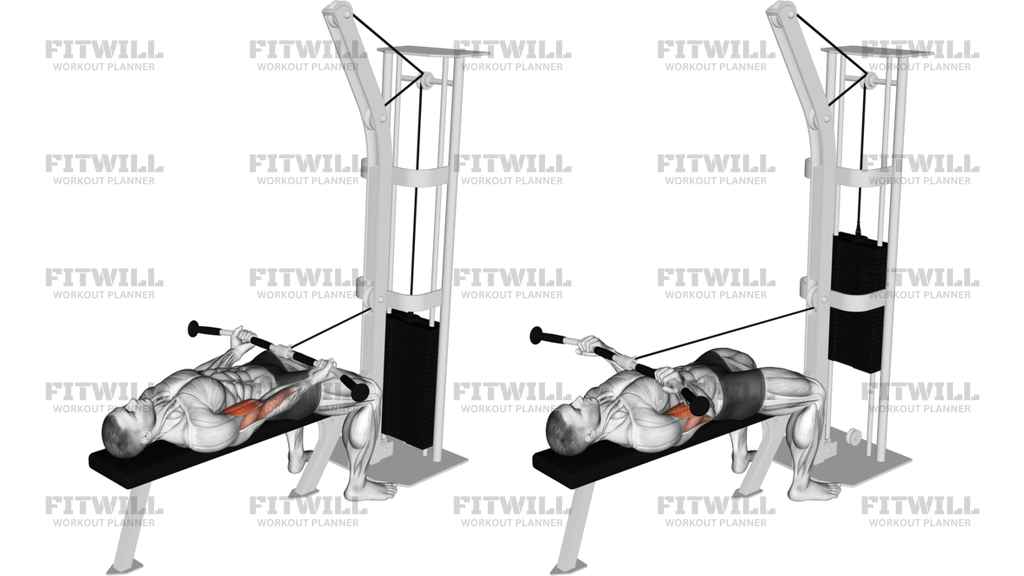
Cable Triceps Pushdown V-Bar With Arm Blaster
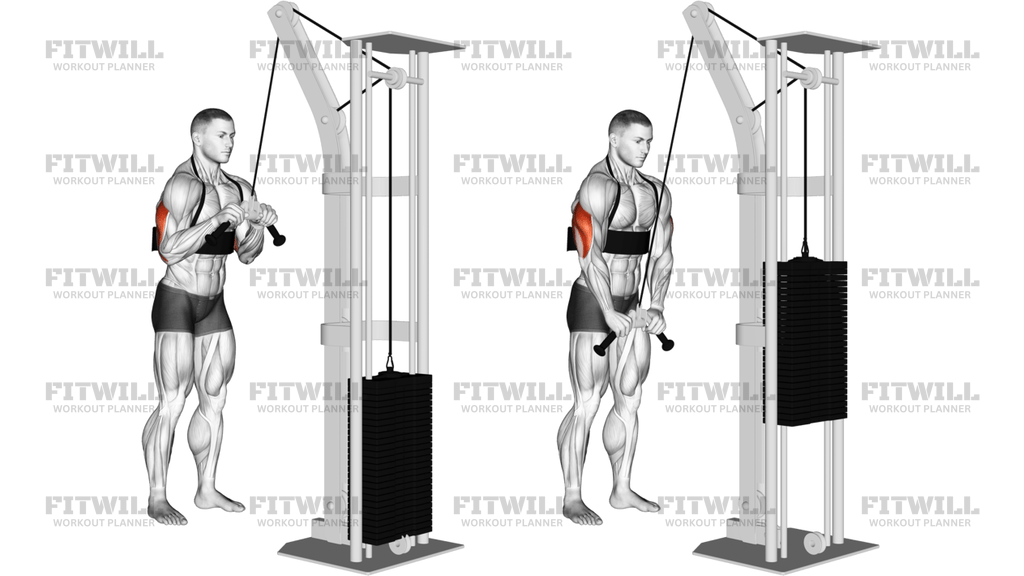
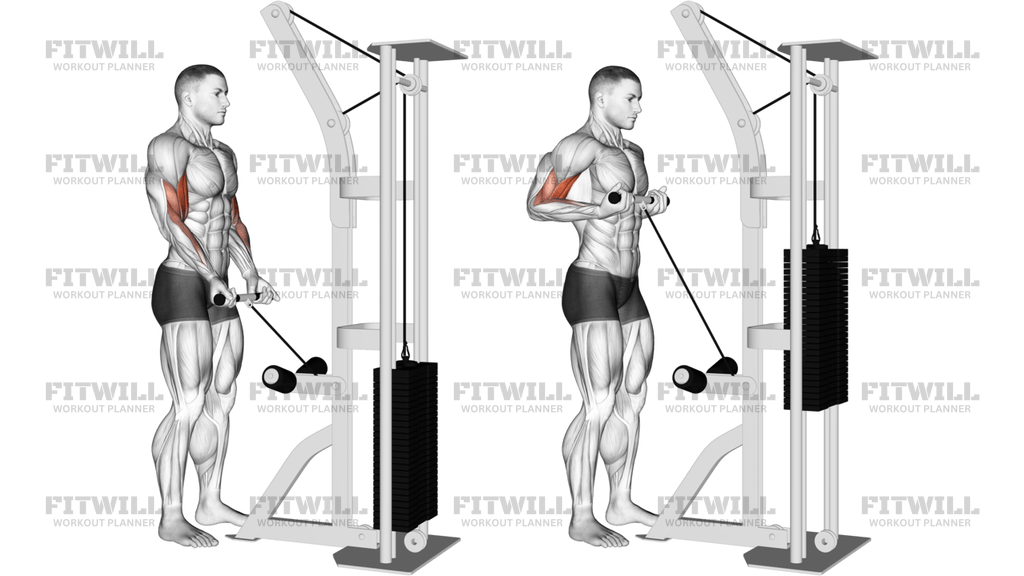
Cable Triceps Pushdown (V-Bar) With Arm Blaster is labeled like a triceps movement, but the visible setup shows a standing cable curl performed with a V-bar and arm blaster. The low pulley keeps tension on the arms from the bottom of the rep, while the arm blaster pins the upper arms in front of the torso so the elbows, not the shoulders, do most of the moving. That makes the exercise a strict option for loading the biceps with very little body English.
The main benefit of this setup is continuous cable tension. A dumbbell curl often gets easiest near the top and most unstable near the bottom, but the cable keeps the biceps working through the full range, especially when the handle is still pulling downward as the elbows extend. The V-bar also gives a comfortable hand position for many lifters and helps both arms move together instead of one side drifting ahead.
A good rep starts with the pulley set low, the V-bar clipped securely, and the arm blaster centered high across the torso. Stand tall with feet about hip-width, knees soft, ribs stacked over the pelvis, and wrists in line with the forearms. Let the upper arms rest against the arm blaster before you curl, then bend only at the elbows until the handle travels toward the upper chest without the shoulders rolling forward or the torso leaning back.
Lower the handle under control until the elbows are almost straight, but do not relax the cable completely. Keep the return smooth so the biceps stay loaded instead of letting the stack slam down. Exhale as you curl, inhale as you lower, and reset the shoulders at the bottom before the next repetition. This works well as accessory arm work, during a biceps-focused session, or any time you want a strict elbow-flexion exercise that reduces cheating and keeps tension predictable.
If the arm blaster feels awkward, the usual fix is a lighter load and a small adjustment in strap height so the elbows are supported without being forced upward. The exercise should feel concentrated in the front of the upper arm, not in the lower back or shoulders. If the torso starts swaying or the wrists start cranking backward, the set is too heavy or the setup is off.
[ Workout Log & Planner ]
Put your next workout in Fitwill
Keep your plan and training log ready when you are.


Instructions
- Set the cable pulley to the lowest position and clip on the V-bar attachment.
- Slide the arm blaster high across your torso so the pad supports the upper arms just in front of your body.
- Stand tall with feet about hip-width apart, a soft bend in the knees, and the cable between your feet.
- Grip the angled V-bar with wrists straight and let the upper arms rest firmly against the blaster.
- Start with the elbows nearly straight and the shoulders down, keeping the chest still.
- Curl the handle toward the upper chest by bending only at the elbows.
- Squeeze the biceps briefly at the top without letting the shoulders roll forward.
- Lower the handle slowly until the elbows are almost straight again, then repeat for the planned reps.
Tips & Tricks
- Keep the arm blaster high enough that the upper arms stay pinned without forcing the shoulders upward.
- Use the V-bar grip that lets your wrists stay stacked instead of cranked far back into extension.
- If your torso leans away from the stack, lighten the load and keep your sternum quiet.
- Let the cable stay taut at the bottom; step far enough back that the plates do not fully relax between reps.
- Drive the curl by closing the elbow joint, not by pulling the shoulders forward.
- Lower for two to three seconds so the biceps keep working through the return phase.
- Stop the rep just before the forearms touch the upper arms if the top position makes you shrug.
- Choose a load that keeps both elbows traveling together instead of letting one wrist twist ahead of the other.
Frequently Asked Questions
What muscles does this cable curl work most?
The biceps are the main target, with the brachialis and forearms helping to control the handle.
Why use an arm blaster on a cable curl?
It keeps the upper arms fixed in front of the torso, which reduces cheating and makes the biceps do more of the work.
Should my elbows move during the set?
They should stay pressed into the arm blaster and only open and close at the elbow joint.
How high should I curl the V-bar?
Curl until the handle reaches the upper chest or collarbone, then stop before the shoulders roll forward.
Is this better than a dumbbell curl?
It is often better when you want constant cable tension and stricter form, while dumbbells allow more free movement.
Can beginners use this exercise?
Yes, as long as the load is light enough to keep the elbows pinned and the torso quiet.
What if the arm blaster feels uncomfortable?
Lower the load, adjust the strap height, or shorten the range so the pad supports the arms without digging into the shoulders.
What is the most common mistake here?
Turning the curl into a standing lean-back row by swinging the torso and letting the shoulders take over.