Resistance Band Air Bike
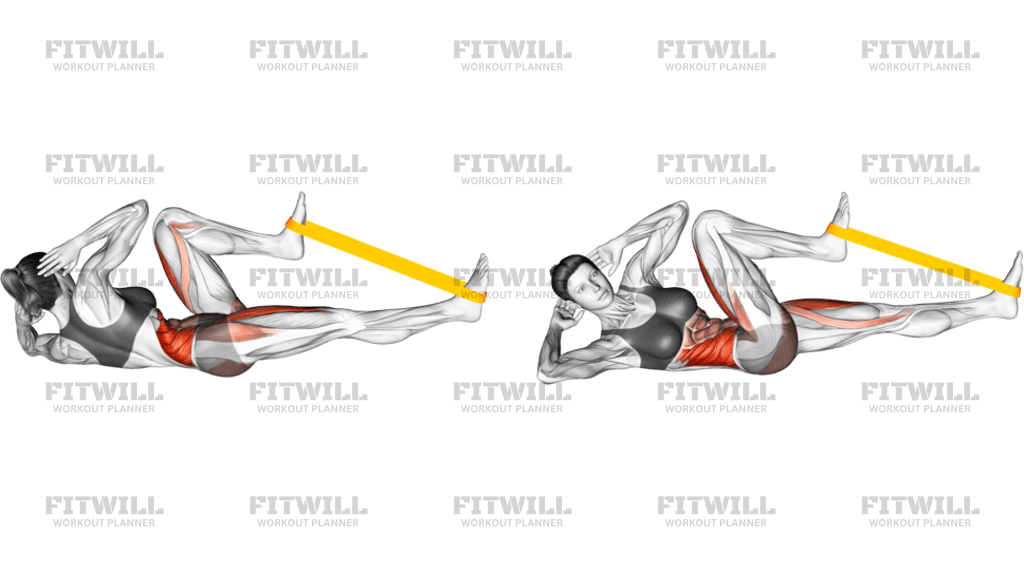
Resistance Band Air Bike is a bicycle-crunch style core exercise performed lying on your back while keeping band tension through each alternating pedal stroke. The movement asks you to coordinate trunk rotation, knee drive, and leg extension at the same time, so the obliques stay active while the abs and hip flexors help control the body line. It is a useful option when you want abdominal work that feels dynamic instead of purely static.
The setup matters because the exercise only works well when the pelvis and ribs stay organized. Lie flat with your low back gently pressed toward the floor, hands lightly supporting the head, elbows open, and the band positioned so it stays taut as your legs cycle. If the band slackens or the low back arches, the set turns into swinging legs instead of a controlled core drill. A good starting position lets you create tension before the first rep rather than chasing it mid-movement.
Each repetition should feel like a controlled pedal-and-crunch, not a frantic bicycle kick. Extend one leg long while drawing the opposite knee in, then rotate through the ribcage so the opposite elbow travels toward that knee without yanking the neck forward. Keep the shoulders slightly off the floor, the chin tucked, and the movement smooth as you switch sides. The goal is to rotate the torso around a stable center, not to collapse side to side.
Breathing helps keep the rep honest. Exhale as you crunch and rotate, then inhale as you switch to the other side and lengthen the extended leg. Work within a range that lets the lower back stay quiet and the neck stay relaxed, especially if the band is pulling harder than expected. This exercise is often used in core circuits, warm-ups, or accessory work when you want a harder version of the air bike that still rewards clean rhythm and control. It should finish with the abs and obliques doing the work, not the hip flexors or shoulders taking over.
[ Workout Log & Planner ]
Put your next workout in Fitwill
Keep your plan and training log ready when you are.


Instructions
- Lie on your back with the resistance band set so it stays taut through the leg cycle, hands lightly behind your head, elbows open, and your low back gently pressed into the floor.
- Lift your shoulders a few inches off the floor and bring both knees into the air so you can start the bicycle pattern without arching your lower back.
- Extend one leg long while pulling the opposite knee toward your chest, keeping the moving leg under control instead of snapping it straight.
- Rotate your ribcage so the opposite elbow moves toward the lifted knee without pulling on your neck.
- Switch sides smoothly and keep the extended leg from dropping so low that your torso starts to arch.
- Keep the band under steady tension as you alternate legs, using a controlled pedal rhythm rather than rushing the reps.
- Exhale during each crunch and twist, then inhale as you transition to the other side.
- Lower your shoulders and relax the band only after you finish the last rep.
Tips & Tricks
- Keep your hands light behind your head; if you are pulling on the neck, the abs are doing less work.
- Press the low back toward the floor before each rep so the pelvis does not tip forward as the legs extend.
- Use a band tension that challenges the legs without forcing you to shorten the range or arch the spine.
- Think about bringing the ribs toward the opposite hip, not the elbow toward the knee.
- Make the extended leg long and active instead of letting it hang loose and swing through the rep.
- Pause briefly when the elbow and knee come closest so the twist stays deliberate, not bouncy.
- If the hip flexors burn before the abs, reduce the speed and keep the shoulders slightly higher rather than kicking harder.
- Keep the chin tucked and the chest open so the neck does not crane forward as fatigue builds.
Frequently Asked Questions
What muscle does Resistance Band Air Bike target most?
The obliques are the main focus, with the abs and hip flexors helping control the bicycle motion.
Can beginners perform this exercise?
Yes, but beginners should use light band tension and a slower pedal rhythm so the lower back stays down.
Where should the resistance band sit?
It should stay taut through the leg cycle, with enough tension that each switch feels deliberate instead of loose and easy.
What is the biggest mistake in the air bike pattern?
The most common mistake is yanking on the head while the legs swing too low and the lower back arches off the floor.
Should I feel this more in the abs or the legs?
You should feel the abs and obliques driving the twist, with the legs working only to maintain the cycling pattern and band tension.
How far should I rotate on each rep?
Rotate only as far as you can keep the shoulders off the floor and the neck relaxed; a small clean twist is better than a forced reach.
Why keep the shoulders lifted the whole time?
Keeping the shoulders slightly off the floor keeps tension in the abs and makes the alternating elbow-to-knee pattern more effective.
How can I make Resistance Band Air Bike harder?
Use a stronger band, slow the switches, or hold the top twist a little longer while keeping the low back controlled.