Dumbbell Bar Grip Sumo Squat
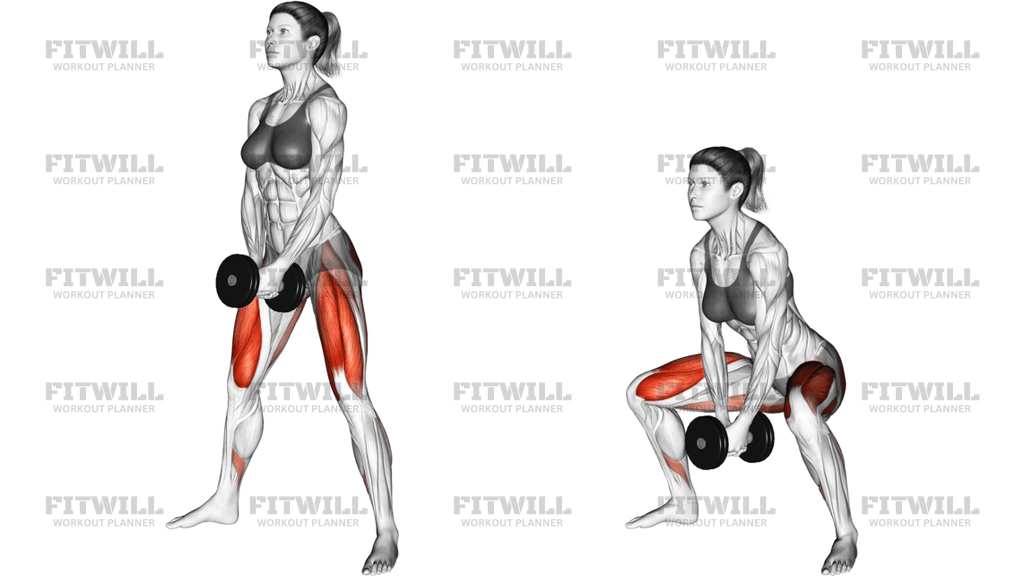
Dumbbell Bar Grip Sumo Squat is a wide-stance squat variation that keeps the dumbbell hanging vertically between the legs while you sit the hips down and back. The bar grip hold changes the feel of the load compared with a classic goblet squat: the weight stays low, the torso can stay tall, and the adductors get a strong stretch at the bottom. It is a practical lower-body exercise for lifters who want to train glutes, quads, and inner thighs with a simple setup and a clear squat path.
The name matters here because the stance and hand position define the exercise. Set the feet wider than shoulder width, turn the toes out, and hold one end of the dumbbell with both hands so it hangs straight under the shoulders. That low, centered load helps you keep your chest lifted while you sit between the thighs instead of folding forward. If the dumbbell drifts away from the midline or the heels come up, the squat usually becomes less stable and the hips lose the best line of force.
Dumbbell Bar Grip Sumo Squat is useful when you want squat volume without a heavy barbell on the back or when you need a more upright pattern that still challenges the hips. The movement trains the glutes through hip extension, the quads through knee extension, and the adductors through the wider stance and deeper knee bend. Core tension is still important, but it should support the rep rather than dominate it. A clean rep should look controlled from the first descent to the final stand, with the knees tracking over the toes and the spine staying long.
At the bottom, think about sitting down until the thighs approach parallel or slightly below if your hips and ankles allow it without the heels lifting or the pelvis tucking hard. Drive through the whole foot on the way up, especially the heel and the outside edge of the foot, and finish by squeezing the glutes rather than leaning back. Use a load that lets you keep the dumbbell still, the knees open, and the torso organized. For many lifters, this is best as an accessory lift, a hypertrophy movement, or a technique-focused leg exercise that rewards patience and clean position more than speed.
[ Workout Log & Planner ]
Put your next workout in Fitwill
Keep your plan and training log ready when you are.


Instructions
- Stand with your feet wider than shoulder width, toes turned out, and hold one end of the dumbbell with both hands so it hangs straight down between your thighs.
- Keep your chest tall, shoulders down, and arms straight so the dumbbell stays centered under your body.
- Brace your midsection and screw both feet into the floor before you start the first rep.
- Send your hips down between your knees while letting the knees track out over the toes.
- Keep the dumbbell close to the floor and between the legs as you lower into the squat.
- Descend until your thighs are near parallel or slightly lower, as long as your heels stay planted and your lower back stays neutral.
- Drive through the whole foot to stand up, leading with the chest and hips rising together.
- Squeeze the glutes at the top without leaning back or letting the dumbbell swing forward.
- Reset your stance and breathing between reps if needed, then repeat for the planned set.
Tips & Tricks
- Keep the dumbbell hanging straight down; if it swings, the stance is usually too narrow or the torso is tipping.
- Turn the toes out enough that the knees can open naturally instead of collapsing inward.
- Think about spreading the floor apart with your feet on the way down and up to keep the hips engaged.
- If your heels rise, shorten the depth before the squat turns into a forward lean.
- A slower descent makes the adductors and glutes work harder and keeps the rep from bouncing at the bottom.
- Do not let the dumbbell touch the floor unless you are deliberately resetting between reps.
- Keep the elbows relaxed and the arms long; pulling the weight up with the arms changes the exercise.
- Choose a load you can hold for full sets without the shoulders shrugging or the chest collapsing.
- Stop the set when your knees stop tracking over the toes or your pelvis starts to tuck under hard.
Frequently Asked Questions
What does Dumbbell Bar Grip Sumo Squat work most?
The main emphasis is on the glutes and quads, with a strong contribution from the adductors because of the wide stance.
Why hold the dumbbell by one end with both hands?
That bar grip keeps the load centered and low, which helps you stay upright and lets the hips drop between the legs more naturally.
How wide should my stance be for Dumbbell Bar Grip Sumo Squat?
Set your feet wider than shoulder width and adjust until your knees can open over your toes without your heels lifting.
Should my dumbbell touch the floor at the bottom?
No, it should hang just above the floor. If it is hitting down, shorten the range or raise the start position slightly.
Can beginners do Dumbbell Bar Grip Sumo Squat?
Yes. Start with a light dumbbell and a shallow depth so you can learn the stance, knee track, and torso position first.
Why do my knees cave in during this squat?
Usually the stance is too narrow, the toes are not turned out enough, or the weight is too heavy for the hip position you are using.
How deep should I squat in this exercise?
Go as low as you can while keeping the heels down, the chest lifted, and the lower back from rounding hard at the bottom.
What can I use instead of a dumbbell for Dumbbell Bar Grip Sumo Squat?
A kettlebell held by the horns can work similarly, but keep the same wide stance and upright torso.
Where should I feel the exercise most?
You should feel the glutes, inner thighs, and quads working together, not strain in the lower back.