Roman Chair 45 Degrees Side Bend
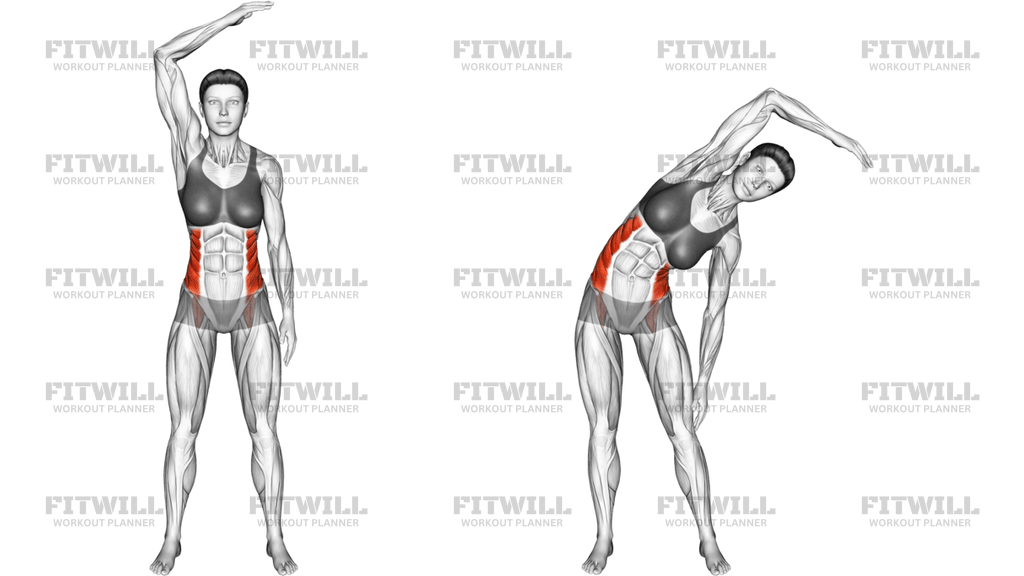
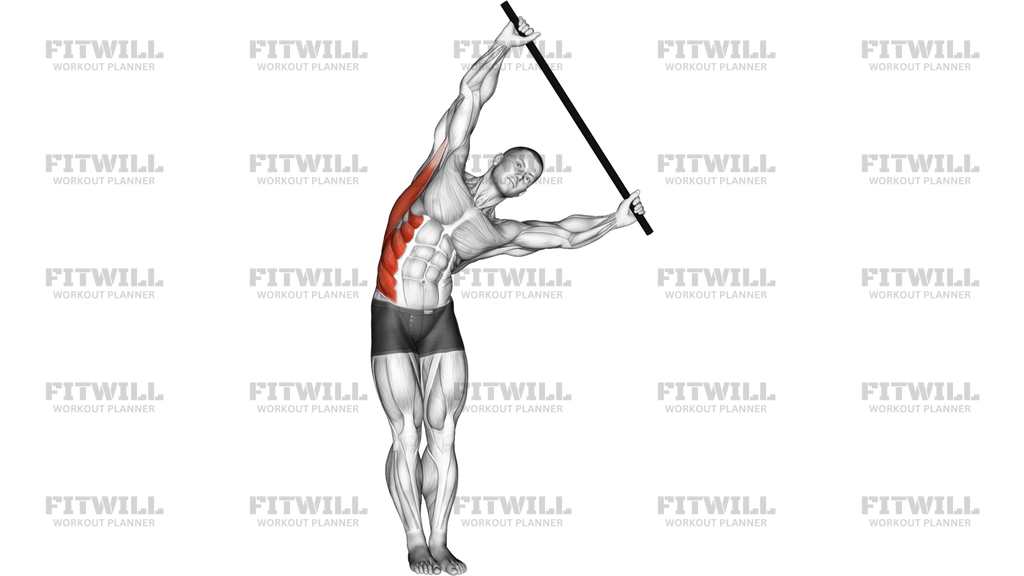
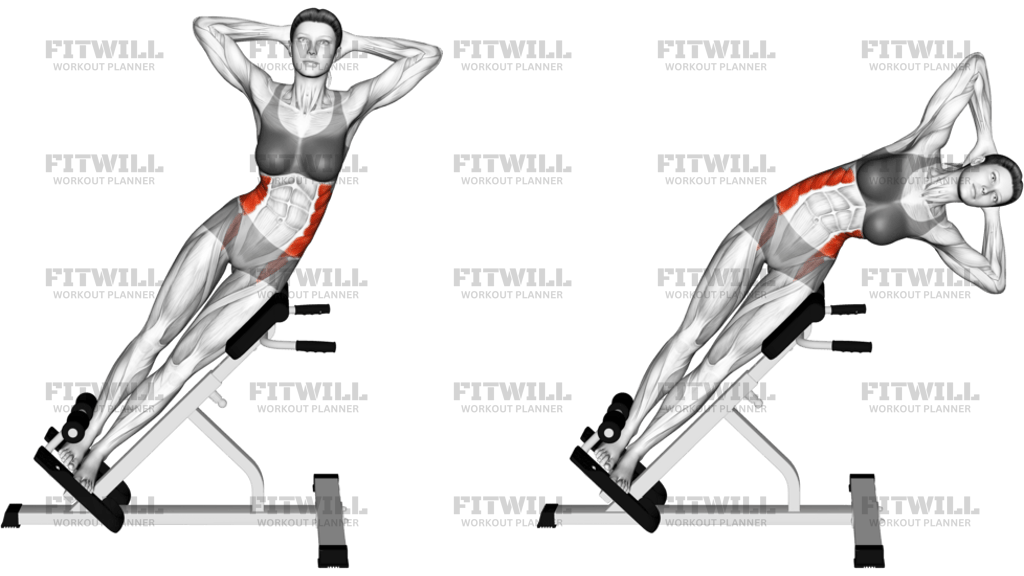
Roman Chair 45 Degrees Side Bend is a side-flexion exercise built around a 45-degree roman chair, where your feet are anchored and your torso moves through a controlled lateral arc. It is a direct way to train the obliques while also asking the abs and lower back to stabilize the trunk so the body stays stacked instead of folding or twisting.
The setup matters because this movement is easy to turn into a sloppy lean if the pad height, foot position, or torso angle are off. In Roman Chair 45 Degrees Side Bend, the hips stay anchored against the support while the ribs travel toward the side of the pelvis, which keeps the work on the waist rather than on momentum. The exercise is most useful when you want focused core strength, better control through side bending, or a targeted accessory drill after your main lifts.
A good repetition starts from a tall, aligned position on the bench, with the hands lightly supporting the head or chest and the neck staying relaxed. Lower under control until you feel a strong contraction and stretch through the side body, then drive back up by squeezing the obliques and returning to a straight line with the legs. The best range is the one you can control without rotating the torso forward or letting the spine collapse into the pad.
Because Roman Chair 45 Degrees Side Bend isolates a small movement pattern, load selection should stay conservative. Bodyweight is often enough to learn the groove, and small changes in range or tempo can make the exercise harder without adding plates. That makes it a practical option for beginners learning lateral trunk control, as well as experienced lifters who want cleaner waist work without turning the set into a swing.
Use this movement as accessory work, not as a test of how far you can lean. If you feel it mostly in the hips or low back, shorten the range and check that your feet are locked and your torso is not twisting. Done well, Roman Chair 45 Degrees Side Bend gives you a controlled, repeatable side-body stimulus that fits neatly into core sessions, trunk stability work, or a balanced strength program.
[ Workout Log & Planner ]
Put your next workout in Fitwill
Keep your plan and training log ready when you are.


Instructions
- Set the roman chair so your outer hip and lower torso can rest against the angled pad while your feet lock securely under the rollers.
- Stand side-on to the bench, place the working-side hip against the pad, and hook both feet firmly under the foot supports.
- Place your hands lightly behind your head or across your chest and stack your shoulders, ribs, and pelvis in one straight line.
- Brace your trunk, then slowly lower your upper body toward the floor by letting the ribs travel toward the hip on the same side.
- Keep your hips pressed into the pad and avoid rotating your chest forward as you descend.
- Lower only until you feel a strong stretch along the side of the waist and can still control the position cleanly.
- Drive the torso back up by squeezing the obliques and returning to a tall, straight line with the bench.
- Exhale as you come back up, then reset your ribcage before starting the next rep.
- After the set, step off the roman chair slowly and repeat on the opposite side if your program calls for both sides.
Tips & Tricks
- Keep the pad under the side of your torso, not under your ribcage alone, so the movement stays anchored instead of sliding.
- Think about pulling the ribs toward the hip, not crunching forward or twisting toward the floor.
- Use your hands as light head support only; if you yank on the neck, the rep usually turns into a hip hinge.
- A smaller range with a clean pause at the bottom is better than a deep lean that peels your hips off the pad.
- If the movement feels too easy, slow the lowering phase instead of adding a large plate right away.
- Keep both feet locked under the rollers; if the feet drift, the bench setup is too loose for useful side-bend work.
- Stop the descent before your lower back starts to arch or your chest rolls forward.
- Use bodyweight first, then add a small plate or dumbbell only if you can keep the torso in one controlled plane.
Frequently Asked Questions
What muscle does Roman Chair 45 Degrees Side Bend target most?
The main target is the obliques, especially the side of the waist that is shortening as you bend.
Can beginners perform this exercise?
Yes. Beginners should start with bodyweight and a short range so they can keep the hips planted on the pad.
Should my hands stay behind my head on Roman Chair 45 Degrees Side Bend?
They can, but only if the neck stays relaxed. If you feel yourself pulling on your head, cross the arms over the chest instead.
How far should I lower on Roman Chair 45 Degrees Side Bend?
Lower only until you still feel the torso controlled by the side body. If the hips leave the pad or the chest starts rotating, the range is too deep.
What is the most common mistake with this exercise?
The biggest mistake is turning it into a twist or a loose side lean instead of a clean bend through the waist.
Can I add weight to Roman Chair 45 Degrees Side Bend?
Yes, but only after you can control bodyweight reps without shifting off the pad. Small plates or a light dumbbell are usually enough.
Why do I feel this in my lower back?
A little low-back work is normal, but the load should stay centered on the obliques. If the lower back takes over, shorten the range and keep the ribs stacked over the pelvis.
What should I use this exercise for in a program?
It works well as accessory core work after your main lifts or in a trunk-stability block where you want focused side-body tension.