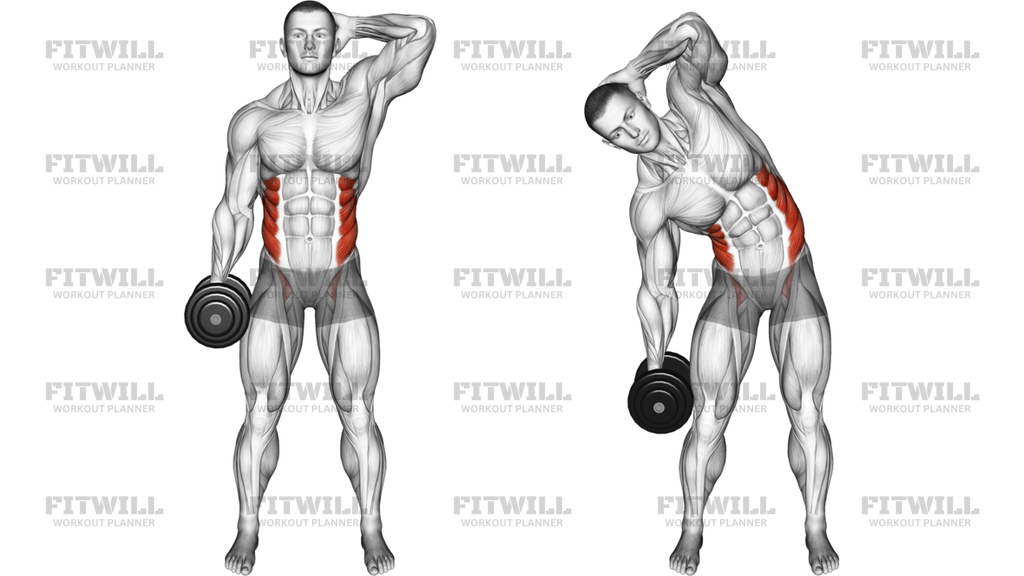
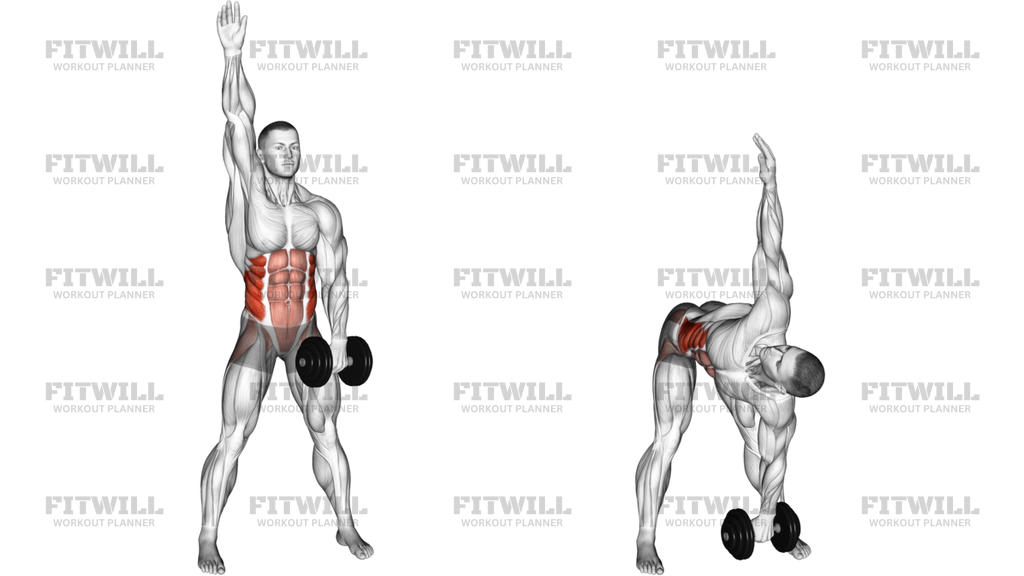
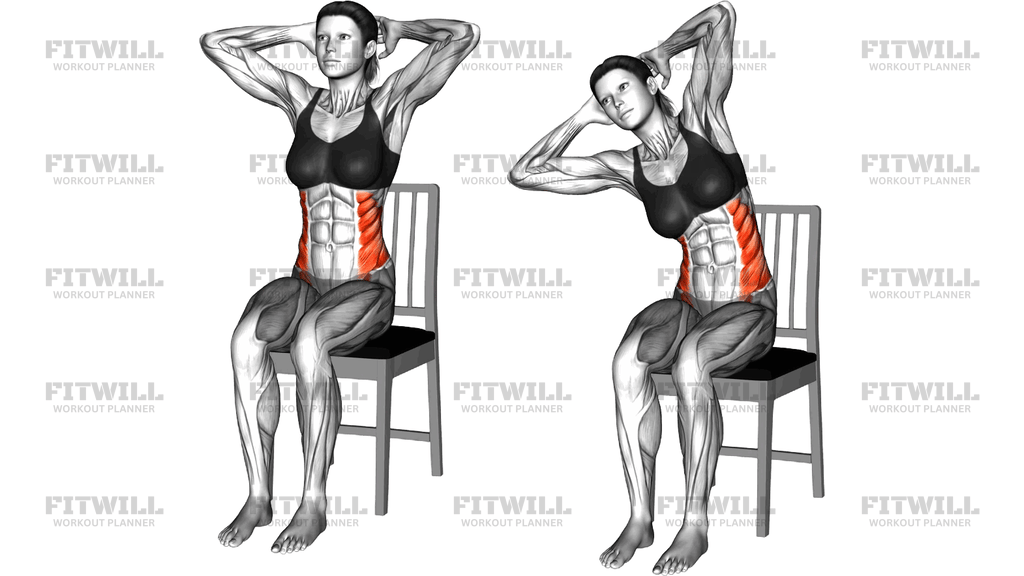
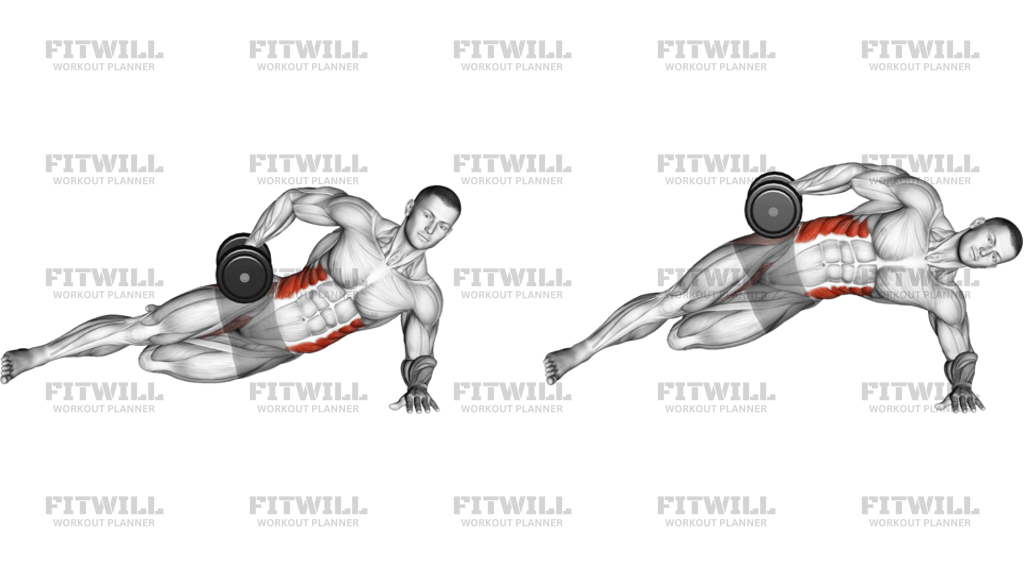
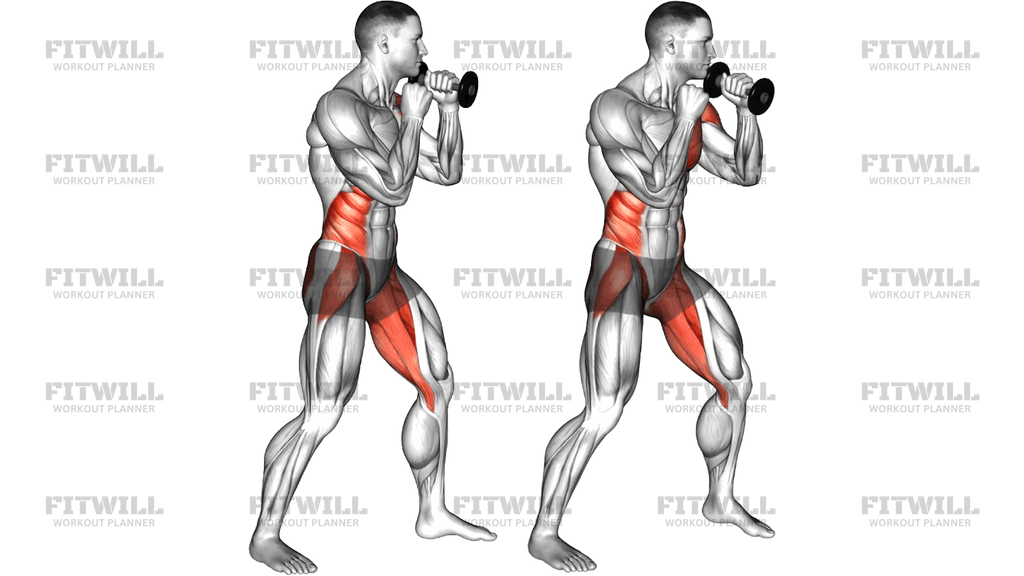
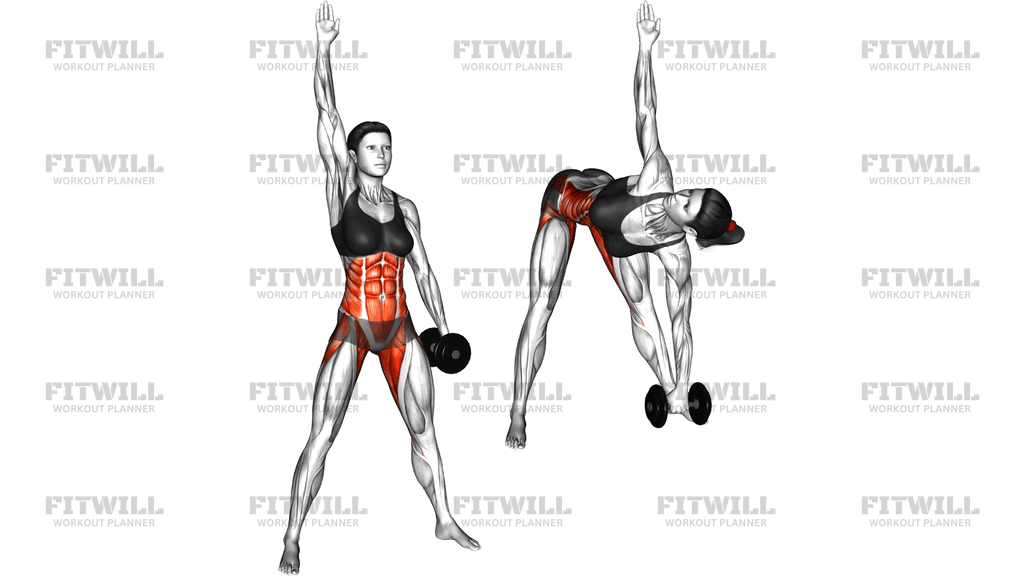
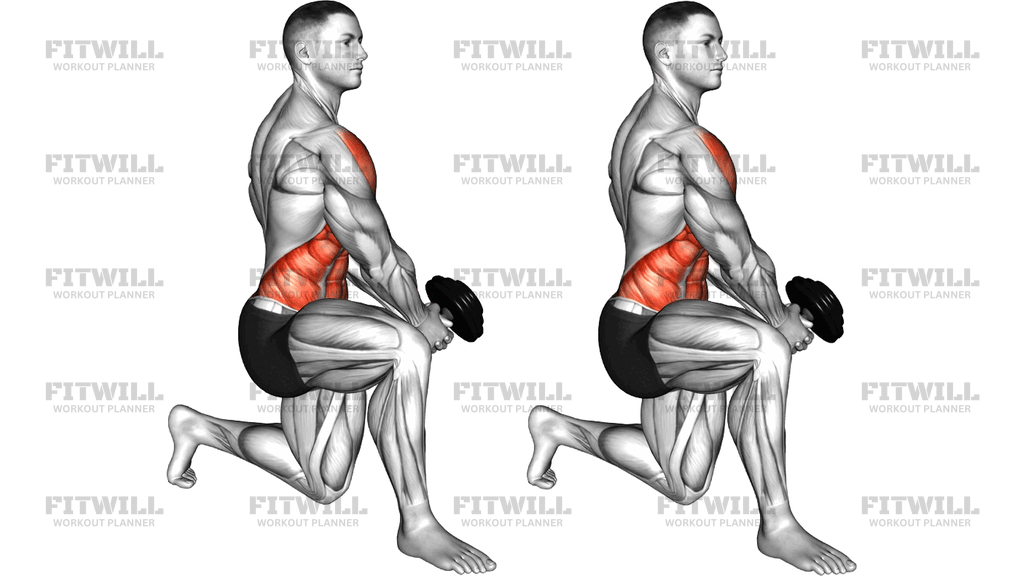
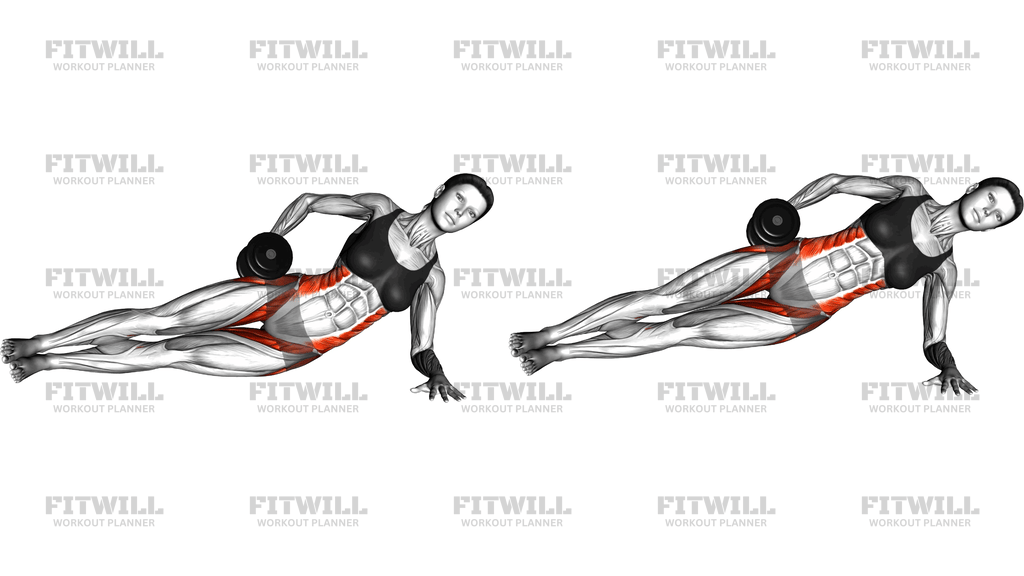
Dumbbell Lying Woodchop
Dumbbell Lying Woodchop is a floor-based core exercise that combines a short crunch with a diagonal reach across the body. It uses a single dumbbell held with both hands to load the obliques through a controlled chopping path, making it useful for trunk strength, rotational control, and better awareness of how the ribs and pelvis move together.
The main target is the obliques, with the rectus abdominis, deep core, and hip flexors helping to stabilize the body as the weight travels. Because the exercise starts from a lying position, the setup matters more than it does in many standing core drills: if the feet, ribs, and head are not organized before the first rep, the movement quickly turns into a swing instead of a controlled chop. A stable starting position also makes it easier to keep the head relaxed and avoid pulling on the neck.
In a good repetition, the torso lifts just enough to bring the dumbbell diagonally across the body, then lowers under control before the next rep begins. The arms guide the weight, but the ribs and waist should do the work. A small, clean range is better than a large, loose swing, especially if the lower back starts to arch or the neck begins to take over. The goal is to feel the waist working through the diagonal path, not to force the dumbbell farther than your trunk can control.
Dumbbell Lying Woodchop is a useful accessory after heavier lifting or as part of a core-focused session when you want abs work that is more dynamic than a plain crunch. It also fits well in circuits because it trains control without needing a machine or much space. For beginners, a light dumbbell and a shorter range are usually enough to learn the pattern without twisting too far, while more advanced lifters can slow the lowering phase to increase time under tension.
Keep the motion smooth and deliberate, with the shoulders and hips staying anchored except for the amount of rotation needed to complete the chop. If the movement feels jerky, the load is usually too heavy or the range is too ambitious. Done well, this exercise teaches the trunk to resist sloppy rotation while still moving through a useful diagonal path, which carries over well to core training, sport rotation, and general lifting stability.
[ Workout Log & Planner ]
Put your next workout in Fitwill
Keep your plan and training log ready when you are.


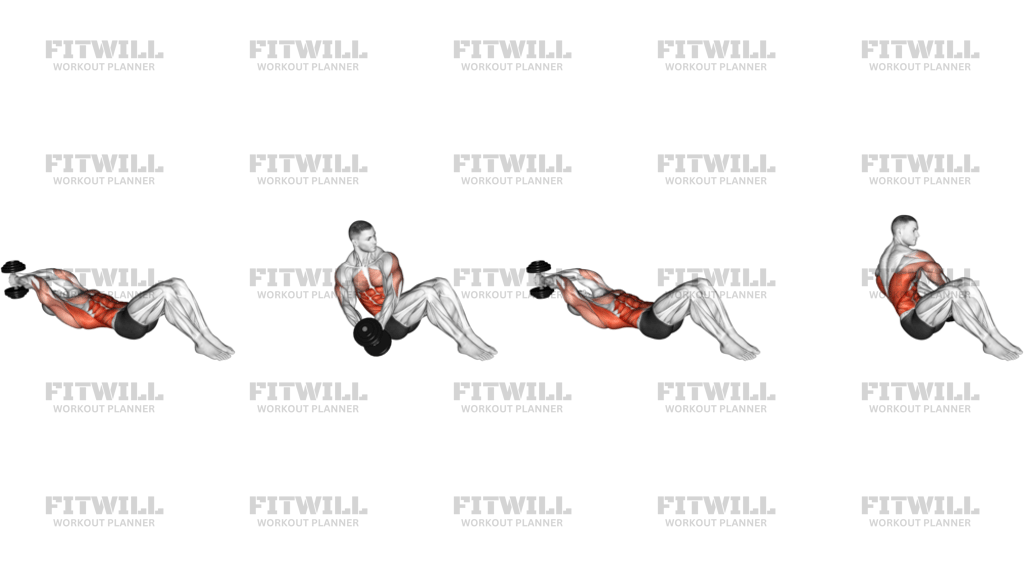
Instructions
- Lie on your back on a mat with your knees bent and feet flat, then hold one dumbbell with both hands near one side of your head or shoulder.
- Keep your chin slightly tucked, ribs down, and lower back long against the floor before you start the first rep.
- Brace your midsection, then curl your shoulders off the mat as you begin to sweep the dumbbell diagonally across your body.
- Guide the weight toward the opposite hip or thigh while keeping the movement smooth and the elbows softly bent.
- Let the rotation come from your ribs and waist instead of throwing the dumbbell with your arms.
- Pause briefly at the top when the chop is fully across your body and your torso is still under control.
- Lower the dumbbell back along the same diagonal path without collapsing your chest or arching your lower back.
- Reset your breath, then repeat the same side or alternate sides if that is how your workout is programmed.
Tips & Tricks
- Start lighter than you think you need; the long lever of the dumbbell makes this exercise feel heavier very quickly.
- If your neck tightens, shorten the curl and keep your eyes fixed on the ceiling instead of chasing the weight with your head.
- Keep both feet planted so the chop comes from your torso, not from sliding hips or popping knees.
- Exhale as the dumbbell travels across your body to help the ribs stay down and the obliques stay engaged.
- Do not let the lower back pop off the floor and turn the rep into a sloppy sit-up.
- A smaller diagonal path is often better than a huge twist, especially if you are still learning the pattern.
- Lower the dumbbell more slowly than you lift it so the obliques keep working on the way back down.
- If one side feels much weaker, train it separately instead of rushing through alternating reps.
Frequently Asked Questions
What muscle does Dumbbell Lying Woodchop target most?
The obliques do most of the work, with the rectus abdominis and deep core helping control the twist and curl.
Can beginners perform this exercise?
Yes. Beginners should start with a very light dumbbell and a shorter range so the movement stays smooth and the neck stays relaxed.
Should my lower back stay on the floor during Dumbbell Lying Woodchop?
Mostly, yes. A small curl is normal, but if your lower back is arching hard or lifting aggressively, the load is too heavy.
Do I need to rotate a lot to do this right?
No. The best reps use a controlled diagonal chop, not an extreme twist that yanks the hips or neck.
Why does this exercise feel more like a crunch than a woodchop?
Because it combines both. You are lifting through the torso while moving the dumbbell diagonally across the body.
What is the most common mistake with the dumbbell path?
People swing the weight with the arms instead of guiding it with the ribs and waist, which usually means the load is too heavy.
Should I hold one dumbbell or two?
Use one dumbbell held with both hands. That keeps the diagonal load centered and makes the chop easier to control.
When is Dumbbell Lying Woodchop useful in a workout?
It works well as core accessory work after compound lifts or in a conditioning circuit when you want to resist sloppy rotation and build trunk control.