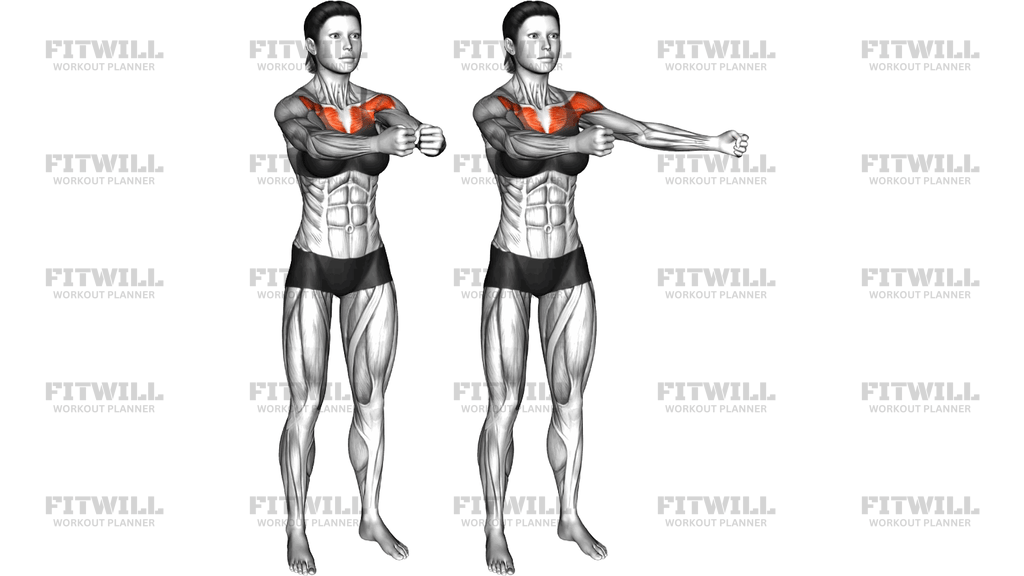
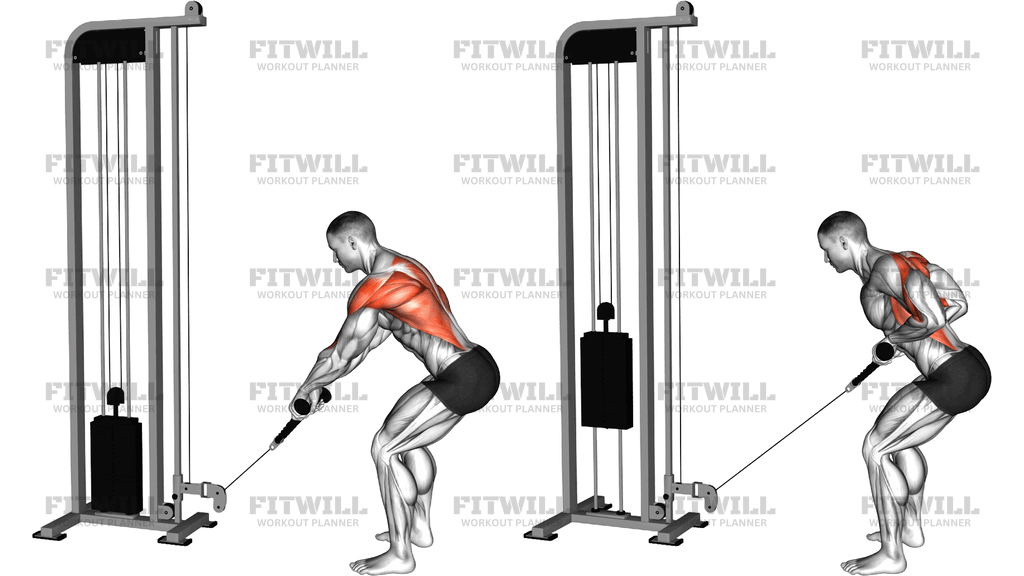
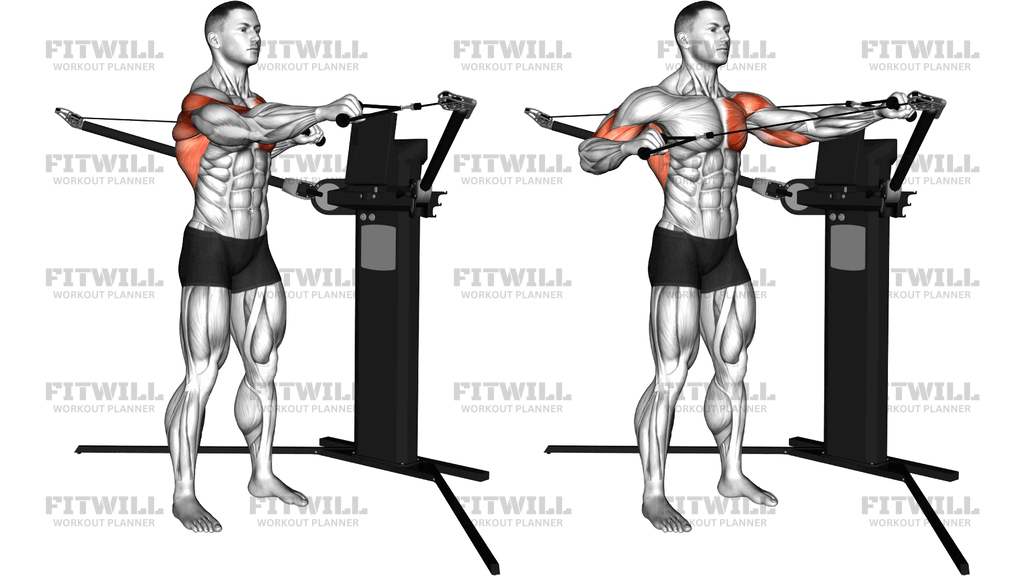
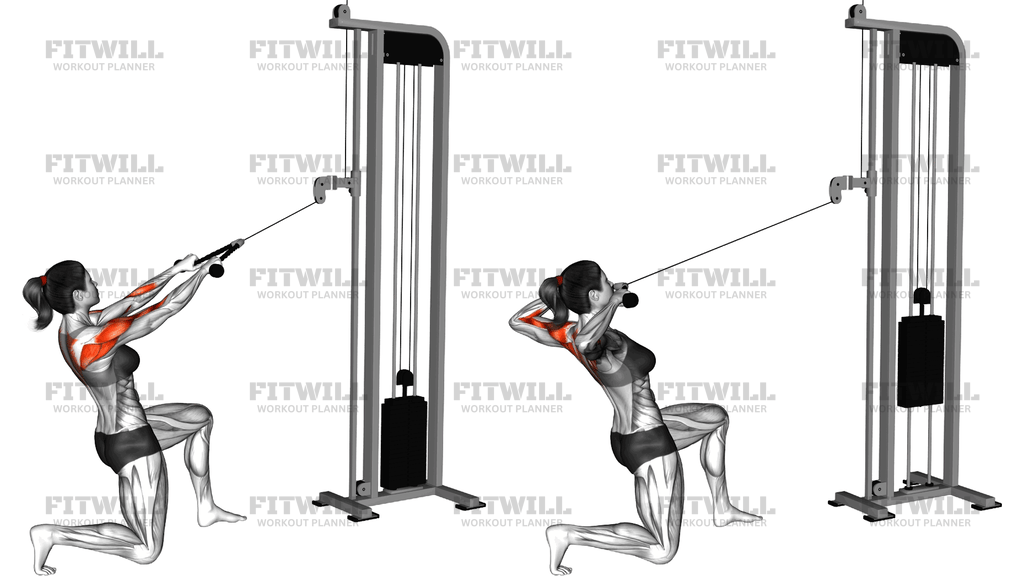
Cable Upper Chest Crossovers
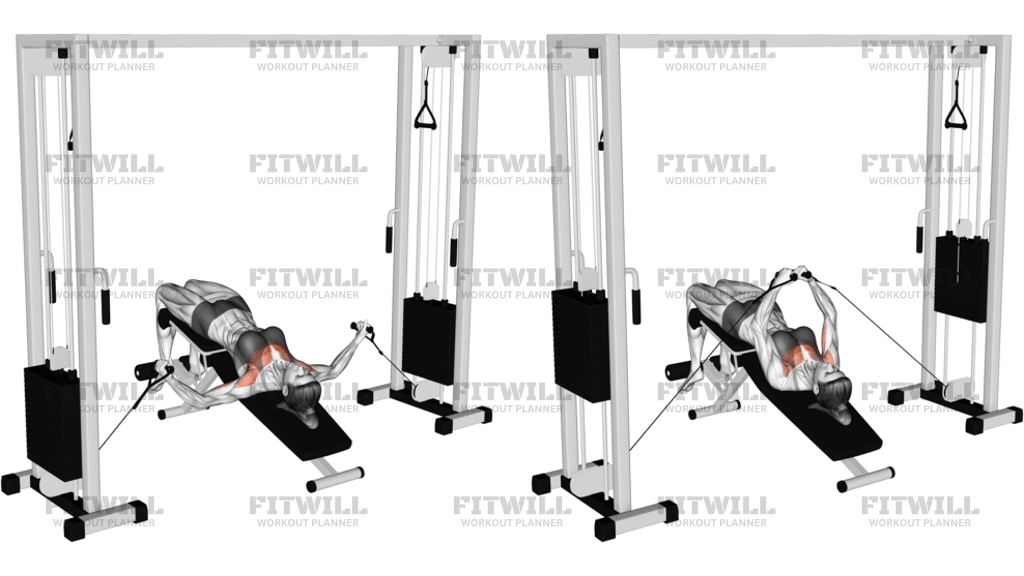
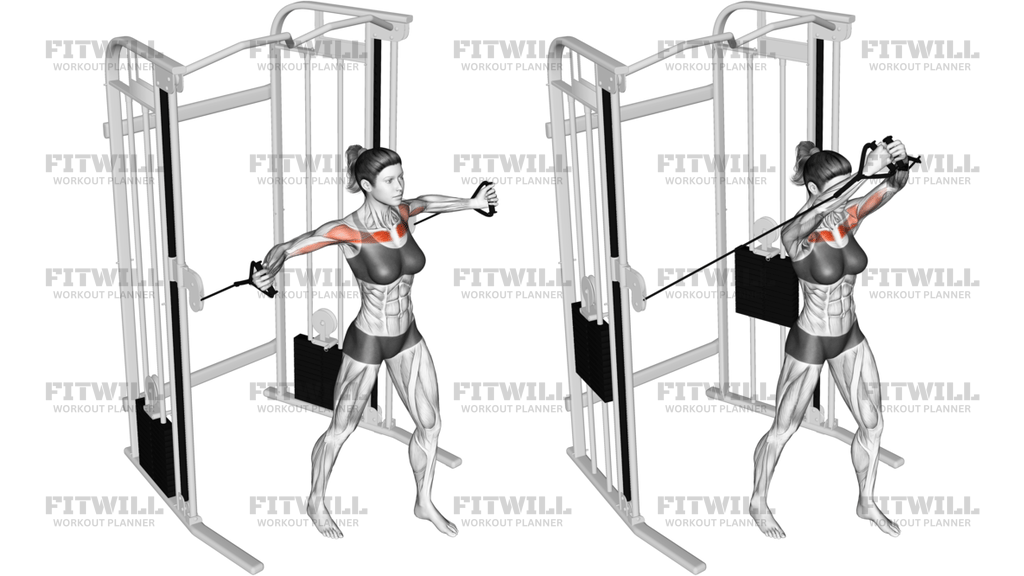
Cable Upper Chest Crossovers is a standing cable fly variation that brings the arms from a wide, stretched position up and in toward the upper chest. It is useful when you want steady resistance through the whole rep, especially for chest-focused accessory work after pressing or for lighter isolation work that keeps the movement smooth and controlled. The cables make it easy to feel where the line of pull changes, so every part of the setup matters.
Set the pulleys low, attach a handle to each side, and stand centered between the towers with one foot slightly in front of the other. Keep a soft bend in the elbows, a tall chest, and a slight forward lean so the cables stay under tension as the arms open wide. That starting position should feel stable but stretched, not loose or collapsed, because the path of the rep begins from the chest and shoulders being organized.
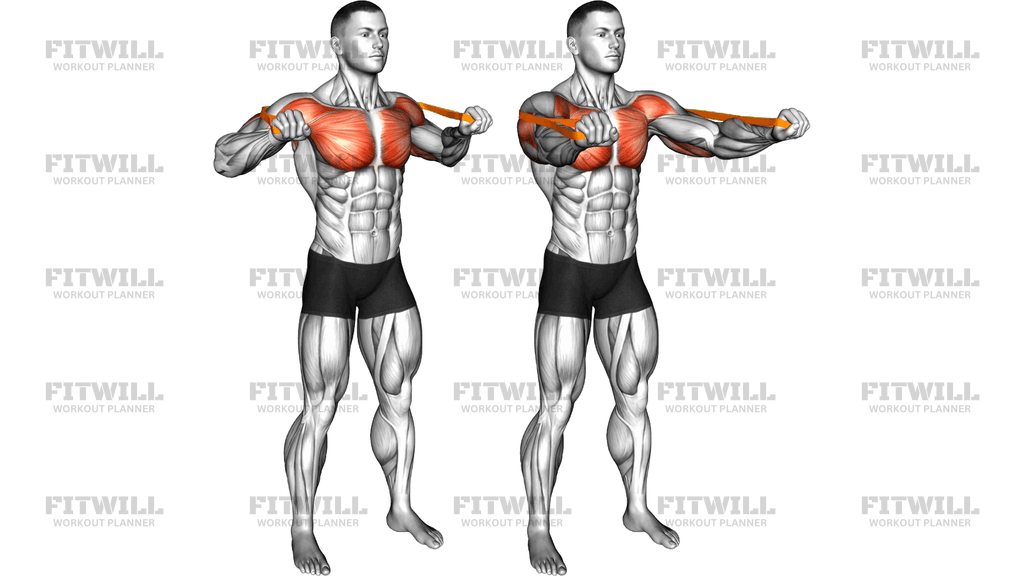
From the start, sweep the handles upward and inward in a wide arc until the hands meet or lightly cross in front of the upper chest. Think about hugging a high line rather than pressing straight ahead. The elbows should stay softly bent the whole time, the shoulders should stay down, and the torso should not rock to finish the rep. Exhale as the handles come together, then return them slowly along the same arc until the chest opens again.
Cable Upper Chest Crossovers work well when you want controlled tension instead of heavy loading. The upper chest does most of the work, while the front shoulders and arms help guide the handles and keep the motion smooth. Because the cables never fully unload, the exercise is also useful for learning how to keep the ribcage stacked and the scapulae controlled through a full chest isolation pattern.
The best reps look deliberate, not forceful. If the handles rise too high, the shoulders shrug, or the lower back starts to arch, shorten the range and reduce the load. Keep the neck relaxed, the feet planted, and the same tempo on every repetition so the set ends because the chest is fatigued, not because the position fell apart.
[ Workout Log & Planner ]
Put your next workout in Fitwill
Keep your plan and training log ready when you are.


Instructions
- Set both cable pulleys to the low position, attach the handles, and stand centered between the towers.
- Step one foot slightly in front of the other, lean forward just enough to keep tension on the cables, and brace your torso.
- Hold a handle in each hand with your palms facing in and your elbows softly bent, then let your arms open wide until you feel a stretch across the chest.
- Keep your shoulders down and your chest tall as you start the rep from the stretched position.
- Sweep both handles upward and inward in a wide arc, bringing them toward the upper chest.
- Bring the hands together or slightly across in front of the upper chest while keeping the elbows in the same soft bend.
- Squeeze the chest briefly at the top without shrugging or leaning farther forward.
- Lower the handles along the same path under control until the chest opens again, then reset your stance before the next rep.
Tips & Tricks
- Use a staggered stance so the cable tension does not pull you backward at the start of the set.
- Keep the elbows fixed in a slight bend; turning the movement into a straight-arm press usually shifts tension away from the chest.
- Stop the handles before they climb above shoulder level if your traps start taking over the rep.
- If the front of the shoulders feel pinched, shorten the opening range and do not let the shoulders roll forward at the bottom.
- Think about bringing the biceps toward each other instead of pushing the handles forward.
- A small forward lean usually keeps the line of pull better matched to the upper chest than standing perfectly upright.
- Exhale as the hands meet and inhale as the arms open back out.
- Use a lighter stack if the torso twists or the two handles finish at different heights.
Frequently Asked Questions
What muscle does Cable Upper Chest Crossovers target most?
It mainly trains the upper chest, with the front shoulders and triceps helping to guide and stabilize the handles.
Should the pulleys be set high or low for Cable Upper Chest Crossovers?
Set them low so the handles travel upward and inward toward the upper chest instead of drifting downward.
How much bend should I keep in my elbows?
Keep a soft, fixed bend from start to finish. Changing the elbow angle turns the movement into more of a press and usually reduces chest tension.
Why do my shoulders feel it more than my chest?
You may be shrugging, leaning too far forward, or starting with the handles too high. Lower the load and keep the shoulders down as the hands sweep up.
Can I cross my hands at the top of Cable Upper Chest Crossovers?
Yes, a small cross is fine if your shoulders stay packed and the movement is still smooth. Do not force a big crossover just to get a larger finish position.
Is Cable Upper Chest Crossovers a good beginner exercise?
Yes, if the load is light and the path stays controlled. The cables make it easy to learn chest adduction without the balance demands of free weights.
How low should I go on the return?
Lower the handles until you feel a chest stretch without the front of the shoulders losing position or the ribs flaring up.
What is the biggest mistake to avoid?
Letting the movement turn into a shrugging swing. Keep the torso quiet and let the arms trace the same arc on every rep.