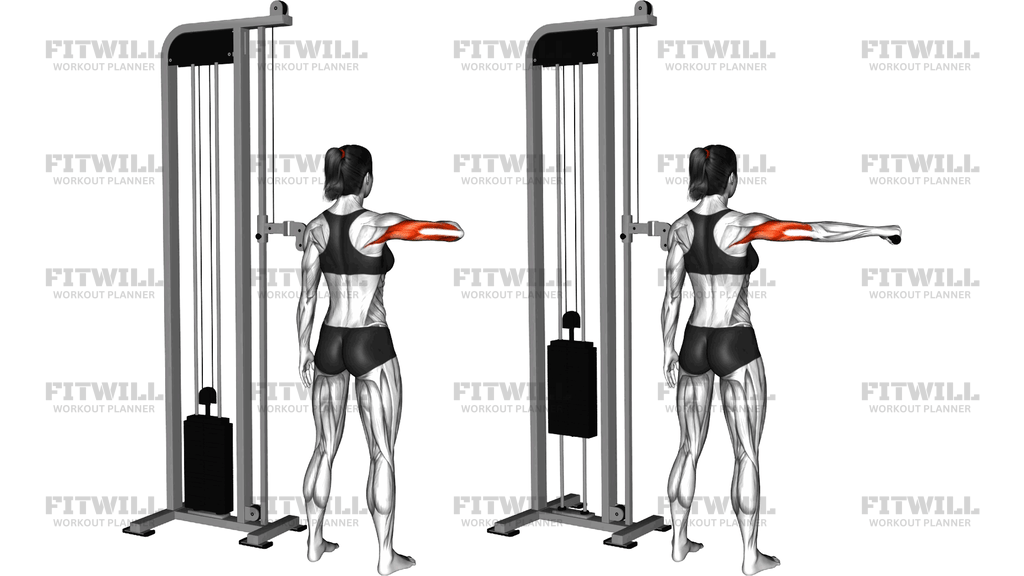
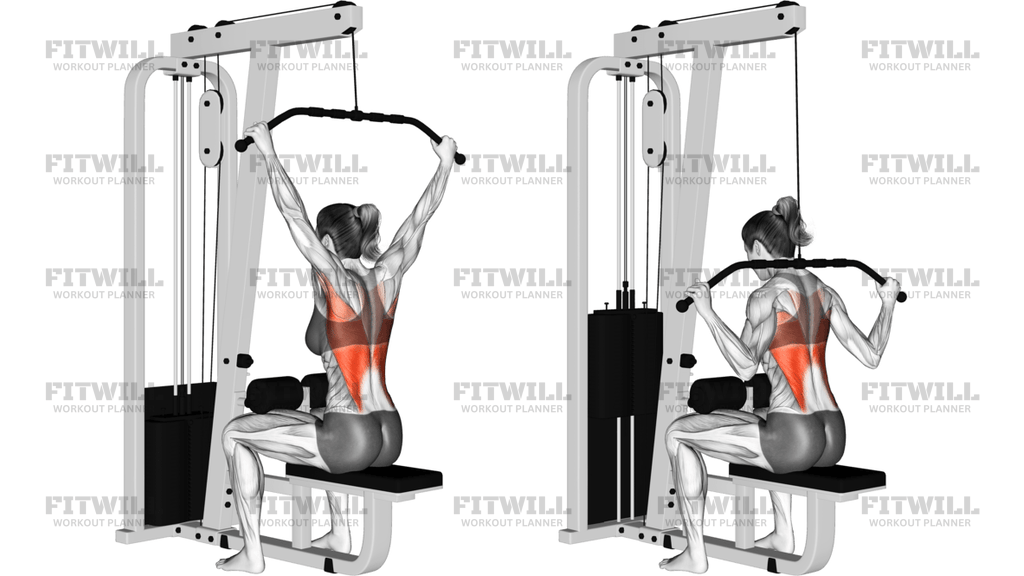
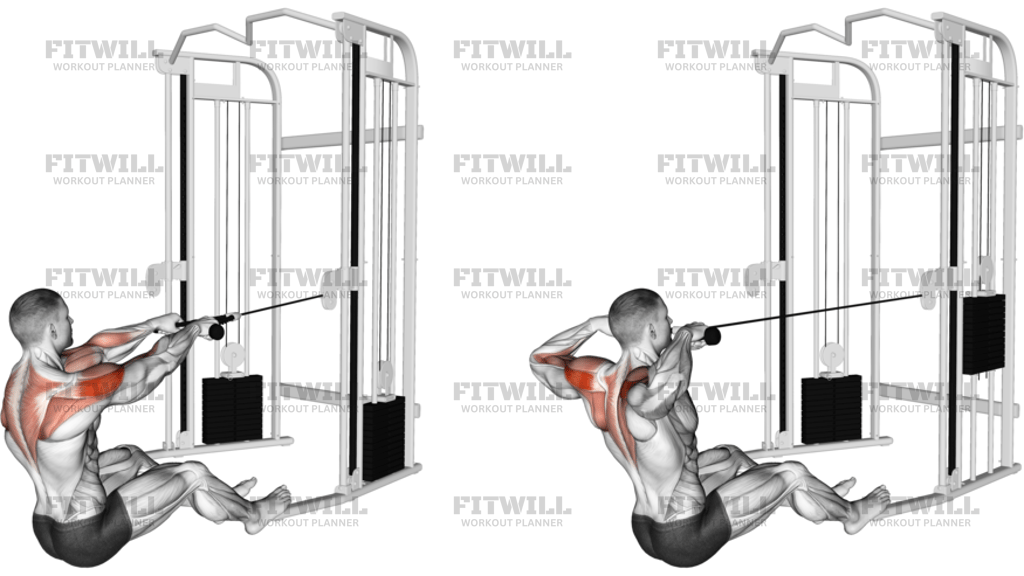
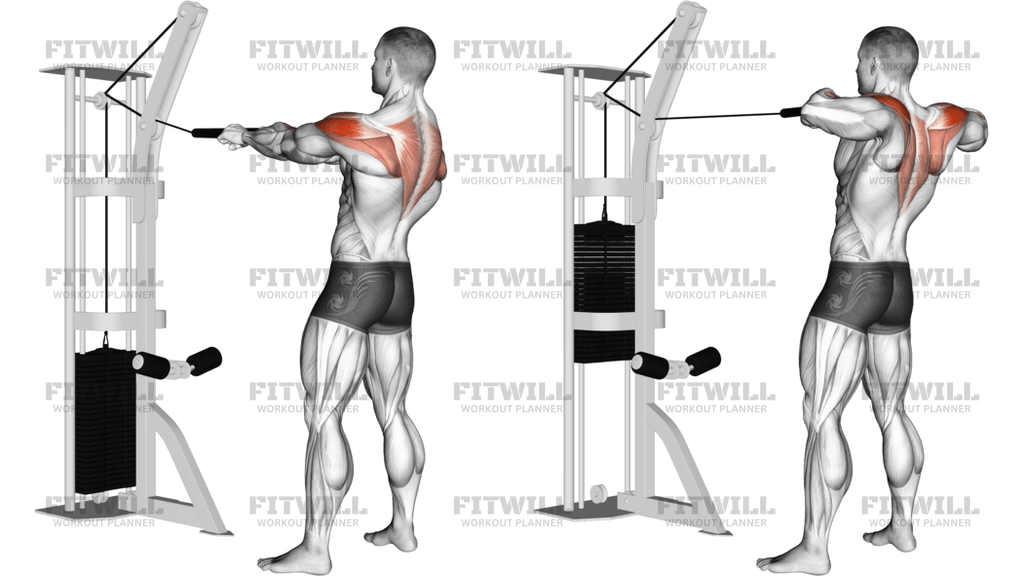
Cable Seated Rear Lateral Raise
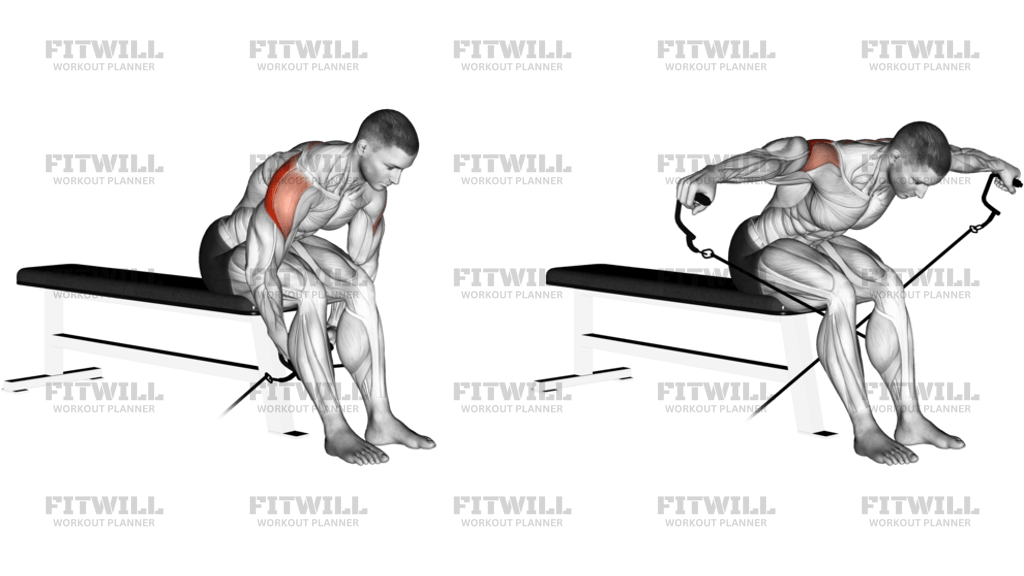
Cable Seated Rear Lateral Raise is a seated rear-delt isolation exercise that uses cables to train the back of the shoulder with very little momentum. The seated position helps keep the torso quiet, which makes it easier to feel whether the rear delts are actually moving the arms or whether the upper traps are trying to take over.
The primary target is the posterior deltoids, with the rhomboids, lateral deltoids, and trapezius helping stabilize the movement. It works best when the elbows keep a soft, consistent bend, the neck stays relaxed, and the arms travel laterally and slightly backward through a rear-delt line. That makes Cable Seated Rear Lateral Raise useful for rear-delt growth, shoulder balance, and strict upper-posterior training.
Set the cables for a seated rear-delt path, sit upright, and grip the handles before you begin. Brace the core, set the shoulders down, and raise the arms laterally and slightly back until you reach a clean contraction. Pause briefly at the top, then lower the handles with control so the movement stays smooth and the torso does not swing.
Cable Seated Rear Lateral Raise works well as a rear-delt accessory after pressing or rowing, or as a control-first shoulder isolation movement when you want less body swing than a standing variation usually gives you. The seated setup often makes the path more honest and easier to repeat. Good reps are small, deliberate, and quiet, with the rear shoulders doing the visible work and the rest of the body staying steady.
If the traps start shrugging or the torso starts rocking, reduce the load and keep the range tighter. The goal is a seated rear-delt raise that stays strict from the first rep to the last.
[ Workout Log & Planner ]
Put your next workout in Fitwill
Keep your plan and training log ready when you are.


Instructions
- Set the cables for a seated rear-delt path and sit upright before the first rep.
- Grip the handles and keep your core braced with your shoulders set down.
- Start with a soft elbow bend and your torso tall.
- Raise the arms laterally and slightly backward through the rear-delt line.
- Pause briefly at the top without shrugging the shoulders.
- Lower the handles slowly back to the start while keeping the torso quiet.
- Keep the elbow bend consistent and the movement smooth.
- Repeat for the planned reps with even tempo on every rep.
Tips & Tricks
- Use light to moderate load so the seated position can keep the movement strict.
- If the torso starts swinging, reduce the weight and shorten the range.
- Keep the elbows softly bent the same amount on every rep so the motion stays in the rear delt.
- Do not shrug the shoulders at the top; the rear shoulders should finish the lift, not the traps.
- Keep the neck relaxed so tension does not climb into the upper traps.
- A slow lowering phase helps keep the rear delts under tension longer.
- The best sets here are quiet, compact, and easy to repeat.
- If the shoulders feel crowded, move the handles a little farther back and lighten the load.
Frequently Asked Questions
What muscles does Cable Seated Rear Lateral Raise work?
It mainly works the posterior deltoids, with the rhomboids, lateral deltoids, and traps helping stabilize the movement.
Why use a seated setup for this raise?
The seated position can reduce momentum and make the movement stricter.
Can beginners do Cable Seated Rear Lateral Raise?
Yes, as long as they use light resistance and controlled reps.
Should my elbows be straight in Cable Seated Rear Lateral Raise?
No, keep a soft bend for joint comfort and better control.
What is the most common mistake in this exercise?
Using the traps and shrugging instead of moving through the rear delts.
What rep range works well here?
Moderate to high reps are common because rear-delt work usually benefits from control and feel.
Does Cable Seated Rear Lateral Raise help posture?
It can support posture by strengthening the upper posterior shoulder muscles.