Lever Incline Chest Press
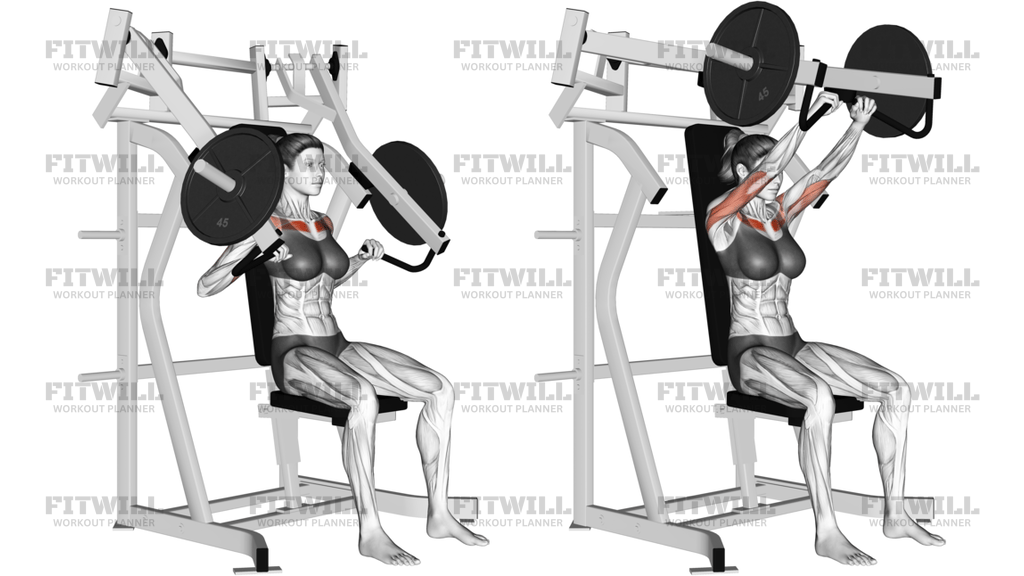
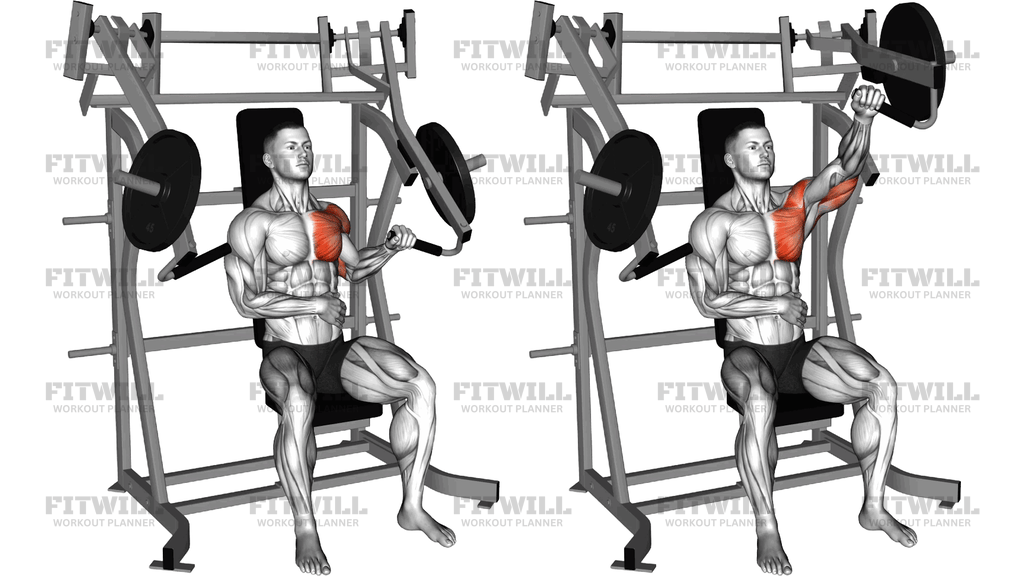
Lever Incline Chest Press is a guided machine pressing exercise performed on an incline chest press station. The image shows a seated lifter with the back supported against the pad, the hands on high lever handles, and the press traveling upward and slightly forward from the upper chest. That setup matters because the machine fixes the path for you, letting you focus on chest-driven force, steady shoulder position, and clean repetition quality instead of balancing free weights.
This movement primarily trains the upper and mid chest while the front delts and triceps help finish each press. Because the torso is supported, it is a useful option when you want to load the pressing pattern with less demand on balance and less need to stabilize the torso through space. It can fit well in hypertrophy blocks, accessory upper-body work, or any session where you want repeatable tension and a clear range of motion.
The seat height and back contact determine how the press line feels. If the seat is too low, the handles can drift too high and turn the rep into a shoulder-dominant press; if the seat is too high, the elbows may get cramped and the shoulders may lose a comfortable path. Set the body before the first rep so the handles start near the upper chest, the chest stays lifted, and the shoulder blades can stay set against the pad.
A good repetition begins with control at the bottom. Let the elbows bend to bring the handles back to the start position without losing the back pad contact, then press the arms up and slightly inward in one smooth arc. Keep the wrists stacked over the handles, avoid bouncing out of the bottom, and stop just short of a hard lockout if that keeps tension on the chest. Lower the lever slowly enough that each rep feels deliberate, not springy.
Use this exercise when you want a stable incline press pattern that is easy to repeat across sets. It is especially useful if you want the chest to do the work without excessive body sway or bar path guesswork. The main keys are matching the machine to your body, keeping the shoulders comfortable, and using a load that lets every rep look the same from the first to the last.
[ Workout Log & Planner ]
Put your next workout in Fitwill
Keep your plan and training log ready when you are.


Instructions
- Adjust the seat so the handles start around upper-chest height and your back can stay flat on the pad.
- Sit tall with your head, upper back, and hips against the support and place both feet flat on the floor.
- Grip the handles with wrists straight and elbows slightly below shoulder height before you unrack or start the machine.
- Set your shoulder blades gently back and down so the chest is open without arching hard through the lower back.
- Press the handles up and slightly forward in a smooth arc until your arms are nearly straight.
- Keep the elbows tracking in a comfortable angle rather than flaring wide as the handles move.
- Lower the handles with control until they are back near the upper chest and the chest stays lifted against the pad.
- Exhale as you press and inhale as the handles come down, keeping the rhythm steady from rep to rep.
- Stop the set if the shoulders shrug, the back leaves the pad, or the machine starts to slam into the bottom.
Tips & Tricks
- If the handles start too high above the chest, lower the seat; if they start too low, raise it until the press line feels natural.
- Keep your wrists stacked over the handles so the machine force stays through the palm instead of folding the wrist back.
- Think about bringing the upper arms slightly inward as you press, not only pushing straight up.
- Do not let the shoulders roll forward at the bottom; keep the chest open against the back pad.
- A neutral or slightly tucked elbow angle usually feels better than a very wide flare on this machine.
- Lower the lever under control for a full stretch, but do not bounce the weight off the stop.
- Use a load that lets you pause briefly near the top without losing shoulder position.
- If the machine has separate handles, press both sides evenly so one arm does not take over the rep.
- Finish the set before your shoulders start shrugging or the range shortens noticeably.
Frequently Asked Questions
What does Lever Incline Chest Press train most?
It mainly targets the chest, with the front shoulders and triceps assisting on each press.
How should I set the seat on this machine?
Set it so the handles begin around upper-chest height and you can keep your back and head supported on the pad.
Where should my elbows be during the press?
Keep them in a comfortable angle slightly below shoulder height rather than flaring straight out.
Should I touch the handles to my chest at the bottom?
Bring them back to a deep, controlled start position, but do not force an extra range if it pulls your shoulders forward.
Can I lock my elbows out at the top?
You can finish almost straight, but a soft lockout often keeps more tension on the chest and feels smoother on the joints.
Is this easier on the shoulders than a barbell incline press?
Usually yes, because the machine guides the path and the back pad reduces the need to stabilize the torso.
What is the most common mistake on this machine?
The most common error is shrugging the shoulders and turning the press into an upper-trap dominated push.
Can beginners use Lever Incline Chest Press?
Yes. The guided path makes it beginner-friendly if the seat is adjusted correctly and the load stays moderate.