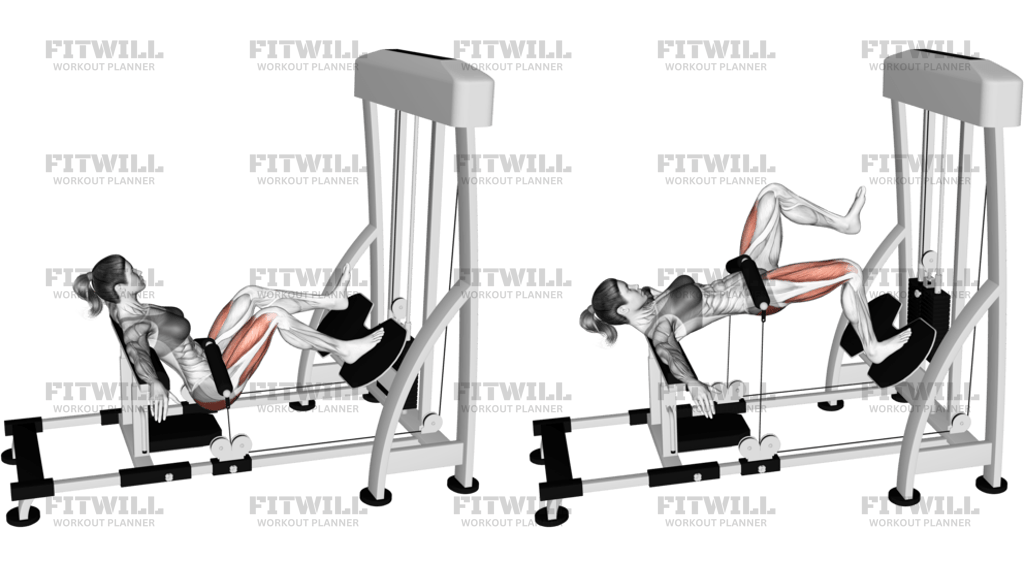
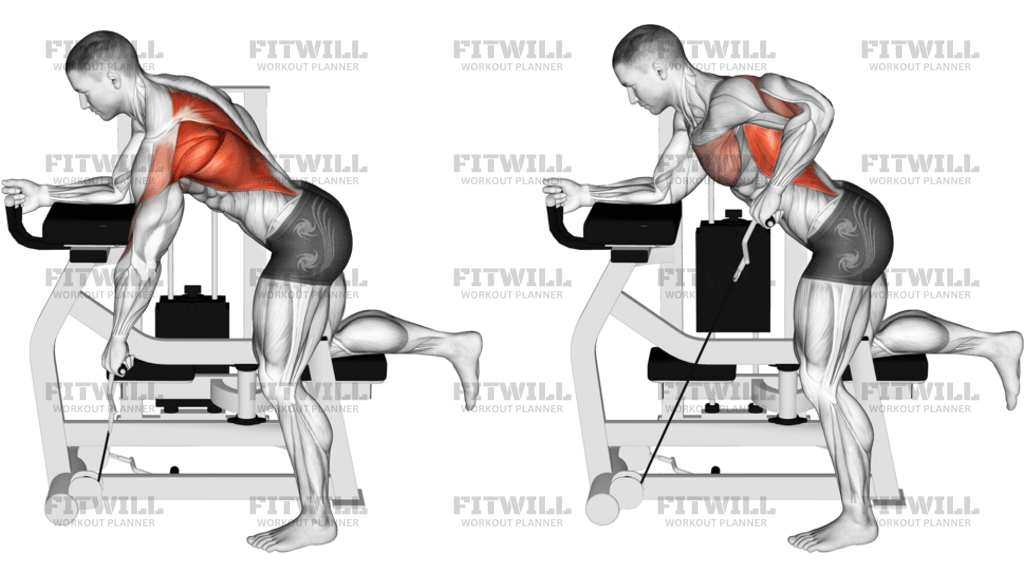
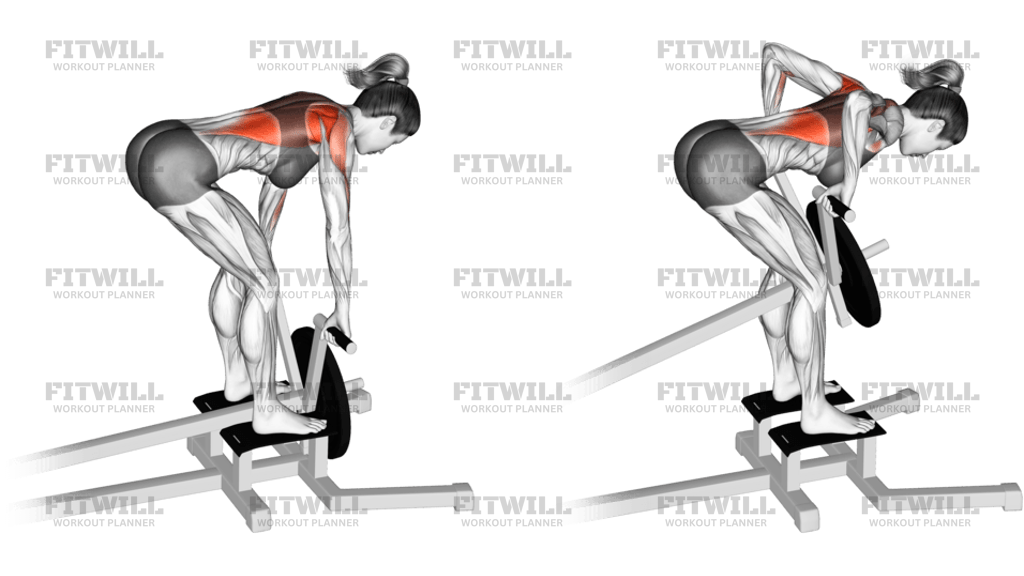
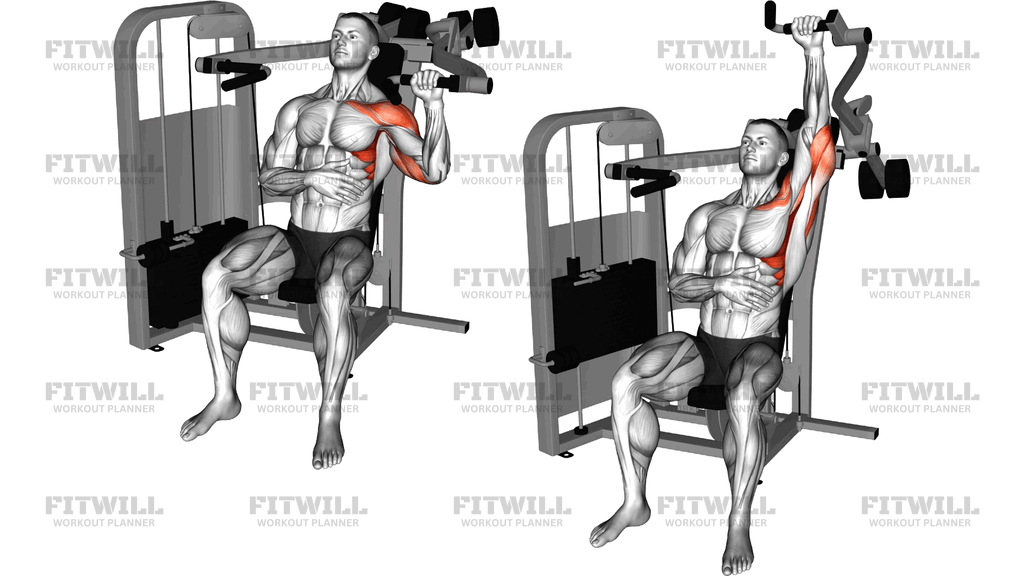
Lever Lying Banded T-Bar Row
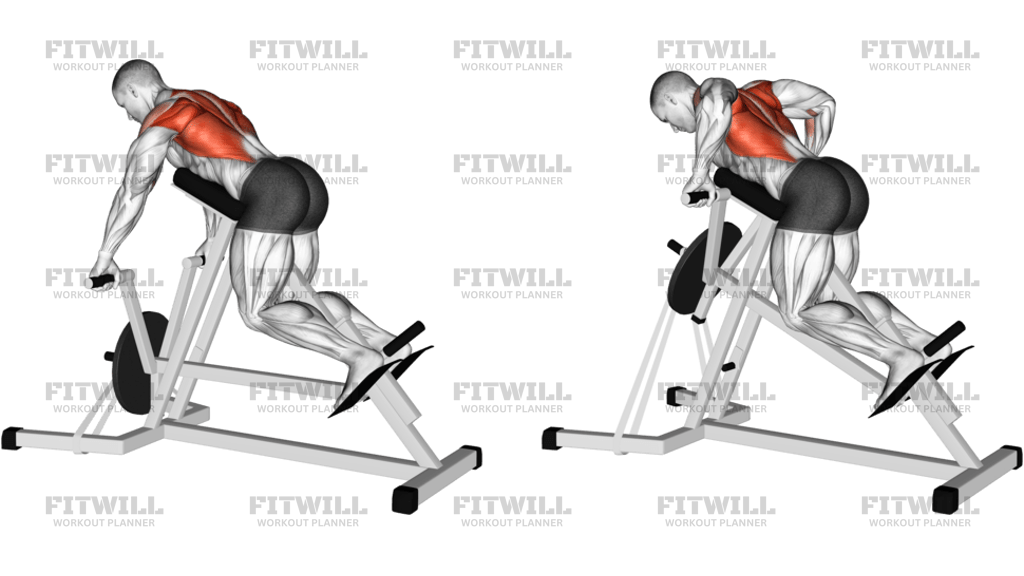
Lever Lying Banded T-Bar Row is a chest-supported rowing exercise on a leverage machine that emphasizes the lats, mid-back, rear shoulders, and biceps without asking the lower back to hold your torso up. The banded setup adds resistance as you approach the top of the pull, so the exercise feels smooth off the bottom and harder where you finish the rep. That makes the exercise useful for building strength, control, and a hard squeeze through the upper half of the range.
The chest-supported position matters because it removes a lot of body English. Lie face down on the pad with your chest and lower ribs supported, your hips settled against the pad edge, and your feet planted on the rear platform for leverage. Reach to the handles with a neutral grip, then let your shoulder blades glide forward before you start the row so the first pull comes from the back and not from a shrug.
From there, drive your elbows back and slightly down toward your lower ribs while keeping your sternum pressed into the pad. The handles should travel in a clean arc, not a jerk upward, and your neck should stay long so the shoulders do not creep toward your ears. Pause briefly at the top to finish the scapular squeeze, then lower the weight under control until your arms are long again and the band tension settles without bouncing you out of position.
Lever Lying Banded T-Bar Row works well as a focused back accessory, a main horizontal pull, or a hypertrophy movement when you want strong upper-back work without taxing the spine. It is also a good option for lifters who struggle to keep a strict hinge row stable, because the machine and pad keep the body organized while still demanding effort from the pulling muscles. The exercise is best when every rep looks the same: tight setup, smooth pull, short pause, and a controlled return.
Common mistakes include lifting the chest off the pad, turning the row into a shrug, or using too much load so the band snaps the handles up at the finish. If the top range feels jerky, shorten the band tension or reduce the weight until the last third of the rep stays controlled. Beginners can use Lever Lying Banded T-Bar Row if they start light, keep their chest anchored, and stop the set the moment they lose the ability to lower the handles slowly.
[ Workout Log & Planner ]
Put your next workout in Fitwill
Keep your plan and training log ready when you are.


Instructions
- Adjust the pad so your chest can lie fully supported on the angled surface and plant your feet on the rear platform.
- Lie face down on the pad with your hips settled, chest pressed into the support, and your hands on the neutral handles.
- Reach your shoulders forward slightly and keep your neck long before you start the first pull.
- Brace your abs and keep your ribs down so your torso stays glued to the pad.
- Drive your elbows back and slightly down toward your lower ribs, keeping the handles close to your body.
- Squeeze your shoulder blades together at the top without shrugging your shoulders.
- Lower the handles slowly until your arms are long and the band tension settles under control.
- Reset your shoulder blades and repeat for the planned reps, then return the handles to the start position carefully.
Tips & Tricks
- Keep your chest pinned to the pad; if it lifts, the row is too heavy or the band is pulling you out of position.
- Let the shoulder blades reach forward at the bottom so the lats get a full stretch before each pull.
- Think about driving the elbows back, not about yanking the handles with your hands.
- Do not let the handles travel high toward your chest or neck; this row should finish near the lower ribs.
- The band makes the top half harder, so slow down the last third of the rep instead of snapping into lockout.
- A brief pause at the top helps you feel the mid-back squeeze without turning the movement into a bounce.
- Use a lighter load if your shoulders shrug or your lower ribs pop off the pad during the set.
- If your grip gives out before your back does, use straps so the row stays focused on the pulling muscles.
Frequently Asked Questions
What muscles does Lever Lying Banded T-Bar Row work?
It mainly trains the lats and mid-back, with rear shoulders, biceps, and grip helping through the pull.
Why is Lever Lying Banded T-Bar Row done chest-supported?
The pad keeps your torso stable so you can row with less lower-back fatigue and more tension on the back muscles.
Where should the handles travel on Lever Lying Banded T-Bar Row?
Pull them toward your lower ribs or upper stomach, not up toward your chest or neck.
Should my shoulders shrug during the row?
No. Keep them down and back as you pull, then let them reach forward again on the way down.
Is Lever Lying Banded T-Bar Row good for beginners?
Yes, if the load is light enough to keep the chest on the pad and the lowering phase slow.
Why add bands to this T-bar row?
The band increases resistance near the top, which makes the finish harder and can improve the squeeze through the upper back.
What is the most common mistake on this machine row?
Using too much load and letting the chest lift, which turns the row into a body swing instead of a strict pull.
Can I swap this for a regular chest-supported row?
Yes. A chest-supported row machine or T-bar row without bands is the closest substitute if you want a similar torso position.