Glute Bridge Two Legs On Bench
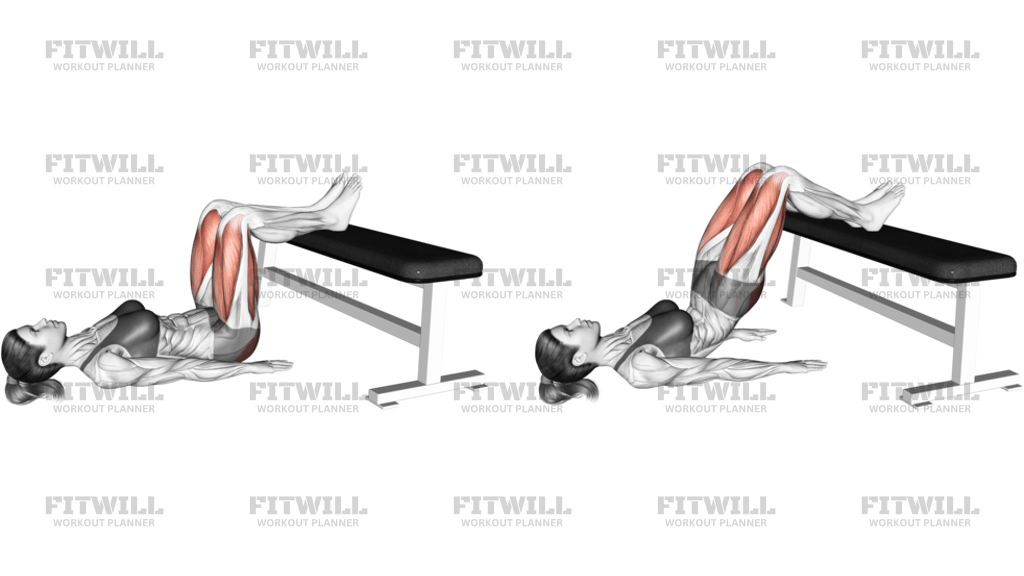
Glute Bridge Two Legs On Bench is a bodyweight glute exercise that elevates both feet on a bench so the hips can extend through a longer and more demanding range than a floor bridge. The setup shifts more tension into the glutes and hamstrings while still asking the core to keep the ribs and pelvis stacked. It is useful when you want a simple, stable lower-body pattern that teaches hip extension without needing a barbell, machine, or complicated setup.
The movement is built around the gluteus maximus, with hamstrings assisting as the knees stay bent and the hips drive upward. The core and lower back help keep the torso from arching excessively, especially near the top position. Done well, the exercise feels like a strong squeeze through the back of the hips rather than a low-back lift. That distinction matters, because the bench changes the leverage and makes it easier to turn the rep into spinal extension if you lose position.
The setup should feel deliberate. Lie on your back with your shoulders and upper back anchored on the floor, then place both feet on the bench so the shins are angled comfortably and the heels can press firmly. From there, create a small brace, keep the chin slightly tucked, and drive the hips up by pushing the bench away with your feet. The best rep finishes with the hips fully extended, the ribs still down, and the pelvis controlled instead of flared upward.
At the top, the line from shoulders to knees should be long and strong without an overarched lower back. Lower the hips under control until the glutes can work again, then repeat with the same foot pressure and torso position. Because the feet are elevated, changes in foot distance on the bench can noticeably alter the feel of the exercise: feet too far away can shift work toward the hamstrings, while feet too close can crowd the knees and shorten the hip drive.
This exercise fits well in glute-focused warmups, accessory work, or lower-body conditioning sessions where you want clean repetitions and a clear contraction. It is also a practical option for beginners who need a stable bridge variation before progressing to loaded hip thrusts or single-leg work. Keep the bench stable, choose a range you can control, and stop the set if you start pushing through the low back instead of the hips.
[ Workout Log & Planner ]
Put your next workout in Fitwill
Keep your plan and training log ready when you are.


Instructions
- Lie on your back with your shoulders and upper back on the floor and place both heels on a stable bench.
- Set your feet about hip-width apart on the bench and bend the knees so the shins are angled comfortably.
- Tuck your chin slightly, brace your abs, and keep your ribs stacked before the first rep.
- Press through your heels and lift the hips by squeezing the glutes, not by arching the lower back.
- Continue driving up until the torso forms a straight line from shoulders to knees.
- Pause briefly at the top and keep the pelvis level without flaring the ribs.
- Lower the hips slowly until the glutes are ready to work again and the bench position stays stable.
- Breathe out as you lift and inhale as you return, then repeat for the planned reps.
Tips & Tricks
- Keep both feet planted evenly on the bench so one side does not take over the rep.
- If you feel the hamstrings cramping, move the feet slightly farther away from the hips and shorten the top squeeze.
- If you feel the low back more than the glutes, stop the rep before the ribs flare and the pelvis tips forward.
- Think about curling the tailbone slightly up at the top to finish with glute tension instead of lumbar extension.
- Use a bench that does not slide; a shifting support changes the whole pattern and makes the exercise unstable.
- Keep the chin gently tucked so the neck stays long and the chest does not over-open at lockout.
- Lower with control for the full eccentric phase; bouncing off the floor or rushing the descent reduces glute work.
- Choose foot placement on the bench that lets your knees track comfortably without collapsing inward or flaring out.
Frequently Asked Questions
What muscle does Glute Bridge Two Legs On Bench target most?
The glutes are the main target, with the hamstrings and core helping to stabilize the bridge.
Can beginners perform this exercise?
Yes. It is a beginner-friendly bridge variation as long as the bench is stable and you keep the range controlled.
Where should my feet go on the bench?
Place both heels or whole feet on the bench about hip-width apart so you can drive through the middle of the foot without twisting.
Should I feel this in my lower back?
No. A little core effort is normal, but the main contraction should come from the back of the hips, not the lumbar spine.
How high should I lift my hips?
Lift until your body forms a straight line from shoulders to knees, then stop before the low back takes over.
What is the most common form mistake?
The most common mistake is flaring the ribs and overextending the low back instead of finishing with a glute squeeze.
How is this different from a floor glute bridge?
The bench changes the leverage and gives you a longer bridge angle, which usually increases glute and hamstring demand.
What should I do if my hamstrings cramp?
Move the feet slightly farther away, shorten the top hold, and keep the lift focused on the hips rather than the knees.