Glute Bridge One Leg On Bench
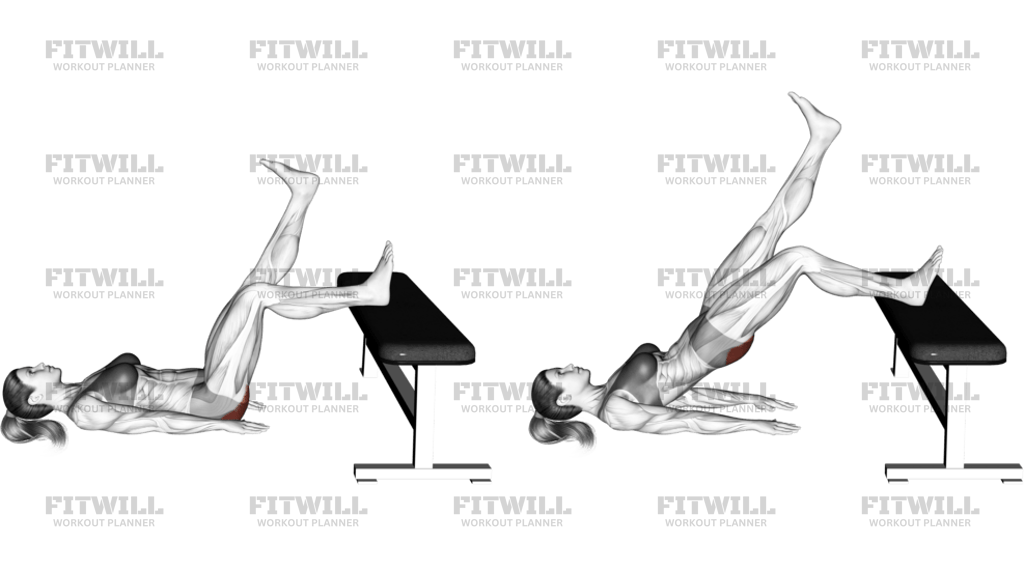
Glute Bridge One Leg On Bench is a bodyweight single-leg bridge variation that trains hip extension with the rear foot elevated on a bench. The movement is simple in appearance, but the bench position changes the leverage enough that the glute on the working side has to do most of the lifting while the core and pelvis stay organized. It is a useful exercise for building glute strength, pelvic control, and cleaner single-leg force production without needing an external load.
The setup matters more here than in a basic floor bridge because the bench foot determines how much hamstring or glute tension you feel and how stable the pelvis stays. When the heel is planted correctly and the ribs stay down, the working hip can extend through a strong range without the low back taking over. The free leg should stay lifted and quiet so the body does not rotate or twist toward the support side.
This exercise is especially useful as accessory work for athletes, lifters, and anyone trying to improve unilateral hip strength or bring up the glutes after a squat- or deadlift-heavy program. It also works well in warmups, glute-focused sessions, and rehabilitation-style training when a controlled, low-load bridge pattern is appropriate. Because it is bodyweight, the challenge comes from tempo, symmetry, and position rather than brute load.
To perform it well, keep pressure through the working heel, lift the hips until the torso and thigh create a strong line, and avoid over-arching at the top. The movement should feel like hip extension, not lower-back extension. A smooth lowering phase, a level pelvis, and a short pause near the top usually tell you the glutes are doing the work and not the low back or hamstrings.
If you use this exercise regularly, aim for clean reps over bigger range or higher fatigue. It should feel challenging on the glutes while still allowing the pelvis to stay square and the shoulders relaxed on the floor. When the working side starts cramping in the hamstrings or the hips begin to rotate, the stance is usually too close or the set is too fatigued. Use that feedback to adjust foot placement, tempo, or rep count.
[ Workout Log & Planner ]
Put your next workout in Fitwill
Keep your plan and training log ready when you are.


Instructions
- Lie on your back with your shoulders and upper back on the floor and place one heel on the edge of a bench so the shin is close to vertical at the top.
- Bend the other knee and hold that leg up so it stays off the floor and does not help with the lift.
- Set your ribs down, lightly tuck the pelvis, and brace your core before the first rep.
- Press through the bench heel and drive the working hip upward until your torso and thigh form a strong line.
- Keep the lifted leg quiet and the pelvis level so you do not twist toward either side.
- Squeeze the glute hard at the top without over-arching your lower back.
- Lower your hips slowly until you feel the working glute lengthen while the foot stays planted on the bench.
- Exhale as you lift, inhale as you lower, and reset your brace before each repetition.
- Complete all repetitions on one side, then switch legs and repeat.
Tips & Tricks
- Place the bench foot so your knee is not jammed far past your toes at the top; a moderate shin angle usually keeps the glute working better than the hamstring.
- Think about pulling the heel down into the bench instead of pushing through the toes.
- If the lower back arches before the glute finishes, lower the hips a little and keep the ribs stacked over the pelvis.
- Keep the free leg bent and lifted; letting it drift or touch down makes it easier to cheat the rep.
- A brief pause at the top helps you feel the working glute and limits bouncing off the floor.
- Use a slower lowering phase if you want more glute tension and less momentum.
- If the hamstring cramps, move the bench foot slightly farther away and reduce the range until the glute takes over.
- Stop the set when the pelvis starts rotating or one side drops lower than the other.
Frequently Asked Questions
What does Glute Bridge One Leg On Bench train most?
It mainly trains the glutes on the working side, with the core and hamstrings helping to keep the pelvis steady.
Why is the bench position important in this bridge?
The bench changes the leverage of the working leg, so heel placement affects whether you feel more glute tension, hamstring cramping, or lower-back compensation.
Should my foot be flat or on the heel?
Use the heel or mid-foot on the bench so you can drive through the working side without letting the toes take over.
Can beginners do this exercise?
Yes, as long as they keep the reps slow, use a comfortable bench height, and stop before the hips start twisting.
Why do my hamstrings cramp during this movement?
Your foot is probably too close to the bench or you are driving the rep from the back of the thigh instead of the glute; move the heel slightly farther out and shorten the set.
How high should my hips come up?
Lift until the torso and working thigh make a strong line, but stop before your low back has to arch to get higher.
Where should I feel the effort?
You should feel it mostly in the glute of the leg on the bench, with some core tension to keep the pelvis square.
How can I make this harder without adding weight?
Slow the lowering phase, add a brief pause at the top, or increase the number of controlled reps before switching sides.