Glute Bridge One Leg On Floor Straight Leg
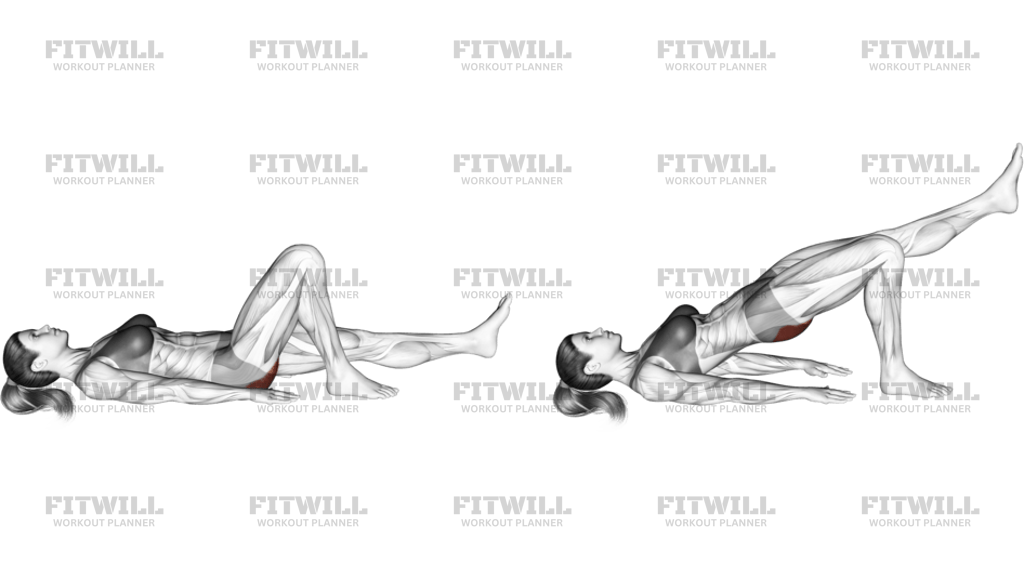
Glute Bridge One Leg On Floor Straight Leg is a floor-based unilateral glute exercise that trains hip extension with one foot planted and the other leg held straight. It is useful when you want to build glute strength and pelvic control without loading the spine heavily, and the bodyweight setup makes it easy to focus on position rather than brute force.
The planted foot, straight working leg, and floor contact all matter. The lifted leg should stay long enough that you are not turning the rep into a tucked-knee bridge, and the pelvis should stay level instead of twisting toward the planted side. That makes the glutes on the working side do the job while the hamstrings and trunk stabilize the body.
At the top of the rep, your hips should rise until your torso and the thigh of the planted leg form a straight line. The motion should come from driving through the heel of the planted foot, not from arching the low back or kicking the straight leg higher. If you finish each rep by squeezing the glute and pausing for a moment, the exercise becomes much more effective.
This movement is often used in warm-ups, accessory blocks, rehab-oriented lower-body work, or as a bridge between basic double-leg glute work and harder single-leg progressions. It is also a practical option when you need glute work without equipment, but the position still demands honest control because hip drop, rotation, and lower-back extension can appear quickly if the set is too hard.
Use a slow return to the floor and reset the pelvis before the next rep. If your hamstrings cramp, shorten the lever slightly by moving the planted foot a little closer or reducing range, but keep the straight-leg position intentional. Clean reps matter more here than speed, because the exercise is built to teach the glute to finish hip extension while the rest of the body stays quiet.
Fitwill
Log Workouts, Track Progress & Build Strength.
Achieve more with Fitwill: explore over 9600 exercises with images and videos, access built-in and custom workouts, perfect for both gym and home sessions, and see real results.
Start your journey. Download today!




Instructions
- Lie on your back on the floor with one knee bent, that foot flat and close enough that your shin is roughly vertical at the top of the bridge.
- Extend the other leg straight so the knee stays locked and the heel hovers off the floor or lightly points forward, not tucked under your body.
- Set your arms by your sides, tuck your ribs down, and keep both hip bones facing the ceiling before you start the first rep.
- Press through the planted heel and lift your hips until your torso and planted thigh form one straight line.
- Keep the straight leg in line with your torso as you rise so the lift comes from the hips, not from kicking the leg upward.
- Squeeze the working glute at the top for a brief pause without overextending your lower back.
- Lower your hips slowly until they hover just above the floor while keeping the straight leg long and the pelvis level.
- Exhale as you drive up, inhale as you lower, and reset your pelvis before the next rep.
- Finish the set by placing both feet down and resting your hips on the floor under control.
Tips & Tricks
- If your low back takes over, reduce the top height and stop at a straight line from shoulders to planted knee.
- Keep the straight leg long and quiet; bending it turns this into a different bridge and reduces the lever challenge.
- A slight heel bias on the planted foot usually hits the glute better than pushing through the toes.
- Do not let the planted knee flare inward or drift outward as you lift, because that often comes with pelvic rotation.
- If your hamstring cramps, move the planted foot a little farther from your hips and shorten the hold at the top.
- Pause for one second at lockout so the working glute finishes the rep instead of bouncing out of the bottom.
- Keep your front ribs down; an aggressive rib flare usually means the lower back is extending instead of the hip finishing the rep.
- Use the slowest lowering phase you can control, because the return is where many people lose pelvic position.
Frequently Asked Questions
What muscles does Glute Bridge One Leg On Floor Straight Leg target most?
It primarily hits the glutes on the planted side, with the hamstrings, core, and lower back helping stabilize the pelvis.
Why is the other leg kept straight in Glute Bridge One Leg On Floor Straight Leg?
Keeping the free leg straight makes the bridge more demanding and helps prevent you from cheating by tucking the knee and shortening the lever.
How high should my hips go in Glute Bridge One Leg On Floor Straight Leg?
Lift until your torso and planted thigh make a straight line. Going higher usually means you are arching the low back instead of extending the hip.
Can beginners do Glute Bridge One Leg On Floor Straight Leg?
Yes, but many beginners need to start with shorter holds or a simpler two-leg bridge first so they can keep the pelvis level.
What is the most common mistake in this bridge variation?
People usually twist their hips or overarch the lower back at the top instead of driving straight through the planted heel.
Why do my hamstrings cramp during this exercise?
That usually means the planted foot is too close or the rep is too aggressive. Move the foot slightly farther away and keep the lift focused on the glute.
Should I feel Glute Bridge One Leg On Floor Straight Leg in my lower back?
No, the lower back should stay mostly quiet. If it is doing the work, lower the bridge height and keep the ribs tucked.
What can I use instead of Glute Bridge One Leg On Floor Straight Leg?
A regular two-leg glute bridge is the easiest substitution. If you want more challenge, progress to a hip thrust or a single-leg bridge with a longer pause.