Barbell Palms Down Wrist Curl Over A Bench
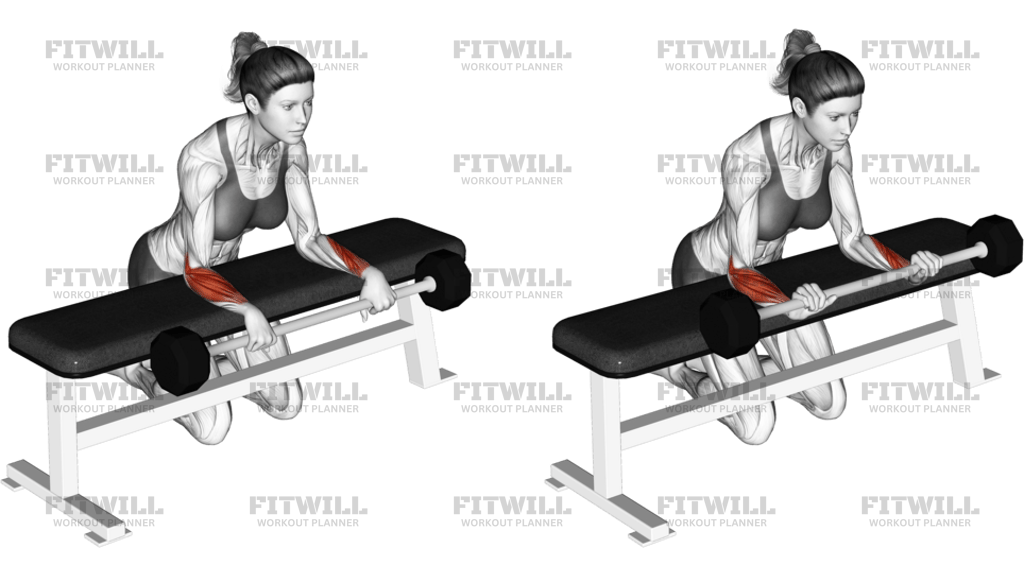
Barbell Palms Down Wrist Curl Over A Bench is a forearm isolation exercise that targets the wrist extensors on the top side of the forearm. The setup matters because the elbows, forearms, and wrists all need to stay in one line while the hands move freely past the bench edge. That fixed support lets you train the smaller muscles around the wrist without turning the rep into a shoulder, upper-arm, or body-sway exercise.
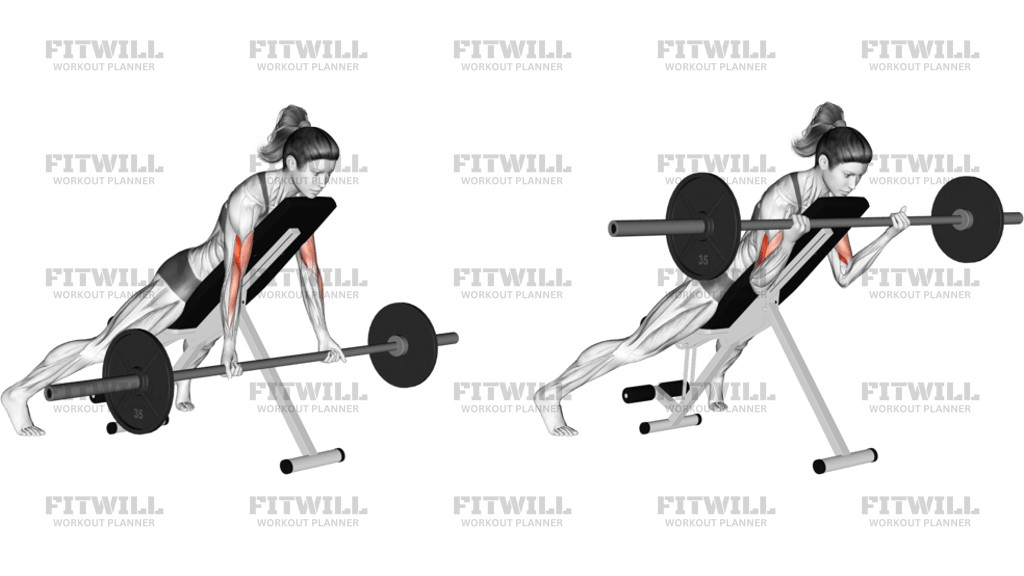
In the image, the lifter kneels behind the bench with both forearms resting on the pad and the barbell gripped overhand. The hands hang just past the edge so the wrists can flex and extend through a clear, controlled arc. Starting from the lowered position, the bar sits closer to the floor; the rep begins by lifting the knuckles and backs of the hands toward the ceiling, then lowering the bar back down under control.
This movement is useful if you want stronger, more resilient forearms for gripping, pressing, racket sports, climbing, or any work that asks the wrist to resist repeated load. It also pairs well with palm-up wrist curls so both the wrist flexors and extensors get trained instead of overloading only one side of the forearm. Because the muscles are small, the best results usually come from careful reps, not aggressive loading.
Good execution is simple but strict: keep the forearms planted, move only at the wrists, and avoid curling the elbows or lifting the chest to cheat the bar upward. The top of the rep should feel like a hard wrist extension contraction, not a shrug or a shoulder raise. If the bar starts to drift or the wrists collapse into pain, the load is too heavy or the range is too deep.
Use this exercise as accessory work after your main lifts, during a forearm-focused session, or anywhere you need extra grip and wrist support without much systemic fatigue. Light to moderate loads, longer sets, and steady tempo usually work better than maximal weight. When done well, the exercise builds durable wrist control while keeping the forearm muscles under clean tension from start to finish.
[ Workout Log & Planner ]
Put your next workout in Fitwill
Keep your plan and training log ready when you are.


Instructions
- Kneel or stand behind a flat bench and place both forearms on the pad with your wrists and hands hanging just past the front edge.
- Hold a barbell with an overhand, palms-down grip so the bar rests in your fingers and the wrists can move freely.
- Keep your elbows planted and your forearms parallel while your chest stays still over the bench.
- Let the wrists drop into the starting position so the bar lowers toward the floor without losing your forearm contact on the bench.
- Exhale and lift the backs of your hands by extending the wrists until the bar rises as high as you can control.
- Pause briefly at the top with the forearms still braced and the elbows unmoved.
- Inhale and lower the bar slowly by letting the wrists flex back down under control.
- Repeat for the planned reps, then set the bar down carefully before removing your forearms from the bench.
Tips & Tricks
- Keep the forearms glued to the bench; if the elbows slide forward, the shoulders and body start stealing the work.
- Let the bar roll into the fingers instead of choking it in the palm so the wrists can move through a cleaner arc.
- Use a lighter bar or plates than you would for flexion curls; the wrist extensors usually fail before the grip does.
- Stop the lowering phase before the bar drops so far that the wrists feel a sharp tug on the top of the forearm.
- Think about lifting the knuckles, not the bar, to keep the motion centered at the wrist joint.
- Keep your ribs down and your torso quiet so you do not turn the rep into a rocking motion over the bench.
- A slower lowering phase helps the extensors more than bouncing the bar back up from the bottom.
- If your wrists ache on the top of the rep, shorten the range slightly and use a smoother tempo before adding load.
Frequently Asked Questions
What does the palms-down grip train in this wrist curl?
The overhand grip shifts the work toward the wrist extensors on the top side of the forearm.
Why are the forearms resting on the bench?
The bench fixes the upper arms and forearms so the wrists do the work instead of the shoulders or torso.
How far should the bar move in the palms-down wrist curl?
Lift until the wrists are fully extended but still comfortable, then lower only as far as you can control without losing forearm contact.
Should my elbows move during the set?
No. The elbows should stay planted on the bench while the hands and wrists move.
Is this the same as a regular barbell wrist curl?
No. A regular wrist curl is usually palms up and emphasizes the wrist flexors, while this version is palms down and hits the extensors.
Can beginners use this exercise safely?
Yes, if they start with a very light bar and keep the movement strict and pain-free.
What is the biggest mistake on this bench setup?
Letting the chest, shoulders, or elbows drift and turning the wrist curl into a whole-body lift.
Where does this exercise fit in a workout?
It works best as accessory work after your main lifts or in a forearm and grip-focused session.