Dumbbell One-Arm Reverse Wrist Curl
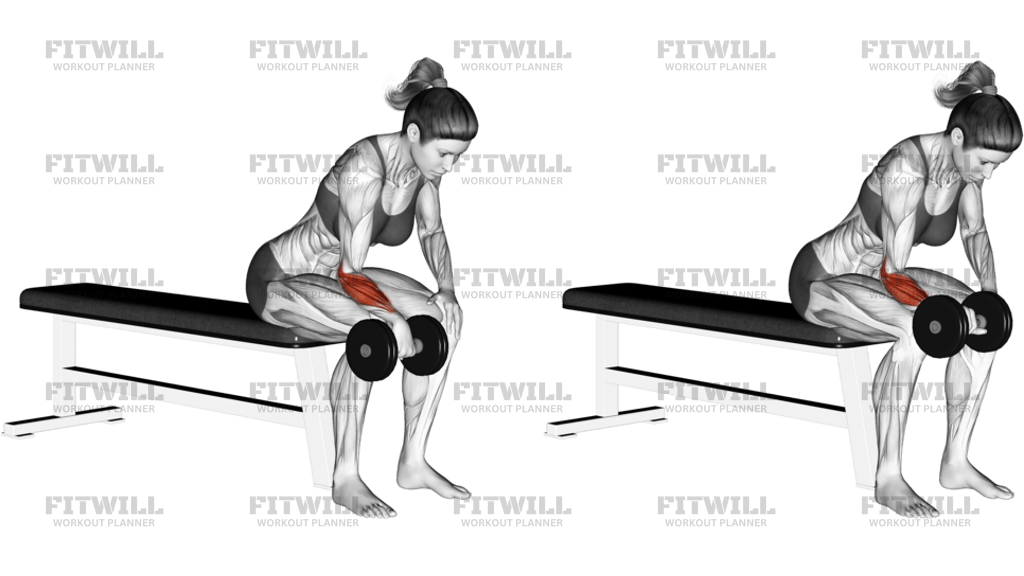
The Dumbbell One-Arm Reverse Wrist Curl is a seated forearm isolation exercise that targets the wrist extensors on the top side of the forearm. In the image, the working arm is supported on the thigh with the wrist hanging past the knee, which is the key setup for keeping the elbow still while the wrist does the work. That braced position reduces cheating and makes the movement much more specific to the forearm.
This exercise is especially useful when you want to strengthen the muscles that extend the wrist and improve tolerance for gripping, pulling, racket work, or barbell training that asks the forearms to stay firm under load. Because the range is small and the leverage is long, light dumbbell loading is usually enough. The quality of the rep matters more than the amount of weight.
The important technical detail is to keep the forearm pinned to the thigh while only the hand moves. Let the dumbbell roll down under control as the wrist flexes, then lift the back of the hand toward the forearm by extending the wrist. The forearm should stay quiet, the shoulder should stay relaxed, and the movement should come from the wrist joint rather than a shrug or elbow lift.
The reverse wrist curl is often used as accessory work after larger pulling or upper-body sessions, or as a preparatory movement when the forearms feel undertrained compared with the rest of the arm. It can also be helpful for people who need balanced forearm development because many training plans emphasize wrist flexors more than extensors. If the motion causes sharp discomfort at the wrist, reduce the range, lower the load, or stop the set and reassess the setup.
Done well, this exercise should feel like a controlled burn across the top of the forearm and the back of the wrist, not a swinging dumbbell or a loose shoulder movement. Keep the hand path smooth, use a predictable tempo, and let the elbow and upper arm act as the anchor for every repetition.
[ Workout Log & Planner ]
Put your next workout in Fitwill
Keep your plan and training log ready when you are.


Instructions
- Sit on a bench and place one forearm across the same-side thigh so the wrist can move just past the knee.
- Hold a dumbbell with a pronated grip, palm facing down, and let the hand hang off the edge of the thigh.
- Set your shoulder down and keep the elbow planted on the thigh before you start the first rep.
- Lower the dumbbell slowly by letting the wrist flex until you feel a controlled stretch through the top of the forearm.
- Reverse the motion by lifting the back of the hand toward the forearm using only wrist extension.
- Stop when the wrist is fully extended without letting the forearm lift or the shoulder drift forward.
- Pause briefly at the top, then return to the bottom under control for the next repetition.
- Keep your torso still and breathe out as you lift, then inhale as you lower.
- Switch arms after the set and keep the same bench support, hand position, and range on both sides.
Tips & Tricks
- Use a very light dumbbell at first; this movement gets hard quickly because the lever arm is long.
- Let the wrist move through a smooth arc instead of bouncing off the bottom of the rep.
- Keep the forearm glued to the thigh so the elbow does not slide forward with each repetition.
- The top of the forearm should do the work; if the biceps or shoulder are trying to help, the load is too heavy.
- Avoid curling the fingers hard around the handle, since a death grip can turn the set into a forearm-cramping exercise instead of a wrist-extension drill.
- If the wrist feels pinchy at the top, shorten the range slightly and keep the rep strict.
- A slower lowering phase usually improves the stimulus more than adding weight.
- Do both arms with the same wrist path and range so one side does not become the stronger stabilizer.
- Finish the set before the wrist starts wobbling, because sloppy reps shift stress away from the extensors.
Frequently Asked Questions
What does the Dumbbell One-Arm Reverse Wrist Curl train?
It mainly trains the wrist extensors and the top side of the forearm while the upper arm stays braced on the thigh.
Why is my forearm resting on my thigh in the setup?
That support isolates the wrist joint and keeps you from turning the movement into a shoulder or elbow lift.
Should my palm face up or down on the dumbbell?
Palm down. The pronated grip is what makes it a reverse wrist curl instead of a standard wrist curl.
How far should the wrist move on each rep?
Move only through a pain-free wrist range. The forearm should stay on the thigh, and the hand should do the visible work.
What muscle should I feel most in this exercise?
You should feel the back of the forearm working, especially near the wrist extensors rather than the shoulder or biceps.
Can beginners do this reverse wrist curl?
Yes. It is a good beginner forearm drill if you keep the dumbbell light and the motion strict.
What is the most common mistake with this dumbbell movement?
The biggest mistake is letting the elbow or shoulder move so the set becomes a swing instead of a wrist isolation exercise.
Is there a good substitute if I do not have a bench?
You can brace the forearm on another stable surface such as a box or the edge of a thigh, as long as the wrist can still hang freely.
How heavy should I go on one-arm reverse wrist curls?
Usually much lighter than you expect. Choose a load that lets you extend the wrist smoothly without losing the forearm brace.