Cable One-Arm Lateral Bent-Over
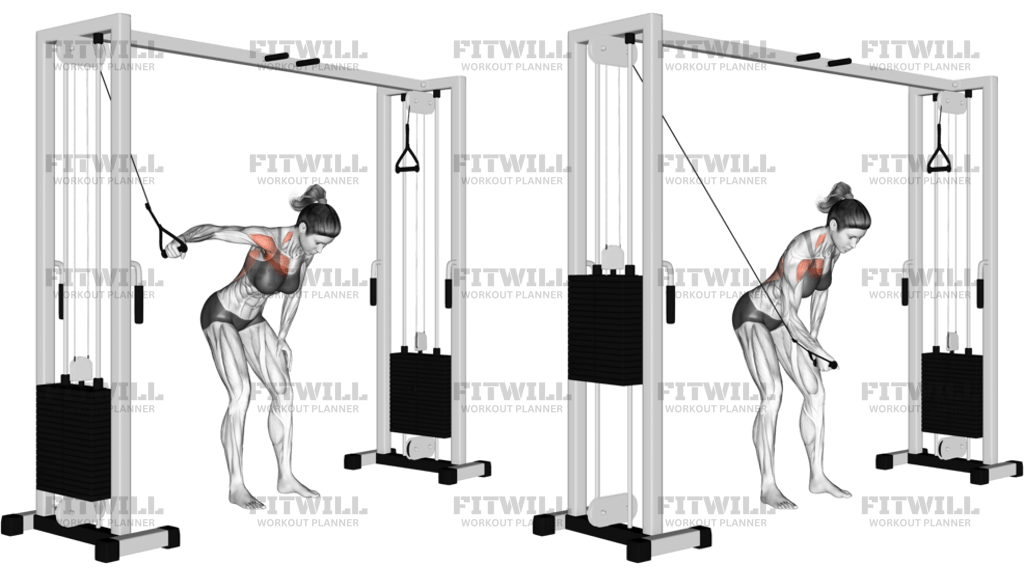
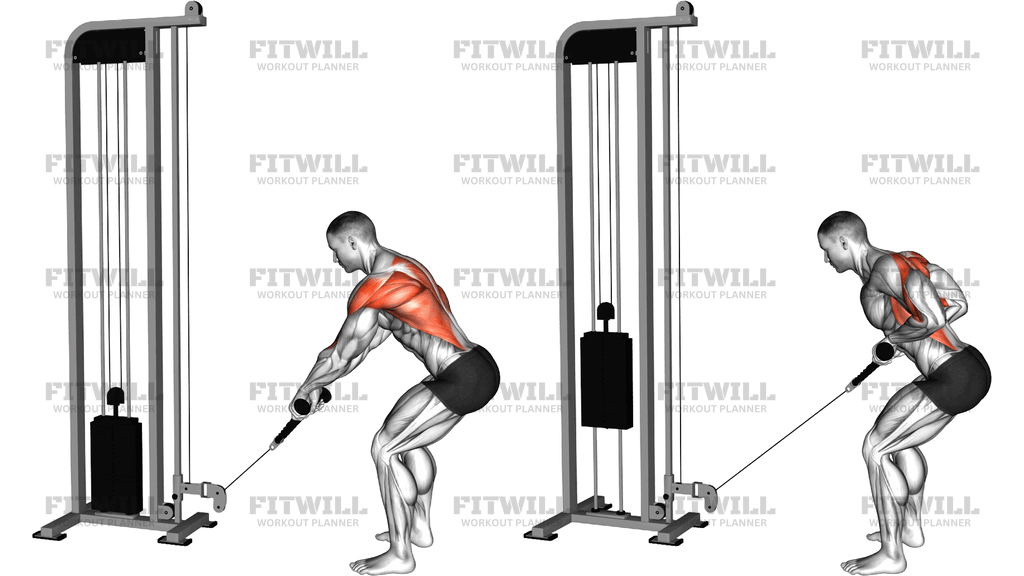
Cable One-Arm Lateral Bent-Over is a single-arm cable raise performed from a hip hinge, usually with the torso pitched forward and the cable pulling from slightly below or behind the working shoulder. The movement trains the rear delts and the upper-back muscles that help control shoulder position, especially when the arm travels out to the side and slightly back instead of straight up. Because the setup puts you in a bent-over position, the exercise depends on a stable hinge, a quiet trunk, and a smooth cable path more than on heavy load.
The main value of this exercise is how precisely it loads one shoulder at a time. That makes it useful when you want to clean up side-to-side differences, build shoulder endurance, or teach the rear delt to work without turning the rep into a row or a shrug. The cable keeps tension on the muscle through most of the range, so even a light stack can feel demanding when the torso stays fixed and the elbow leads the motion.
The setup matters because the body angle changes the line of pull. Hinge forward until your torso is stable, keep a soft bend in the elbow, and let the handle start near the opposite thigh or slightly across the body. From there, sweep the arm out in a controlled arc while keeping the rib cage down and the neck long. The shoulder should move, but the torso should not twist to create extra range.
A clean repetition finishes when the upper arm reaches roughly in line with the torso or a little below shoulder height, depending on how your shoulder feels. Pause briefly in that open position, then lower with control along the same path instead of dropping the stack. If the top of the rep turns into an upper-trap shrug, shorten the range and lighten the load so the rear delt stays in charge.
Cable One-Arm Lateral Bent-Over fits well as accessory work, shoulder isolation, or a warm-up drill before pressing or rowing. It is especially helpful when you want controlled tension without joint stress, but it still rewards discipline: stable hips, square shoulders, and even breathing. If the movement causes pinching, the load is too heavy, the hinge is too shallow, or the arm is drifting into a row instead of a lateral rear-delt raise.
Fitwill
Log Workouts, Track Progress & Build Strength.
Achieve more with Fitwill: explore over 9600 exercises with images and videos, access built-in and custom workouts, perfect for both gym and home sessions, and see real results.
Start your journey. Download today!




Instructions
- Attach a single handle to the low pulley and stand side-on to the cable with your working arm farthest from the stack.
- Hinge forward at the hips until your torso is angled down and steady, with a soft bend in the knees and a neutral spine.
- Grip the handle with the working hand and let it start near the opposite thigh or just in front of the knee, with the elbow slightly bent.
- Brace your trunk, keep your ribs down, and square your shoulders before the first rep.
- Raise the arm out and slightly back in a smooth arc, leading with the elbow and keeping the wrist in line with the forearm.
- Stop when the upper arm reaches about shoulder height or slightly below, then squeeze the rear delt without shrugging.
- Lower the handle slowly along the same path until the arm is back near the starting position.
- Exhale as you lift, inhale as you lower, and keep the torso from rotating toward the cable.
- Reset your hinge if needed, then repeat for the planned number of controlled repetitions.
Tips & Tricks
- Keep the hinge fixed; if your chest rises as the handle moves, the rear delt is losing tension to momentum.
- Use a lighter load than you would for a row, because this movement works best when the arm moves smoothly rather than forcefully.
- Let the elbow lead the lift and keep the hand slightly behind it so the shoulder, not the wrist, drives the rep.
- Avoid shrugging toward your ear at the top; a tall neck and quiet upper traps usually mean the rear delt is doing the work.
- If the cable pulls you into rotation, widen your stance or move the non-working hand to a thigh for extra support.
- Stop the raise when the upper arm is level with the torso or just below shoulder height if going higher turns it into a trap-dominant shrug.
- Keep the cable path slightly diagonal rather than perfectly side-on if that feels smoother on your shoulder.
- Use a slow lowering phase to keep tension on the back of the shoulder instead of letting the stack drop.
Frequently Asked Questions
What does Cable One-Arm Lateral Bent-Over work most?
It primarily targets the rear delts, with help from the upper back and shoulder stabilizers.
Can beginners perform this exercise?
Yes, if they start with very light resistance and keep the torso locked in a stable hinge.
Should I stand upright or bent over for this cable raise?
Stay bent over with a fixed hip hinge so the arm moves against the cable without turning the exercise into an upright lateral raise.
How high should the handle come up?
Usually to shoulder height or a little below. If you have to shrug to go higher, the rep is too high.
Is this a rear-delt fly or a row?
It is a rear-delt raise / reverse-fly pattern. The elbow travels out and slightly back, but you should not be pulling the elbow hard behind the body like a row.
Where should I feel the exercise?
Most of the tension should be on the back of the shoulder, with some work in the upper back and the muscles that keep your torso steady.
What is the biggest form mistake?
Using the trunk to twist the handle up instead of keeping the hips and ribs quiet while the shoulder moves.
How can I make the movement easier on my shoulder?
Shorten the range slightly, lower the load, and keep the arm path smooth instead of forcing the handle into a bigger arc.